Dogs · Grooming
Slicker Brush vs Deshedding Tool: Which Job Does Each One Do?
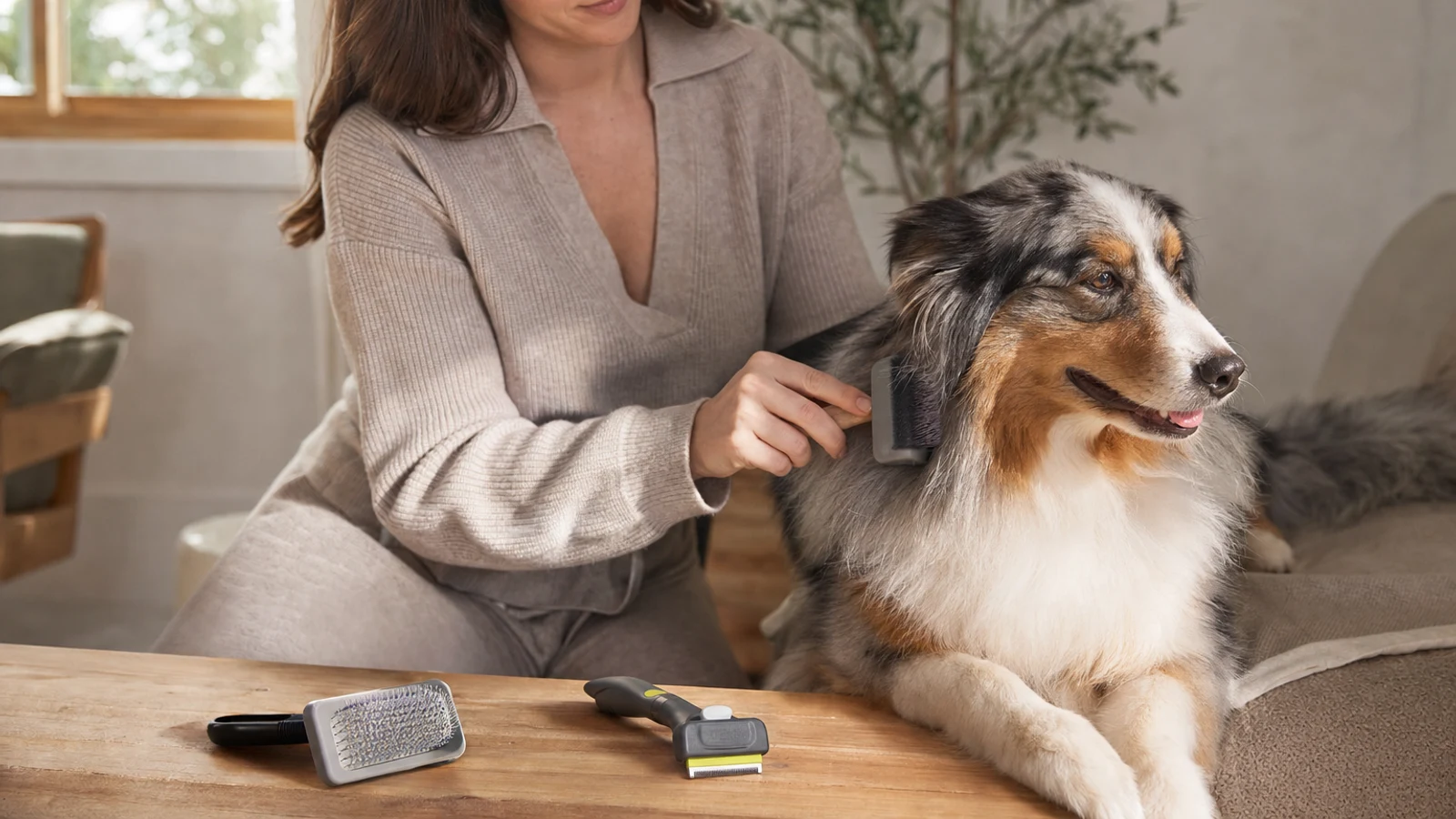
A slicker brush is mainly for regular coat maintenance, light tangles, and separating fur. A deshedding tool is more specialized: it targets loose undercoat in dogs with a true double coat. Some dogs benefit from both, but neither tool is right for every coat.
Quick answer
Choose a slicker brush when your dog needs routine brushing, light detangling, or help maintaining a longer, curly, wavy, or layered coat. Choose a deshedding tool when your dog has a dense undercoat and sheds heavily, especially during seasonal coat changes. A slicker is usually the more versatile first tool; a deshedding tool is an occasional specialist tool, not a replacement for regular brushing or professional grooming.
Shop this guide
Current Amazon options
Six current listings related to this buying decision. Use the guide to compare fit and trade-offs, then verify the latest seller, price, size, and availability on Amazon.
As an Amazon Associate I earn from qualifying purchases. Product availability, seller, price, and listing details can change.
Key decision checks
The practical difference: maintenance versus undercoat removal
A slicker brush is a broad coat-maintenance tool. Its closely spaced pins separate fur, catch loose hair, and work through small tangles near the surface and within longer coats. It is especially useful when the main job is preventing knots, keeping a coat fluffy and organized, or preparing the coat for a comb or finishing brush.
A deshedding tool is designed for a narrower job: removing loose undercoat from dogs that have a dense layer beneath their outer coat. It can collect more dead underfur during a heavy shed, but its deeper reach also makes pressure, tool design, and frequency more important. The two tools may be used together, but they are not interchangeable.
- Slicker brush: routine brushing, light tangles, coat separation, and everyday maintenance.
- Deshedding tool: loose undercoat removal during heavier shedding periods.
- Neither tool should be used to cut through tight mats or diagnose unexplained hair loss.
When a slicker brush is the better choice
Start with a slicker brush when your dog has a long, medium, curly, or wavy coat that tangles or mats easily. Dogs with continuously growing hair, such as many Poodles and Poodle mixes, often need regular brushing to prevent knots even though they may not shed heavily in the same way as a double-coated dog. A slicker can help separate the coat so a comb can check whether tangles remain close to the skin.
A slicker can also be useful for some double-coated dogs as part of routine grooming. It can lift loose hair, reach through portions of the coat, and help identify small tangles before they become mats. However, a slicker alone may not remove all the loose undercoat from a very dense seasonal shed, so the best tool depends on whether tangles or shedding is the larger household problem.
- Choose flexible pins and a size that lets you work in small sections without pressing hard.
- Look for a design that allows the pins to move through the coat rather than scrape the skin.
- Use short, controlled strokes around sensitive areas such as the ears, legs, tail, and belly.
- Follow with a metal comb when you need to confirm that the coat is clear down to the skin.
When a deshedding tool makes sense
A deshedding tool makes the most sense for a dog with a genuine double coat and a noticeable amount of loose underfur. Examples include many Retrievers, Collies, Pomeranians, Huskies, Shepherds, and similar breeds, although individual coats vary. These dogs may shed year-round and may also release larger amounts of undercoat during seasonal coat changes.
The tool is less compelling when your dog has a single, curly, wiry, or very fine coat without a substantial undercoat. It may also be the wrong first purchase for a short, smooth-coated dog, where a rubber curry brush, grooming mitt, or suitable bristle brush may be more comfortable for collecting surface hair. A tool marketed as “heavy duty” is not automatically better for your dog.
- Use it for loose undercoat, not for pulling through mats or forcing out attached hair.
- Prefer a tool matched to your dog’s coat length and density rather than a one-size-fits-all blade.
- Treat it as an occasional or seasonal tool unless the product directions and a grooming professional indicate otherwise.
- Stop if your dog shows discomfort, repeated avoidance, skin redness, or coat thinning.
Safety matters more than the amount of hair collected
The biggest mistake with a deshedding tool is judging success by how much fur comes out. A large pile of hair does not prove that the session was beneficial. Pressing too hard, making too many passes over one area, or using a tool on a coat that does not have a suitable undercoat can pull healthy hair, break the coat, or irritate the skin.
Use light pressure and work in the direction of hair growth. Do not use either tool to rip through a tight mat. Mats can hide sore or damaged skin, and cutting or breaking them apart close to the skin can cause injury if you cannot clearly see what you are doing. A professional groomer is the safer choice for extensive matting, a dog that cannot tolerate handling, or a coat that needs clipping.
- Brush on a dry coat unless the product is specifically designed for another use.
- Avoid irritated, wounded, infected, or sunburned skin.
- Do not keep repeating strokes over the same patch simply because hair is still appearing.
- Check the skin during and after grooming for redness, scratches, scabs, or tenderness.
Compare options for your pet
Slicker Brush vs Deshedding Tool: Which Job Does Each One Do?
Compare current Amazon listings using the fit and safety checks in this guide. Confirm size, specifications, seller and availability before ordering.
See on Amazon →As an Amazon Associate I earn from qualifying purchases. Links open Amazon search results; individual listings have not been independently verified.
How to choose between them for common coat situations
The best choice follows the job your household needs done. If hair is forming knots behind the ears, in the armpits, around the collar, or on feathered legs, a slicker is usually more relevant. If your dog’s coat is not tangled but loose fur is coming out in handfuls from a dense undercoat, a deshedding tool may add value during the heavier shedding period.
Some dogs need both, but sequence and restraint matter. A slicker or comb can help organize the coat and find tangles, while a suitable undercoat tool can be used sparingly where loose underfur is abundant. For curly or continuously growing coats, regular brushing and professional trimming may matter more than trying to remove shedding hair.
- Mostly tangles or mats: choose a slicker first, then use a comb to check the result.
- Heavy seasonal shedding from a double coat: consider a deshedding tool, used gently and intermittently.
- Short, smooth coat: consider a rubber grooming tool or mitt before either option.
- Curly or continuously growing coat: prioritize routine section-by-section brushing and grooming appointments.
- Sensitive skin, painful handling, or unexplained coat loss: ask a veterinarian or qualified groomer before buying a more aggressive tool.
Buying criteria that matter more than brand claims
Look for a tool that matches coat length, density, and your ability to control pressure. A comfortable handle can help you maintain a steady, light stroke, while a head that is too large may encourage you to brush over too much coat at once. For a slicker, pin flexibility and spacing are important. For a deshedding tool, the working edge should be appropriate for the coat and easy to control around curves and thinner areas.
Read the care instructions instead of assuming that a tool can be used daily. Manufacturer guidance varies by product, and even a stated schedule may need to be adjusted for the individual dog’s coat and skin. Ease of cleaning is also practical: loose hair should come out without forcing you to bend or damage the pins or edge.
- Match the tool to coat type, length, and density—not simply breed name.
- Choose a size that lets you work in small, visible sections.
- Avoid tools that require force, snag repeatedly, or leave the dog trying to escape.
- Check return and replacement-part policies before buying if fit is uncertain.
- Use a professional groomer for a personalized tool demonstration when the coat is difficult or the dog is fearful.
When brushing is not the real problem
Routine grooming can help remove dead hair, prevent tangles, and give you a chance to notice skin changes. It cannot explain every increase in shedding. Bald patches, thinning areas, persistent scratching, redness, scabs, sores, strong odor, or hair that pulls out unusually easily warrant veterinary attention rather than more aggressive brushing.
A veterinarian is also appropriate when your dog suddenly resists grooming, reacts as though brushing hurts, or develops a skin problem after using a tool. If the issue is coat technique rather than health, a species-qualified professional groomer can demonstrate pressure, sectioning, and tool choice without treating a medical condition.
- Pause home grooming over open sores, inflamed skin, or painful areas.
- Seek veterinary advice for sudden or excessive hair loss, bald patches, or ongoing itchiness.
- Ask a professional groomer for help with severe mats, dense coats, or grooming-related fear.
Common questions
FAQ
Can a slicker brush remove loose undercoat?
Yes, a slicker can collect some loose undercoat, particularly from longer or layered coats. It may not remove as much dense underfur during a heavy shed as a suitable undercoat tool. Its broader strengths are coat separation, light detangling, and routine maintenance.
Can I use a deshedding tool every day?
Do not assume daily use is appropriate. Frequency depends on the tool, the dog’s coat, and the condition of the skin. Many deshedding tools are intended for limited sessions rather than constant brushing. Follow the product directions, use light pressure, and stop if the coat or skin looks irritated.
Should I use a slicker brush or deshedding tool on a Poodle mix?
Usually start with a slicker brush and a comb because preventing tangles is often the main job for a curly or wavy coat. A deshedding tool may be unnecessary or unsuitable if the dog lacks a dense shedding undercoat. Because Poodle mixes vary widely, a groomer can identify the actual coat pattern.
What should I do if my dog has mats?
Do not force a slicker or deshedding tool through tight mats. Small, loose tangles may be handled patiently with appropriate grooming tools, but extensive mats can conceal painful skin and are safer for a professional groomer to assess. Never treat red, moist, wounded, or painful skin as a normal grooming issue.
Sources & further reading
Where the factual guidance comes from
Ready to choose?
Slicker Brush vs Deshedding Tool: Which Job Does Each One Do?
Compare current Amazon listings using the fit and safety checks in this guide. Confirm size, specifications, seller and availability before ordering.
See on Amazon →As an Amazon Associate I earn from qualifying purchases. Links open Amazon search results; individual listings have not been independently verified.
Keep researching