Cats · Feeding & Hydration
Automatic Feeder vs Regular Bowl for Cats: Which Fits Your Routine?
An automatic feeder is useful when meals must happen on schedule or portions need tighter control. A regular bowl is simpler, more flexible for wet food, and easier to monitor by hand. The right choice depends on your cat’s diet, appetite, household schedule, and need for access control.
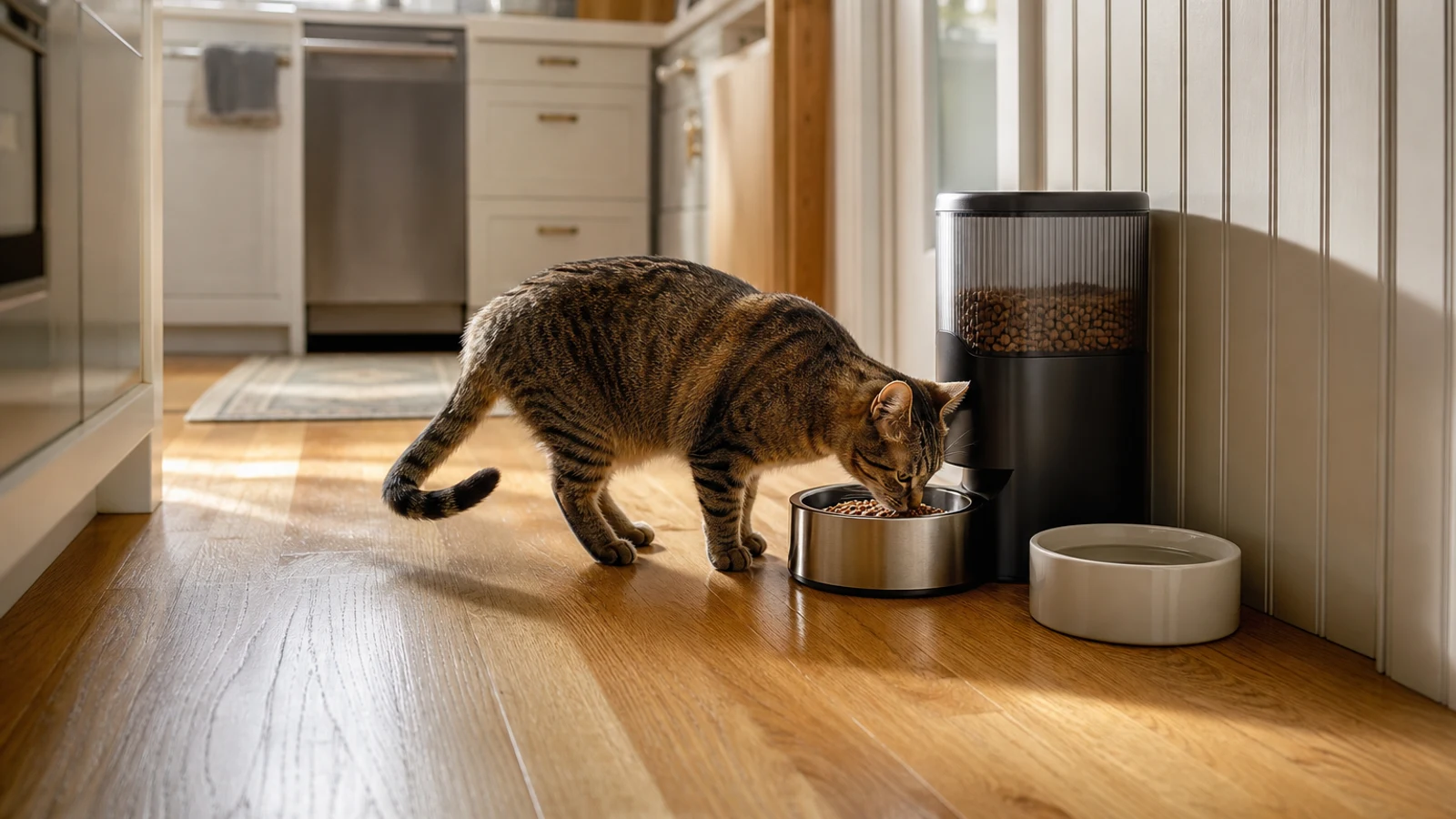
Quick answer
Choose an automatic feeder if you regularly miss mealtimes, need measured dry-food portions, want to divide food into several small meals, or are trying to stop your cat from associating early-morning hunger with you. Choose a regular bowl if someone is reliably home to serve meals, your cat mainly eats wet food, or you need to observe appetite and eating behavior closely. Neither option replaces a complete feeding plan or veterinary guidance for weight, medical, or prescription-diet concerns.
Shop this guide
Current Amazon options
Six current listings related to this buying decision. Use the guide to compare fit and trade-offs, then verify the latest seller, price, size, and availability on Amazon.
As an Amazon Associate I earn from qualifying purchases. Product availability, seller, price, and listing details can change.
Key decision checks
The practical difference: scheduling versus simplicity
An automatic feeder controls when food is released, and some models divide a measured daily ration into several scheduled servings. A regular bowl gives you direct control at every meal, but the timing and portion depend on someone being available. That difference matters most in households with long workdays, changing shifts, early-morning begging, or cats that eat too quickly when a full bowl is left out.
A bowl is not automatically the same as free-feeding. You can weigh or measure the day’s ration into a regular bowl and serve it at set times. The comparison is really between a device that dispenses food without you being present and a simple dish that requires a person to portion, place, refresh, and monitor each meal.
- Automatic feeder: best for repeatable timing, divided dry-food meals, and owner absences during feeding periods.
- Regular bowl: best for flexibility, direct observation, wet food, and homes with a dependable feeding routine.
- Measured bowl feeding: a useful middle ground when you want portion control without another appliance.
Choose an automatic feeder when timing or portions are the problem
An automatic feeder earns its space when your cat needs meals at times you cannot consistently manage. It can release food before your alarm, during a work shift, or in several smaller servings across the day. That may also redirect some food-seeking behavior toward the feeder rather than the person who normally gets up to serve breakfast.
Portion control depends on how the feeder measures food and how carefully you calibrate it. A setting described as a “portion” is not automatically the same as a gram or calorie target, and kibble shape can affect how much reaches the bowl. Weigh the delivered amount during setup, then account for every scheduled serving, treat, topper, and manually added meal in the daily total.
- You are away from home at predictable mealtimes.
- Your cat benefits from several small dry-food servings rather than one large serving.
- You need a repeatable routine for a cat that begs early or eats too fast.
- You can maintain the unit, monitor its output, and keep a backup plan for missed meals.
Choose a regular bowl when flexibility and observation matter more
A regular bowl remains the better fit when a person is already home for meals and the cat’s food is mostly wet, mixed, or medically customized. You can change the texture, amount, timing, or location immediately, and you can see whether the cat approaches and eats. That direct observation is valuable when appetite changes may signal a health problem.
A bowl also has fewer failure points. There is no motor to jam, programming to reset, app to disconnect, battery to replace, or hopper to keep dry. The trade-off is that the routine depends on human consistency. If portions are scooped by eye or the bowl is topped up whenever it looks empty, calorie intake can become difficult to track.
- You serve wet food at each meal or rotate several food textures.
- Someone can reliably feed and check the cat in person.
- Your cat is ill, recovering, losing appetite, or following a veterinarian-directed diet.
- You prefer the lowest-maintenance option and do not need unattended scheduling.
Match the feeder to the food, not the other way around
Most hopper-style automatic feeders are designed for dry kibble and specify an acceptable kibble size. They are not a universal replacement for a bowl. A regular bowl handles wet food without special hardware, while wet-food automation generally requires a tray, cooling system, or another design made for short serving windows and food freshness.
If your cat eats both wet and dry food, a combined routine may work best: use an automatic feeder for measured dry meals and serve wet food manually. Do not leave wet food sitting out for extended periods. Follow the food label and your veterinarian’s advice, especially for cats with urinary, kidney, gastrointestinal, diabetes-related, or other nutrition-sensitive conditions.
- Dry kibble: usually compatible with hopper feeders, but verify size and shape requirements.
- Wet food: usually simpler in a regular bowl unless using a purpose-built chilled or timed tray feeder.
- Mixed feeding: count the total daily ration across both food types rather than treating feeder servings as extras.
- Prescription diets: confirm the feeding method with your veterinarian before relying on automation.
Compare options for your pet
Automatic Feeder vs Regular Bowl for Cats: Which Fits Your Routine?
Compare current Amazon listings using the fit and safety checks in this guide. Confirm size, specifications, seller and availability before ordering.
See on Amazon →As an Amazon Associate I earn from qualifying purchases. Links open Amazon search results; individual listings have not been independently verified.
Reliability, cleaning, and power deserve equal weight
A feeder only helps if the cat can consistently reach the food. Check whether the schedule remains active without Wi-Fi, whether batteries provide backup during an outage, whether the lid resists a determined cat, and whether the food path is accessible for cleaning. Test the unit while you are home before depending on it for a workday, overnight absence, or trip.
Regular bowls are easier to inspect but still need frequent washing, particularly after wet food. Automatic feeders add a hopper, chute, tray, seals, and sometimes an app or camera. Removable food-contact parts are easier to clean than fixed channels. Keep the feeder on a stable surface, protect cords from chewing, and make sure a second person or contingency plan can provide food if the device fails.
- Confirm the food tray and hopper can be cleaned without exposing electronics to water.
- Check the manufacturer’s food-size, power, battery, and dishwasher instructions.
- Measure several test portions rather than assuming every release is identical.
- Keep an ordinary bowl and enough food available for a missed or delayed meal.
Multi-cat homes need access control, not just a timer
One timed feeder does not necessarily mean each cat receives the correct amount. A faster or more assertive cat may eat another cat’s serving, especially when both bowls open at once or the feeder dispenses into a shared dish. Separate feeding rooms, individually supervised meals, or access-controlled feeders may be more appropriate when cats have different diets or body-condition goals.
A regular bowl can be easier to manage in a multi-cat home if meals are served in separate locations and collected after eating. It can also be easier to notice which cat is not eating. If one cat needs a prescription diet, is losing weight, vomits repeatedly, or suddenly changes eating habits, feeding logistics should be discussed with a veterinarian rather than solved only with a new device.
- Different diets or calorie targets usually require separate feeding access.
- A shared automatic feeder is a poor fit when one cat guards food or steals meals.
- Observe each cat’s intake when appetite, weight, or medication makes individual monitoring important.
A simple decision guide for your routine
Pick the option that solves your actual household problem. If the problem is missed timing, early-morning begging, or uncontrolled dry-food portions, an automatic feeder may provide useful structure. If the problem is wet-food flexibility, appetite monitoring, or keeping equipment to a minimum, a regular bowl is likely the better tool.
You can also combine both. Many households use a regular bowl for wet food and human interaction, then schedule part of a measured dry-food ration automatically. Start with the cat’s complete daily allowance, confirm the cat accepts the equipment, and adjust only with attention to body condition, appetite, and professional nutrition advice when needed.
- Choose an automatic feeder for unattended scheduling and repeatable dry-food portions.
- Choose a regular bowl for wet food, flexibility, and direct appetite checks.
- Use both when your routine includes scheduled dry food and supervised wet meals.
- Ask a veterinarian before changing food, restricting calories, or managing a medical condition through feeding equipment.
Common questions
FAQ
Can an automatic feeder replace a regular bowl?
It can replace the serving function for some dry-food routines, but it does not replace every bowl’s flexibility. Many automatic feeders are dry-food only, and cats still need a clean food-contact surface. A regular bowl may remain useful for wet food, backup meals, or supervised feeding.
Are automatic feeders good for overweight cats?
They can help measure and divide a daily ration, but the device does not decide how many calories your cat needs. Weight-loss plans should be guided by a veterinarian, because rapid or inappropriate restriction can be dangerous. Weighing food and tracking all treats and extras matter more than simply buying a feeder.
Can I put wet cat food in an automatic feeder?
Only if the model is specifically designed for wet food. Most hopper-style dispensers are intended for dry kibble, while some tray or chilled feeders are built for wet meals. Follow the manufacturer’s food instructions and do not assume that a dry-food dispenser can safely keep wet food fresh.
Will an automatic feeder stop my cat from begging?
It may reduce begging directed at you by making meal timing more predictable, but it is not guaranteed to change the behavior. Make sure the total daily amount is appropriate, avoid adding untracked snacks, and consider play, attention, and enrichment when the cat is seeking interaction rather than food.
Is a regular bowl better for cats that eat wet food?
Usually, yes, because a regular bowl is simple and lets you serve and remove wet food promptly. A purpose-built refrigerated or timed wet-food feeder can also work when you are away, but it adds cleaning, power, and food-freshness requirements.
Sources & further reading
Where the factual guidance comes from
Ready to choose?
Automatic Feeder vs Regular Bowl for Cats: Which Fits Your Routine?
Compare current Amazon listings using the fit and safety checks in this guide. Confirm size, specifications, seller and availability before ordering.
See on Amazon →As an Amazon Associate I earn from qualifying purchases. Links open Amazon search results; individual listings have not been independently verified.
Keep researching