Cats · Litter & Cleanup
Covered vs Open Litter Box: Which Setup Fits Your Cat?
Research does not support a simple “cats always prefer open boxes” rule. Cleanliness, size, access, and the individual cat can matter more.
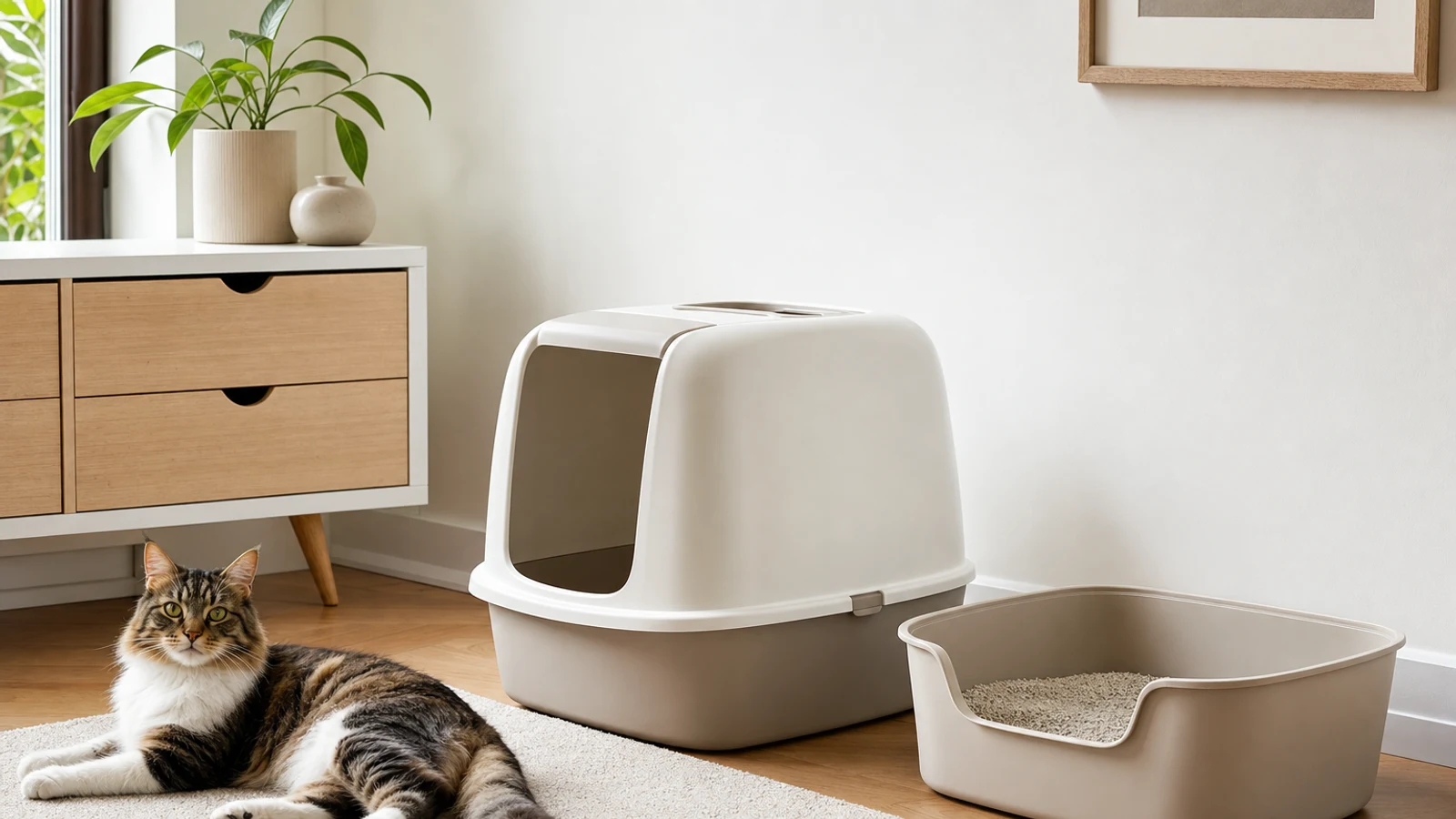
Quick answer
There is no universal winner. In one controlled study, most cats showed no significant preference between covered and uncovered boxes when the boxes were large and cleaned daily; a minority preferred one style. Use that as permission to test, not as proof that your cat will be indifferent. Size, cleanliness, entry, escape routes, and your cat’s own behavior still matter.
Shop this guide
Current Amazon options
Six current listings related to this buying decision. Use the guide to compare fit and trade-offs, then verify the latest seller, price, size, and availability on Amazon.
As an Amazon Associate I earn from qualifying purchases. Product availability, seller, price, and listing details can change.
The internet has made this more absolute than the evidence
You will often read that cats “hate” covered litter boxes. That is too broad. A controlled study of 27 cats found no overall preference between covered and uncovered boxes when other factors were kept similar and the boxes were cleaned daily. Nineteen cats showed no significant preference; four preferred covered boxes and four preferred uncovered boxes.
That result is useful because it changes the buying question. Instead of assuming the cover itself decides everything, look at the whole toileting setup: usable floor area, entry height, odor buildup, cleaning frequency, location, and whether the cat feels able to enter and leave comfortably.
What a cover changes for the household
A covered box can hide waste from view and may help contain scattered litter. It can also make the box feel more visually tidy in a small room. Those are human benefits, and they are legitimate—but they should not come at the expense of access or cleaning.
A cover can also make it easier to forget what is happening inside. The same study noted the concern that covered boxes may be cleaned less often because the waste is out of sight. If a cover makes you scoop less frequently, the design has created a maintenance problem even if your cat would otherwise accept it.
What an open box changes for the cat
An open box gives the cat a clearer view of the room and can make entry and exit simpler. It also makes the box easier for you to inspect quickly. The cost is more visible litter, more opportunity for scatter, and less containment if the cat digs enthusiastically.
For a larger cat, box size may matter more than whether a lid exists. The covered-versus-uncovered study deliberately used unusually large boxes so that size would not confound the result. That is a reminder not to compare a roomy open tray with a cramped hooded box and conclude that the hood was the only difference.
Compare options for your pet
Covered vs Open Litter Box: Which Setup Fits Your Cat?
Compare current Amazon listings using the fit and safety checks in this guide. Confirm size, specifications, seller and availability before ordering.
See on Amazon →As an Amazon Associate I earn from qualifying purchases. Links open Amazon search results; individual listings have not been independently verified.
If your cat is undecided, run a small home experiment
The most useful takeaway from the research is that individual preference exists. If you are changing setups, offer two clean boxes with the same litter in similar locations for a period of time and watch what your cat actually uses. Keep the experiment boring: same litter, similar size, similar cleanliness. Change one variable at a time.
Do not turn house-soiling into a product-shopping problem automatically. Feline veterinary guidance treats toileting problems as something that can involve medical issues, stress, resource placement, cleanliness, and social dynamics. A sudden change in litter-box behavior deserves veterinary attention.
A better buying checklist than “covered or open?”
Before you buy, measure the space where the box will live and the cat who will use it. Check the usable interior dimensions rather than the external footprint. Look for an entry height your cat can manage, a surface that is easy to clean, and a design that can be scooped without disassembling half the product.
If you choose a covered model, favor one with enough room for the cat to turn comfortably and a lid that comes off easily for cleaning. If you choose an open tray, consider higher sides where appropriate without making the entrance difficult. The best box is not the one that looks neatest on a product page; it is the one your cat uses reliably and you keep clean.
Common questions
FAQ
Do cats prefer covered or open litter boxes?
There is no universal preference. A controlled study found no overall difference, while a minority of cats showed individual preferences for one style or the other.
Do covered litter boxes trap odor?
They can contain odor within the enclosure, which makes regular scooping especially important. A covered box should not be treated as a way to clean less often.
What if my cat suddenly stops using the litter box?
Do not assume the box design is the only cause. Sudden house-soiling can have medical or behavioral causes, so contact your veterinarian while also reviewing cleanliness, access, location, and household stressors.
Sources & further reading
Where the factual guidance comes from
Controlled study comparing covered and uncovered litter-box use.
Frames litter-box optimization as one part of evaluating feline house-soiling.
Ready to choose?
Covered vs Open Litter Box: Which Setup Fits Your Cat?
Compare current Amazon listings using the fit and safety checks in this guide. Confirm size, specifications, seller and availability before ordering.
See on Amazon →As an Amazon Associate I earn from qualifying purchases. Links open Amazon search results; individual listings have not been independently verified.
Keep researching