Dogs · Walking & Travel
Dog Harness vs Collar for Everyday Walks: What Actually Changes?
A collar is simple and useful for identification; a well-fitted harness can reduce pressure on the neck and offer different control on walks.
Quick answer
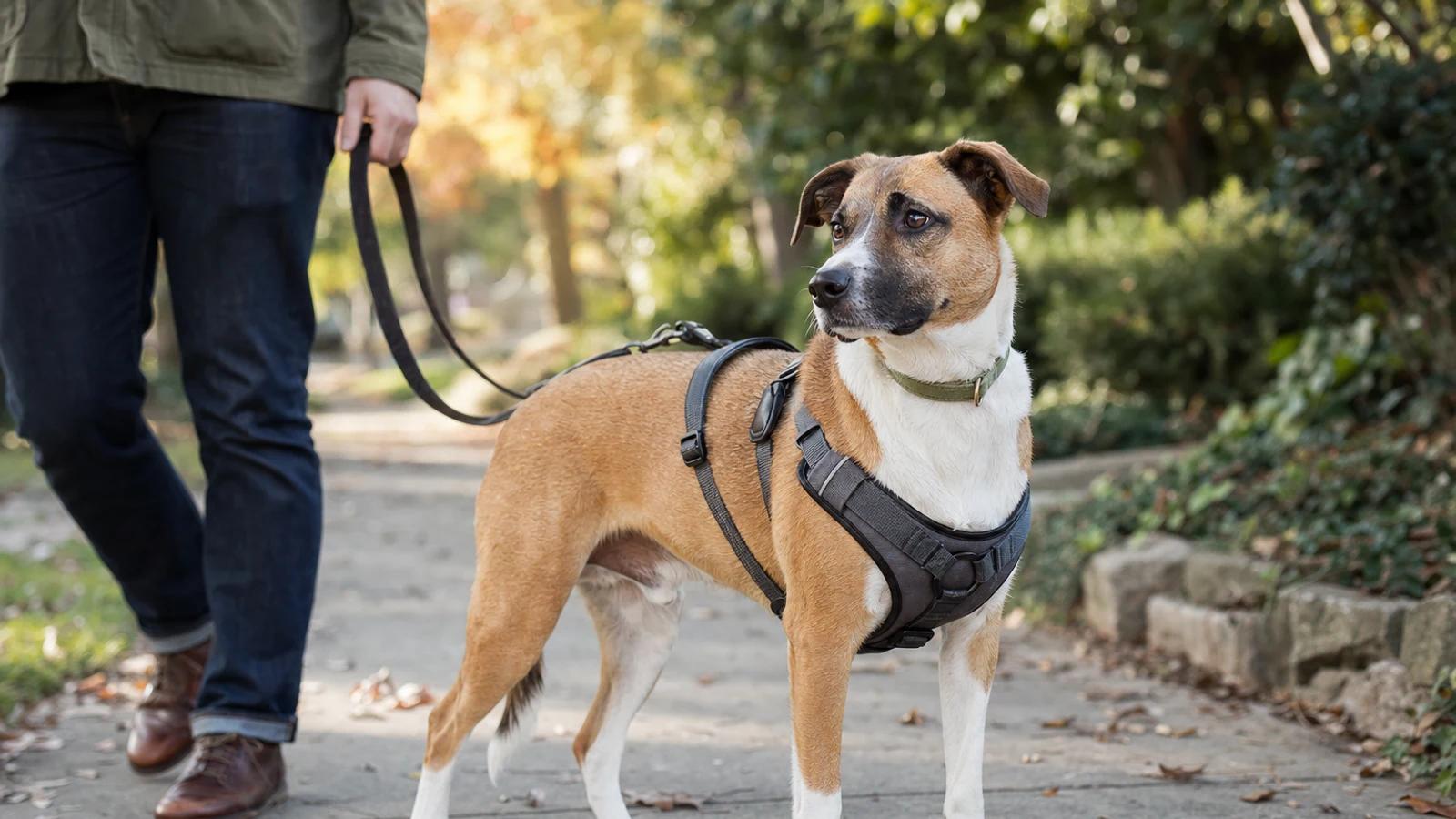
A flat collar is convenient for identification and can work well for dogs that walk comfortably without pulling. A properly fitted body harness can be a better walking attachment when neck pressure is a concern, but the harness must allow normal shoulder movement and be secure enough that the dog cannot back out. Many households use both: collar for ID, harness for the leash.
Shop this guide
Current Amazon options
Six current listings related to this buying decision. Use the guide to compare fit and trade-offs, then verify the latest seller, price, size, and availability on Amazon.
As an Amazon Associate I earn from qualifying purchases. Product availability, seller, price, and listing details can change.
Key decision checks
This is really two decisions, not one
“Harness or collar?” sounds like a single product choice, but owners are often solving two different jobs. One piece of gear holds identification. Another connects the dog to the leash. Those jobs do not have to be done by the same item.
That distinction makes the decision easier. A lightweight flat collar can stay on for identification, while a harness comes out for walks. Or a calm dog that rarely pulls may use a properly fitted collar for both. The right setup depends on how the dog moves, how much pressure reaches the neck, and how securely the gear fits.
What changes when the leash attaches to a collar
A collar is quick to put on, familiar to most dogs, and convenient for tags. The concern appears when the leash becomes a source of repeated tension. Veterinary behavior guidance notes that a dog pulling hard against a collar can put pressure on delicate neck structures.
That does not mean every ordinary flat collar is unsafe. It means a collar works best when fit is secure and the walk itself is not a prolonged tug-of-war. If the dog lunges, coughs under pressure, has neck or airway concerns, or is still learning loose-leash walking, the attachment point deserves more thought.
What changes when the leash attaches to a harness
A body harness moves leash pressure away from the neck and across the torso. That can be useful for dogs with tracheal or neck problems and for owners who want a different way to manage pulling while training continues.
But “harness” is not a single design. Some front-clip styles can influence movement, and a poorly shaped harness may sit directly over the shoulders. A good fit should let the front legs move normally, avoid rubbing behind the elbows, and remain secure when the dog turns or backs up.
- Check the harness from the front, side, and top while the dog walks.
- Watch for rubbing, shortened stride, twisting straps, or gaping around the chest.
- Test escape resistance gently before relying on the harness near traffic or other hazards.
Compare options for your pet
Dog Harness vs Collar for Everyday Walks: What Actually Changes?
Compare current Amazon listings using the fit and safety checks in this guide. Confirm size, specifications, seller and availability before ordering.
See on Amazon →As an Amazon Associate I earn from qualifying purchases. Links open Amazon search results; individual listings have not been independently verified.
Pulling is a training problem as well as a gear problem
A front-clip harness may give you useful leverage, but no piece of equipment teaches loose-leash walking by itself. If the dog spends every outing leaning into pressure, the long-term solution is still training that rewards the position and pace you want.
Veterinary behavior sources also advise against equipment designed to create pain or discomfort. For most households, the better question is not “Which tool can stop pulling fastest?” but “Which secure, comfortable setup lets us train without adding unnecessary pressure?”
A practical way to choose
Choose around the dog in front of you. If your dog walks loosely, wears a secure flat collar, and has no neck or airway concerns, a collar may be perfectly workable. If your dog pulls hard, has a sensitive neck, is small and delicate, or benefits from body-based control, a well-fitted harness is often easier to justify.
For dogs that can slip out of ordinary gear, fit and escape resistance matter more than fashion. A martingale collar or a carefully fitted harness may be considered depending on the dog, but the safest setup is the one you have tested calmly before you need it in a stressful moment.
Common questions
FAQ
Is a harness always safer than a collar?
No. A harness can reduce neck pressure, but a poor fit can restrict movement, rub, or allow escape. Safety depends on design, fit, the dog, and how the leash is used.
Can my dog wear a collar and harness at the same time?
Yes. Many owners keep identification on a collar and attach the leash to a harness. The pieces should not interfere with each other or create rubbing.
Does a no-pull harness stop pulling permanently?
It can change leverage and help with management, but it does not replace loose-leash training. The goal is still to teach the dog how to walk comfortably with you.
Sources & further reading
Where the factual guidance comes from
Detailed veterinary behavior guidance on fit, pressure, movement, and common collar and harness designs.
Practical comparison of common collar and harness use cases.
Ready to choose?
Dog Harness vs Collar for Everyday Walks: What Actually Changes?
Compare current Amazon listings using the fit and safety checks in this guide. Confirm size, specifications, seller and availability before ordering.
See on Amazon →As an Amazon Associate I earn from qualifying purchases. Links open Amazon search results; individual listings have not been independently verified.
Keep researching