Dogs · Walking & Travel
Front-Clip vs Back-Clip Dog Harness: Which Fits Your Walks Better?
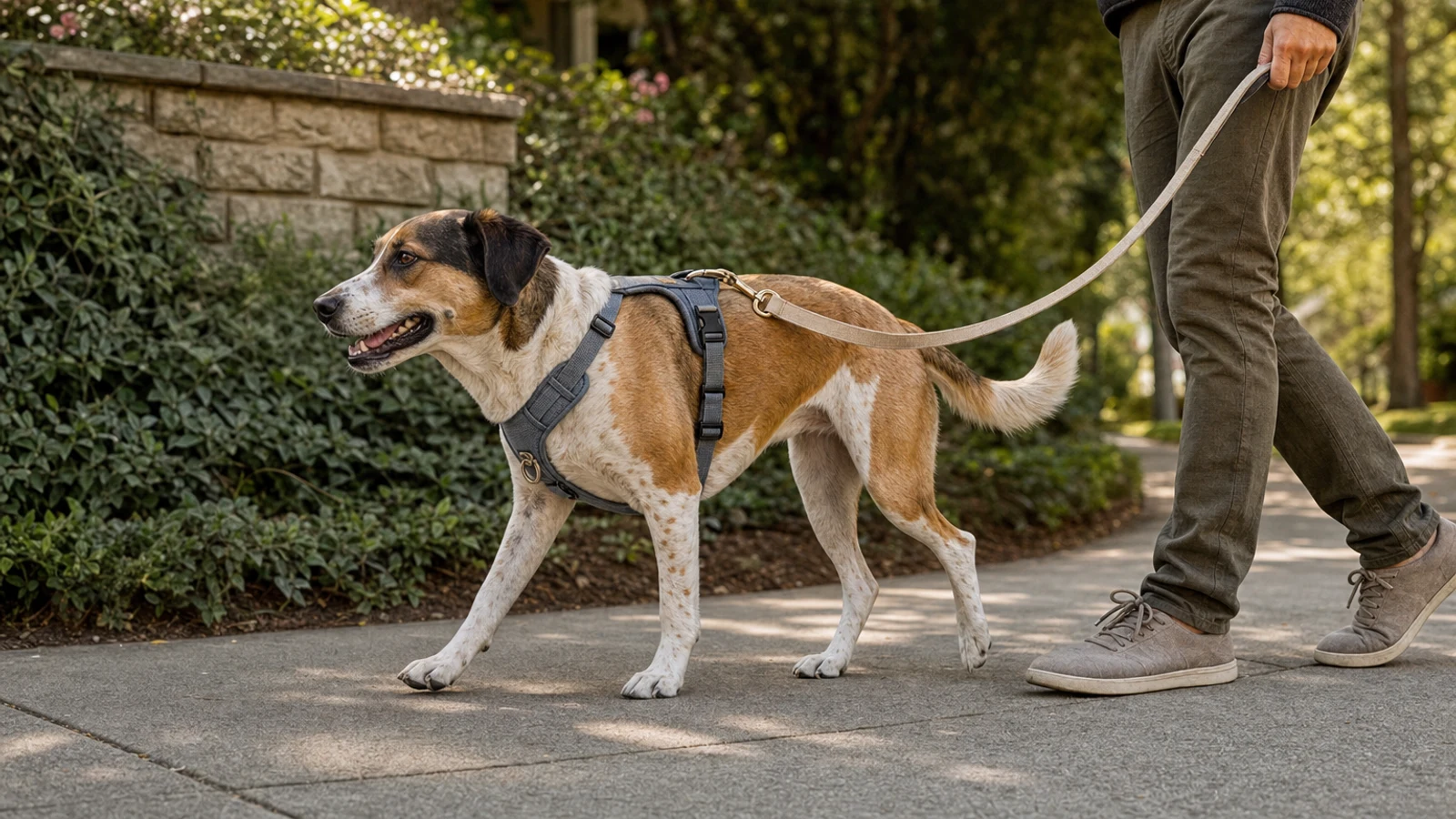
Front-clip harnesses can help redirect dogs that pull, while back-clip harnesses are often simpler for calm walkers and activities where a dog needs to move freely. The best choice depends on your dog’s behavior, body shape, walking goals, and harness fit—not the clip position alone.
Quick answer
Choose a front-clip harness when your main problem is pulling and you need more directional control during ordinary walks. Choose a back-clip harness for a dog that already walks politely, for simple everyday handling, or for activities where a dog is expected to move forward. A dual-clip harness can be practical if both attachment points are well designed and you will use each for an appropriate purpose. In every case, fit, strap placement, escape resistance, and the dog’s movement matter as much as the ring location.
Shop this guide
Current Amazon options
Six current listings related to this buying decision. Use the guide to compare fit and trade-offs, then verify the latest seller, price, size, and availability on Amazon.
As an Amazon Associate I earn from qualifying purchases. Product availability, seller, price, and listing details can change.
Key decision checks
Start With The Walking Job
The right harness begins with the animal and the household problem. Are you trying to keep a strong dog from pulling you toward traffic? Do you need a comfortable setup for relaxed neighborhood walks? Are you managing a small or short-nosed dog whose neck and airway deserve extra protection? Or do you want one harness that can move from casual walks to controlled training?
Front-clip and back-clip describe the leash attachment point. They do not describe the overall quality, safety, or fit of the harness. A well-designed harness in the wrong size can rub, twist, restrict movement, or allow a dog to reverse out. A poorly chosen attachment can also make walks harder even when the harness itself appears sturdy.
For most households, the useful question is not “Which clip is universally best?” It is “Which attachment gives this dog the right amount of control without creating new problems?”
- Front clip: usually intended to redirect forward momentum and improve handler control when a dog pulls.
- Back clip: usually intended for straightforward everyday walking, calm dogs, or activities where forward movement is expected.
- Dual clip: useful when you genuinely need both modes, provided the harness is stable and both points are designed for leash use.
How A Front-Clip Harness Changes The Walk
A front-clip harness places the leash connection on the dog’s chest, ahead of the body’s main forward-driving line. When the dog surges, leash tension can turn the chest or shoulders back toward the handler instead of allowing the dog to lean straight into the leash. That mechanical redirection may make it easier to interrupt pulling and reward a loose leash.
This can be valuable when the dog is physically stronger than the person holding the leash, when the household needs more control in busy areas, or when a dog is still learning basic leash manners. It can also reduce the tendency to brace against a leash compared with some back-clip setups. However, it is management equipment, not a complete training program. A dog may still pull, lunge, or react, particularly when distracted by other dogs, wildlife, vehicles, or unfamiliar people.
Front clips have trade-offs. The leash may pass near the front legs, the harness may rotate if it is loose, and the dog can be turned sideways when it pulls. Some dogs dislike that sensation or develop an awkward gait. A front connection should not be used as an excuse to drag, jerk, or repeatedly force the dog around. Use steady handling, reward-based training, and enough distance from triggers to keep the dog below its reaction threshold.
For a dog with persistent lunging, fear, pain, coughing, limping, or sudden resistance to walking, a harness change is not the whole answer. A veterinarian should assess possible medical causes, and a qualified reward-based trainer or veterinary behavior professional may be appropriate for serious reactivity.
- Useful for: strong pullers, dogs learning loose-leash walking, and handlers who need more directional control.
- Watch for: chest straps that sit across moving shoulders, leash tangling, twisting, rubbing, or reluctance to walk.
- Do not assume: “no-pull” means the dog cannot pull or that training is no longer needed.
How A Back-Clip Harness Changes The Walk
A back-clip harness places the leash attachment between or behind the shoulders. For a dog that already walks with a reasonably loose leash, this is often the simplest and most familiar arrangement. The leash stays away from the front legs, handling is usually intuitive, and the dog can move forward without being turned sideways by a chest connection.
Back clips can also make sense for activities in which forward traction is part of the job, such as appropriately designed running or pulling equipment. That does not mean every everyday harness is suitable for jogging, hiking, bikejoring, or load work. The harness must be designed for the activity, and the dog must be physically prepared for it.
The main drawback appears when a dog pulls hard. A back connection can give the dog a stable point against which to lean, allowing it to continue driving forward. That may make a powerful dog more difficult for a smaller or less stable handler to control. It can also let pulling become self-reinforcing: the dog pulls, reaches the interesting place, and learns that pulling works.
A back clip is therefore not automatically gentler or more comfortable. Harness design, body shape, strap location, tension, and duration of use all matter. Research on dog-worn equipment has found that different harnesses can affect gait, and the effects vary among dogs. A back-clip harness that sits clear of the shoulders may suit one dog better than a front-clip model that presses or shifts; another dog may be easier and safer to manage with a well-fitted front connection.
- Useful for: calm walkers, routine outings, and suitable forward-motion activities.
- Watch for: dogs leaning into the leash, rotating the harness, or becoming difficult to stop near hazards.
- Do not assume: a back clip is best simply because it looks less complicated.
Fit Matters More Than The Label
Measure the dog according to the manufacturer’s instructions, usually around the widest part of the rib cage. Do not select a size from body weight alone when a brand provides girth measurements. Dogs with deep chests, narrow waists, short legs, heavy coats, broad shoulders, or unusual proportions may need a different shape rather than merely a larger or smaller size.
After adjustment, the harness should be secure without compressing the throat, armpits, or rib cage. Many manufacturers use a two-finger guideline, but the exact fit still depends on the harness design and the dog’s anatomy. The back panel should remain centered, the straps should not cut into the front legs, and the dog should not be able to back out when the leash is gently tensioned.
Test the fit indoors before relying on it outdoors. Ask the dog to walk, turn, sit, sniff, and look in different directions. Watch for rubbing, strap migration, shortened steps, repeated scratching, freezing, or attempts to remove the harness. Check again after a few minutes because some harnesses shift only once the dog begins moving.
A front clip deserves particular attention to placement. If the chest attachment rides up toward the throat, turns the harness sharply, or sits directly over a moving shoulder area, try a different size or design. A back clip should also remain centered and stable rather than sliding from side to side. If the dog can escape, stop using the setup in open or traffic-heavy areas until the problem is corrected.
- Measure the rib cage at the location specified by the brand.
- Check movement, not just appearance, while the dog walks and turns.
- Inspect skin and coat regularly for redness, bare spots, dampness, or broken hair.
- Recheck fit after grooming, weight change, coat growth, or replacement of worn straps.
Harness Shape And Gait Trade-Offs
Clip location is only one part of the design. Chest straps, Y-shaped fronts, broad panels, padded sections, and narrow webbing can all contact the dog differently. A design marketed as “non-restrictive” is not automatically unrestricted for every dog. Published studies have found that harnesses can alter shoulder extension and other gait measures, with results differing by design and individual dog.
That evidence should encourage observation rather than panic. A brief, ordinary walk in a properly fitted harness is not the same as strenuous running or prolonged pulling. It does mean buyers should avoid treating marketing language as proof that a harness cannot affect movement. If your dog participates in sports, runs regularly, has orthopedic disease, or shows a changed stride, consult a veterinarian or canine rehabilitation professional about the specific harness and activity.
Look for a front shape that leaves appropriate room around the shoulders, adjustment points that let you center the harness, and materials that stay flat rather than forming hard edges. More padding is not always better if it creates heat, bulk, or pressure points. A lightweight design may be preferable for a small dog or warm climate, while a more substantial harness may be easier to handle on a large dog—provided it does not restrict or overheat the animal.
- Prioritize shoulder clearance and stable positioning over a fashionable shape.
- For running or sport, choose equipment designed for that activity rather than adapting a casual walking harness.
- Stop and reassess if the dog develops limping, a changed stride, pain, coughing, or reluctance to move.
Compare options for your pet
Front-Clip vs Back-Clip Dog Harness: Which Fits Your Walks Better?
Compare current Amazon listings using the fit and safety checks in this guide. Confirm size, specifications, seller and availability before ordering.
See on Amazon →As an Amazon Associate I earn from qualifying purchases. Links open Amazon search results; individual listings have not been independently verified.
Cleaning, Inspection, And Everyday Maintenance
Harnesses collect dirt, skin oils, moisture, grass, and fine grit, especially around the chest and armpits. Follow the care instructions for the specific product. Many everyday fabric harnesses can be hand-washed with mild detergent and air-dried, but coatings, reflective details, padding, and hardware may have special requirements.
Let the harness dry fully before putting it back on the dog. Damp material can increase odor and skin irritation, while trapped grit can act like sandpaper. If the dog swims or walks in salt, mud, or treated winter conditions, rinse the harness with clean water and inspect the straps afterward.
Before each walk, check the leash ring, stitching, buckles, adjustment sliders, and any front attachment webbing. Look for fraying, stretched seams, cracked plastic, bent metal, or a buckle that no longer locks securely. Replace a harness when wear could compromise control. Do not rely on a top handle as a lifting device unless the manufacturer specifically designs and rates it for that purpose.
A harness should not stay on a dog unattended unless the manufacturer and situation clearly support that use. Remove it if it snags, causes scratching, or remains damp against the skin. Keep identification and a properly fitted backup collar available where appropriate, but avoid attaching the leash to a collar and harness combination unless the setup is intentional and you understand how the forces will be distributed.
- Wash according to the product instructions and dry completely.
- Inspect high-load areas before walks, especially if the dog pulls or swims.
- Retire gear with damaged stitching, buckles, rings, or webbing.
Which Harness Fits Common Walking Situations?
For a dog that already walks politely, start with a stable back-clip harness if it gives good shoulder clearance and is easy for your household to use. There is little reason to choose a front clip solely because it is labeled “no-pull” when pulling is not your problem.
For a powerful dog that pulls on ordinary walks, a non-tightening front-clip or dual-clip harness may provide useful management while you teach loose-leash skills. Practice in low-distraction settings first. If using a dual-ended leash, follow the harness manufacturer’s instructions and check that both attachment points are intended for that use; do not improvise with untested combinations.
For small, short-nosed, or neck-sensitive dogs, a harness may be preferable to placing leash tension on the neck, but the correct style is individual. A veterinarian can help if the dog has airway disease, eye disease, orthopedic problems, or a history of pain. A front clip is not automatically safer if it creates awkward turning, chest pressure, or shoulder restriction.
For hiking or running, prioritize a design that stays put during longer strides and does not chafe under repeated motion. For car travel, use a restraint specifically intended and documented for vehicle use; a leash attachment ring or casual walking harness should not automatically be treated as a crash-protection system.
- Calm walker: usually begin with a comfortable, stable back clip.
- Puller: consider a non-tightening front clip or dual clip alongside training.
- Sport or running: use activity-specific equipment and build fitness gradually.
- Medical concerns: ask a veterinarian or qualified rehabilitation professional before choosing based on clip position alone.
When Not To Buy Yet
Do not buy a harness simply because a product page promises to eliminate pulling. If the dog is coughing, limping, painful, fearful, escaping equipment, or suddenly unwilling to walk, investigate the underlying issue first. Gear can manage a walk; it cannot diagnose pain or replace behavior support.
Delay purchase if you cannot measure the dog accurately, cannot return the item if the fit is wrong, or cannot identify where the leash is meant to attach. Be cautious with any harness that lacks clear adjustment instructions, has attachment hardware that feels weak or poorly secured, or allows the dog’s front legs and throat to contact uncomfortable edges.
A harness is also the wrong solution for a household that needs a tested vehicle restraint but is shopping only for walking equipment. Buy a product intended for the actual job, and verify the manufacturer’s instructions rather than assuming one ring, handle, or strap serves every purpose.
- Do not use a walking harness as a substitute for a vehicle restraint.
- Do not continue using gear that causes rubbing, escape, altered movement, or distress.
- Do not let a harness replace veterinary evaluation or qualified behavior help when problems persist.
Bottom Line
Front-clip and back-clip harnesses solve different walking problems. A front clip is usually the more useful starting point when pulling or handler control is the main concern. A back clip is often the simpler choice for a dog that already walks well or for an activity that requires uncomplicated forward movement.
The most dependable purchase is the one that fits your dog’s body, stays centered, leaves room for normal movement, and matches the actual job. If you are uncertain, a dual-clip model can provide flexibility, but only when its design and fit are sound. Whichever attachment you choose, combine it with calm handling, reward-based leash training, regular inspection, and professional advice when health or behavior concerns go beyond ordinary equipment selection.
Common questions
FAQ
Does a front-clip harness stop a dog from pulling?
Usually not by itself. A front connection can redirect a pulling dog and give the handler more control, but the dog may still pull or lunge. Pair the harness with reward-based loose-leash training and appropriate distance from distractions.
Is a back-clip harness bad for dogs that pull?
Not automatically, but it can let a dog lean into the leash and continue moving forward with more leverage. If pulling makes walks difficult or unsafe, consider a properly fitted non-tightening front-clip or dual-clip harness while training.
Can front-clip harnesses hurt a dog’s shoulders?
Any harness can affect movement if its design or fit places pressure near moving structures. Research has found gait changes with multiple harness designs, so observe the individual dog and stop using a harness that causes rubbing, altered stride, pain, or reluctance to walk.
Should I use both the front and back clips at the same time?
Only if the harness and leash system are designed for two-point use. A dual-ended leash can offer added directional control, but it requires careful adjustment and handling. Follow the manufacturer’s instructions rather than attaching two ordinary leashes without a plan.
How tight should a dog harness be?
It should be secure without compressing the throat, chest, or armpits. Many manufacturers recommend room for two fingers, but also check that the harness stays centered, does not rub, and cannot be backed out of. Always follow the specific product’s fitting directions.
Is a harness better than a collar for every dog?
No. The best restraint depends on the dog’s behavior, anatomy, health, training, and the activity. A properly fitted harness may be useful for dogs that pull or dogs whose neck should not receive leash tension, while a calm dog may walk comfortably on a flat collar. A veterinarian can advise on health-related concerns.
Sources & further reading
Where the factual guidance comes from
Ready to choose?
Front-Clip vs Back-Clip Dog Harness: Which Fits Your Walks Better?
Compare current Amazon listings using the fit and safety checks in this guide. Confirm size, specifications, seller and availability before ordering.
See on Amazon →As an Amazon Associate I earn from qualifying purchases. Links open Amazon search results; individual listings have not been independently verified.
Keep researching