Other Pets · Cleanup
Rabbit Litter Boxes: What to Check Before You Buy?
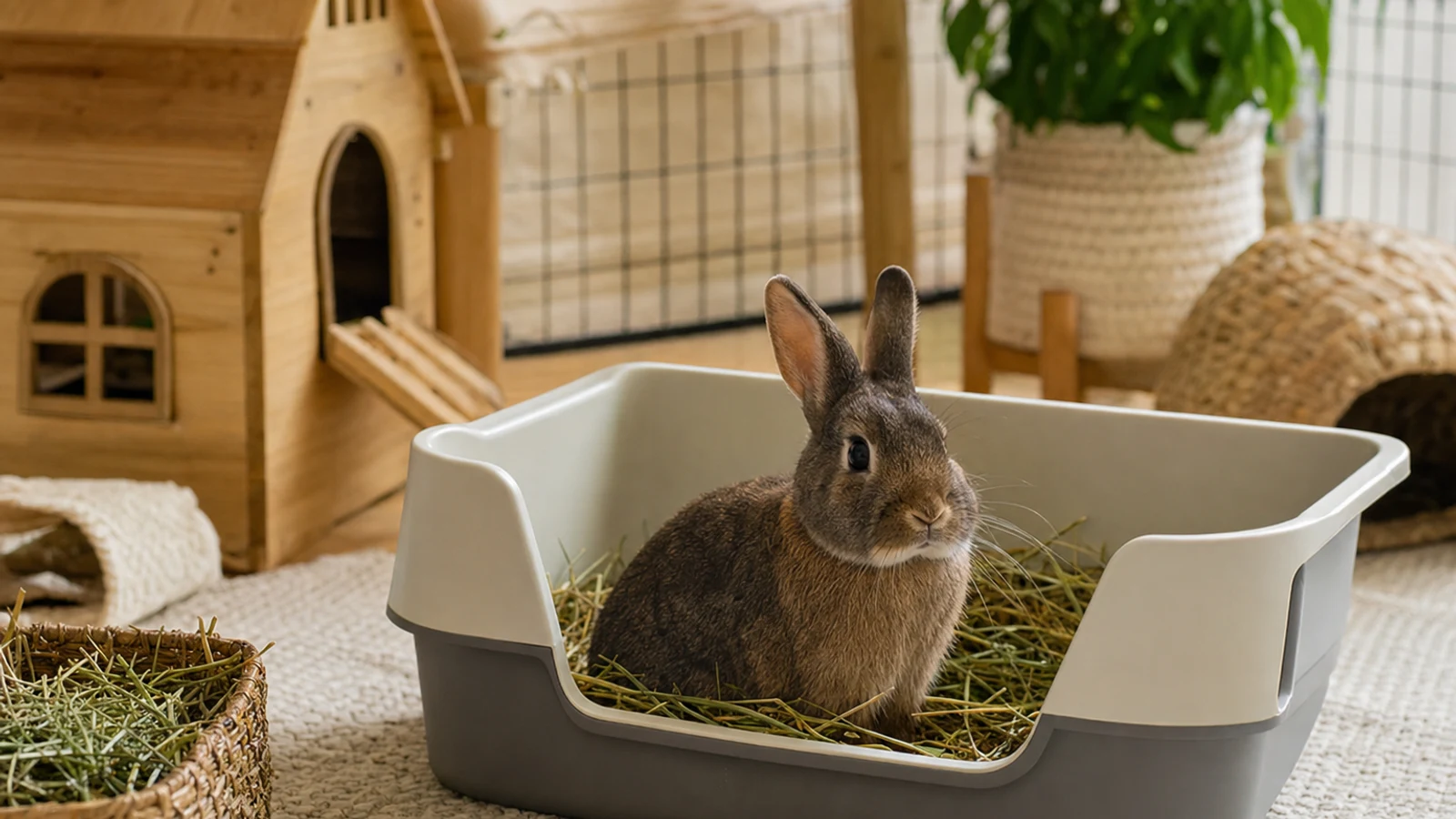
The best rabbit litter box is usually a roomy, open, stable tray that your rabbit can enter easily, sit in comfortably, and use without being exposed to unsafe litter. Check the box size, entry height, material, placement, and cleaning routine before buying.
Quick answer
Choose an open, sturdy litter box with enough floor space for your rabbit to sit, turn around, and use the tray without hanging over the edge. A low entry helps older, larger, or less-mobile rabbits, while higher sides reduce urine spills. Use a rabbit-safe, non-clumping litter that is safe if eaten, place the box where your rabbit already toilets, and consider one box per rabbit plus one extra for larger homes or bonded pairs.
Shop this guide
Current Amazon options
Six current listings related to this buying decision. Use the guide to compare fit and trade-offs, then verify the latest seller, price, size, and availability on Amazon.
As an Amazon Associate I earn from qualifying purchases. Product availability, seller, price, and listing details can change.
Key decision checks
Start with the rabbit, not the product label
A rabbit litter box has one main job: provide an easy-to-reach, comfortable place for urine and droppings while keeping the surrounding living area cleaner and drier. Rabbits often choose a particular corner naturally, so the most successful box is usually the one that fits the rabbit’s habits and can be placed in that preferred location.
Treat litter-box selection as a fit and access decision rather than a search for a specialized design. A large cat litter tray, shallow storage pan, or rabbit-specific box may work if it is sturdy, open, easy to clean, and large enough for the individual rabbit. The label matters less than the usable interior space and the safety of the litter used inside it.
- For a single rabbit, start by measuring the rabbit’s body and the available corner rather than choosing the smallest tray that fits.
- For bonded rabbits, choose a box that allows both animals to use it without crowding, or provide multiple boxes.
- If the rabbit is elderly, arthritic, injured, or less mobile, prioritize a low entry and ask a rabbit-experienced veterinarian about mobility changes.
Choose a roomy, open box with practical sides
The rabbit should be able to enter, sit, turn around, and eliminate without keeping its hindquarters over the rim. Rabbit-welfare guidance commonly recommends sizing up, with one House Rabbit Society guide describing a box at least twice the rabbit’s size. This is a useful starting point, not a substitute for observing whether the rabbit can use the entire tray comfortably.
An open design is generally easier to access, inspect, and clean than a covered box. Higher rear and side walls can help contain urine and scattered hay, but an entrance that is too tall may discourage use or create a barrier for a senior rabbit. Look for a box with a broad, stable base rather than a narrow tray that tips when the rabbit jumps in or out.
- Room to sit fully inside, turn around, and keep the rear end away from the edge.
- A low enough front entry for the rabbit’s current mobility and body shape.
- Higher back or side walls if urine frequently reaches the surrounding floor.
- A smooth interior without hard-to-reach seams that trap wet litter or debris.
- A base wide enough to resist sliding, tipping, or rocking on the household floor.
Check litter safety before buying the tray
Rabbits may sit in their litter box, groom their feet afterward, and sometimes eat the material. That makes litter choice part of the box decision. Veterinary and welfare guidance generally favors rabbit-safe, non-clumping materials such as paper-based products, hay, straw, or suitable pellets that do not expand dangerously or contain added fragrances and chemicals.
Avoid treating ordinary cat litter as automatically suitable. Clumping litter can create a serious problem if swallowed, while clay, silica crystals, scented products, and some wood or softwood shavings may be unsuitable for rabbits. Product labels can change, so check the complete ingredient and material information rather than relying only on phrases such as “natural” or “odor control.”
- Prefer non-clumping, non-expanding litter intended for rabbits or clearly identified as safe if ingested.
- Avoid clumping, clay, silica-gel, scented, deodorizing, and chemically treated products unless a rabbit-qualified veterinarian specifically advises otherwise.
- Do not use pine or cedar shavings as a default choice; guidance differs among products, and softwood materials can create safety concerns.
- If the rabbit chews or consumes large amounts of litter, remove access to the material and contact a veterinarian for advice.
Plan the hay and placement together
Placement often matters more than the box style. Put the tray in the corner the rabbit already uses, or watch for the preferred toilet area during the first days at home. Keep the tray continuously accessible; moving it behind a barrier, into a difficult-to-reach enclosure, or far from the rabbit’s usual activity can lead to accidents.
Many rabbits eat hay while using the litter box, so a hay rack positioned over or beside the tray can encourage use. Some owners place hay directly in the box, but this can increase waste and make the contents harder to keep clean. The practical choice depends on whether the rabbit keeps hay reasonably dry and whether the setup prevents the rabbit from becoming trapped or unable to leave.
- Place the box in a corner or along a wall where the rabbit can see its surroundings.
- Keep the route to the box clear at all times.
- Use a separate hay rack if direct hay placement causes excessive waste or dampness.
- For free-roaming rabbits, consider a tray in each frequently used room rather than expecting one distant box to serve the entire home.
- When training, begin with a smaller safe area and expand access after the rabbit uses the tray reliably.
Compare options for your pet
Rabbit Litter Boxes: What to Check Before You Buy?
Compare current Amazon listings using the fit and safety checks in this guide. Confirm size, specifications, seller and availability before ordering.
See on Amazon →As an Amazon Associate I earn from qualifying purchases. Links open Amazon search results; individual listings have not been independently verified.
Match the box to cleaning work
A good litter box should make routine cleaning quick enough that you will do it consistently. Look for a smooth, nonporous surface, a shape that can be lifted without spilling, and dimensions that fit your scoop, trash container, sink, or cleaning area. Removable grates can keep feet above wet litter, but they are not automatically better: openings must not trap toes, and some rabbits dislike standing on them.
Do not judge cleanliness only by the visible droppings. Urine can collect beneath the surface while the top still looks acceptable, allowing ammonia odors to build. Depending on the number of rabbits and how heavily the box is used, the full contents may need to be removed every day or every couple of days, followed by rinsing and fresh litter. A deeper clean should be part of the routine, using products that are safe for rabbits and leaving no irritating residue.
- Choose a tray you can empty, rinse, and dry without dismantling complicated parts.
- Check whether replacement liners or custom accessories are actually necessary; a simple washable tray may be easier to maintain.
- Inspect corners, seams, grates, and fasteners for trapped wet litter or chew damage.
- Clean more often if the tray becomes wet, smells strongly of ammonia, or is shared by multiple rabbits.
- Ask a veterinarian if a sudden change in urine, droppings, appetite, or litter-box use accompanies the mess.
Decide whether you need one box or several
One large box may work for one rabbit and can sometimes serve a bonded pair, but household layout and rabbit behavior matter. A rabbit with access to multiple rooms may need additional trays so a toilet area is always nearby. Welfare guidance often suggests one tray per rabbit plus one extra, particularly when several rabbits share a space or when one rabbit guards, avoids, or repeatedly misses the main box.
Multiple trays also help during training and when a rabbit has mobility limitations. Instead of buying several identical boxes immediately, start with the preferred toilet corner and add another where accidents occur or where the rabbit spends substantial time. Keep the style consistent if the rabbit is sensitive to sudden changes in substrate or box design.
- One rabbit in one main area: begin with one roomy tray and add another if accidents occur elsewhere.
- One rabbit with free access to several rooms: consider a tray in each high-use area.
- Two or more rabbits: provide enough capacity that one rabbit cannot block the other from using the toilet area.
- A senior or disabled rabbit: place boxes close to resting, feeding, and exercise areas, with low entries.
Buying checklist and red flags
Before choosing a rabbit litter box, compare the usable interior rather than the outside dimensions or product photographs. A tray that looks large may lose floor space to molded corners, a tall divider, or an attached hay compartment. If the box includes a grate, cover, or feeder, check that these parts do not reduce the rabbit’s ability to enter, turn, sit, or leave naturally.
Avoid designs that depend on a rabbit tolerating a narrow entrance, unstable base, strong fragrance, or difficult cleaning routine. A decorative box is not a better box if it becomes wet, tips over, traps litter, or discourages use. When in doubt, choose the simpler design and observe the rabbit’s behavior after introduction.
- Measure the rabbit, the intended corner, and the doorway or route used to carry the box for cleaning.
- Confirm that all included materials are chew-resistant enough for the rabbit’s habits and free of exposed sharp edges.
- Check that the entrance is low enough without making the entire tray too shallow to contain urine.
- Choose a box that accommodates the safe litter you plan to use without requiring a deep layer.
- Keep the receipt or return option when testing a new design, because individual rabbits may reject unfamiliar textures or layouts.
Common questions
FAQ
Can I use a cat litter box for a rabbit?
Often, yes. A large open cat litter tray can work if it gives the rabbit enough room to sit and turn around, has an accessible entrance, stays stable, and is filled with rabbit-safe litter. The tray should be selected for the rabbit’s body and mobility, not simply by the label on the product.
Should a rabbit litter box have a grate?
Not necessarily. A grate may keep some rabbits away from wet litter, but it can also reduce usable space, trap toes, or make the rabbit uncomfortable. Choose one only if the openings are safe, the rabbit can stand naturally, and the design remains easy to inspect and clean.
How often should I change rabbit litter?
Change it often enough that urine does not build up and ammonia odor is not noticeable. Depending on box size, litter type, and the number of rabbits, that may mean emptying the entire box daily or every one to two days. Replace it sooner when the material is damp or heavily soiled.
Why is my rabbit suddenly missing the litter box?
Possible causes include a moved or dirty box, a changed litter substrate, territorial marking, stress, reduced mobility, or a medical problem. Restore easy access and the familiar setup, but contact a rabbit-experienced veterinarian if the change is sudden, persistent, or accompanied by changes in appetite, urine, droppings, posture, or activity.
Is hay in the litter box a good idea?
Hay can encourage a rabbit to spend time in the box and may support litter training because rabbits often eat while eliminating. A hay rack above or beside the tray can reduce waste. If hay becomes soaked, moldy, or excessively contaminated, replace it and adjust the setup.
Sources & further reading
Where the factual guidance comes from
Ready to choose?
Rabbit Litter Boxes: What to Check Before You Buy?
Compare current Amazon listings using the fit and safety checks in this guide. Confirm size, specifications, seller and availability before ordering.
See on Amazon →As an Amazon Associate I earn from qualifying purchases. Links open Amazon search results; individual listings have not been independently verified.
Keep researching