Dogs · Feeding
Raised vs Floor Dog Bowls: What Should You Consider Before Buying?
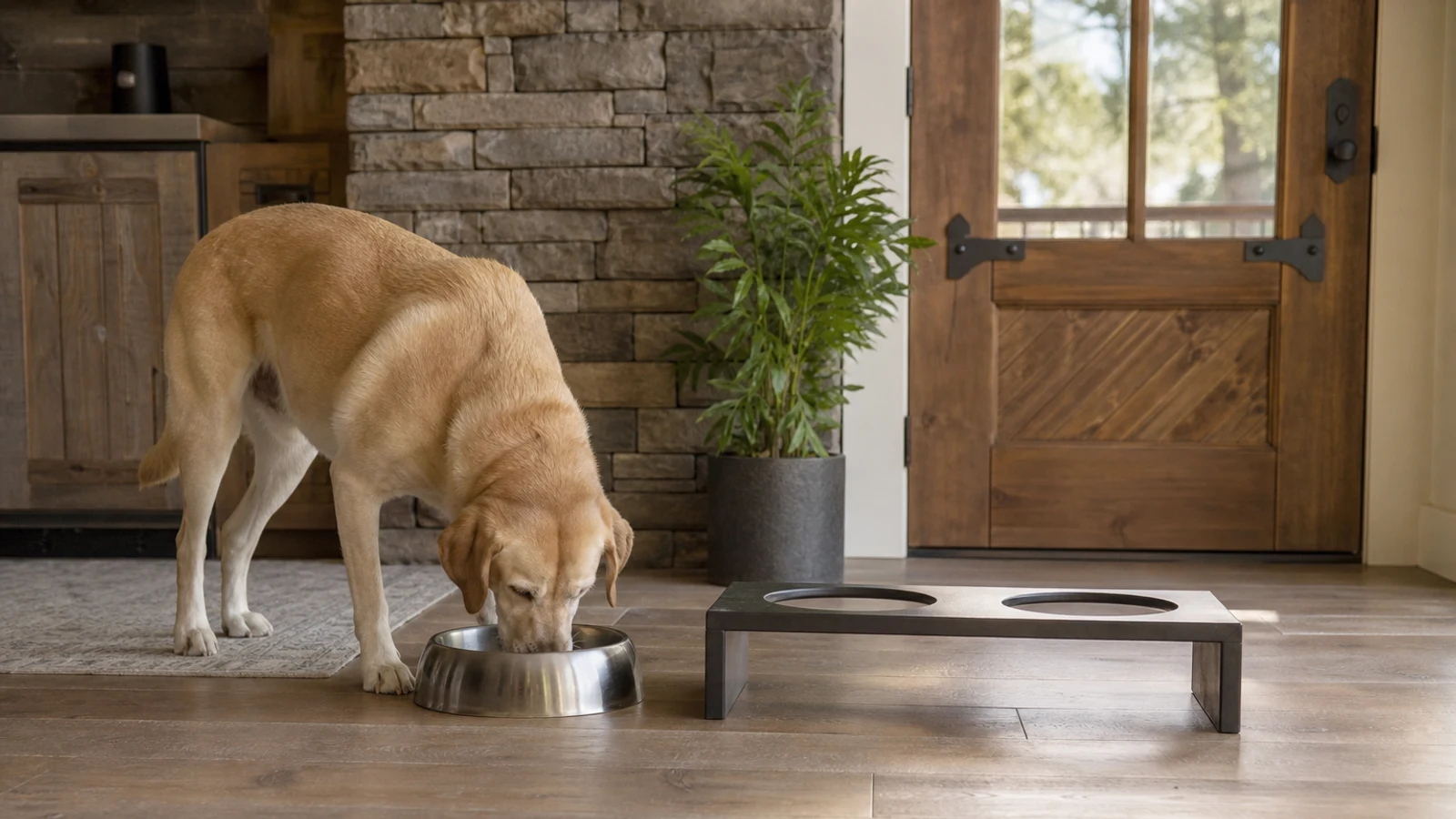
Raised bowls can make meals easier for some dogs with mobility or esophageal problems, but they are not a general bloat-prevention tool. For many healthy dogs, a stable floor bowl remains the simpler default.
Quick answer
Choose a floor bowl for most healthy dogs unless your dog has a specific comfort or medical reason to eat higher. Raised bowls may help dogs with neck, back, limb, or joint discomfort and are part of management for diagnosed megaesophagus, but they should not be purchased as a way to prevent bloat. For large or deep-chested dogs, discuss feeder height with your veterinarian because evidence has linked raised feeding with increased GDV risk in some populations, while other evidence remains limited or conflicting.
Shop this guide
Current Amazon options
Six current listings related to this buying decision. Use the guide to compare fit and trade-offs, then verify the latest seller, price, size, and availability on Amazon.
As an Amazon Associate I earn from qualifying purchases. Product availability, seller, price, and listing details can change.
Key decision checks
Start with your dog’s actual need
The right choice depends less on your dog’s height than on the job the bowl must do. A floor bowl is usually the straightforward option for a healthy dog that can comfortably lower its head, while a raised bowl is an accommodation for a particular problem: difficulty bending, unstable footing, limited limb movement, or a veterinarian-directed feeding position.
Do not choose a raised feeder simply because a dog is large, tall, elderly, or a certain breed. Size can affect fit and comfort, but it does not by itself establish that elevation is healthier. Watch how your dog approaches the bowl, eats, swallows, and moves away, then consider whether a different height solves an observed problem without creating new ones.
- Choose floor level when your dog eats comfortably and has no veterinary reason for elevation.
- Consider raised feeding when bending causes visible discomfort, a mobility condition affects posture, or a veterinarian recommends it.
- Treat repeated regurgitation, coughing during meals, pain, weakness, or sudden changes in eating as veterinary concerns rather than bowl-shopping problems.
Floor bowls are the safer default for many healthy dogs
A floor bowl keeps the feeding setup simple, easy to replace, and compatible with the normal posture of many dogs. It also avoids assuming that elevation prevents gastric dilatation-volvulus, commonly called GDV or bloat. A veterinary evidence review found conflicting research and no evidence that raised feeders reduce GDV risk compared with floor feeding; its cautious recommendation was to use floor feeding for dogs considered at risk unless a medical reason requires elevation.
This does not mean a floor bowl prevents bloat. GDV is a serious emergency with multiple suspected and established risk factors, including body shape, family history, age, rapid eating, and meal practices. Bowl height is only one part of the discussion, and the available evidence does not justify promising that either bowl style can make a dog safe from GDV.
- Prefer a floor bowl for a large or deep-chested dog when there is no separate reason to elevate and your veterinarian has not advised otherwise.
- If your dog gulps food, address eating speed with meal management or a suitable slow-feeding design rather than raising the bowl for that purpose.
- Do not make major feeding changes for a dog with a GDV history or high-risk conformation without veterinary guidance.
When a raised bowl can make practical sense
Raised feeding can be useful when lowering the head is physically difficult. Dogs with osteoarthritis, spinal discomfort, weakness, limb loss, or other mobility limitations may find a higher bowl easier to reach. VCA notes that raised food and water bowls can reduce neck and back strain for some dogs with osteoarthritis, with the most comfortable position varying by the individual dog. This is comfort guidance, not proof that every older dog needs elevation.
A raised bowl may also be part of a medical feeding plan for diagnosed megaesophagus. Veterinary references describe feeding with the dog’s upper body elevated, sometimes with the forelimbs higher than the hindlimbs, and keeping the dog upright after eating. A normal raised bowl may be inadequate for that purpose, so owners should follow the veterinarian’s instructions about posture, food texture, meal size, and after-meal positioning.
- Use the lowest height that clearly improves comfort rather than automatically choosing the tallest stand.
- Look for a posture that lets the dog eat without stretching, crouching, twisting, or pushing its shoulders forward.
- For megaesophagus, regurgitation, swallowing problems, or aspiration concerns, ask a veterinarian for a complete feeding plan instead of selecting a bowl alone.
GDV and bloat claims deserve extra caution
Raised bowls were once commonly promoted as a way to reduce bloat risk in large dogs. That claim is not supported as a general recommendation. A prospective study of large and giant breeds reported raised feeding as a risk factor for GDV, while a later evidence review noted that only a small number of studies directly addressed feeder height and that the findings conflict. The practical conclusion is not that every raised bowl causes GDV, but that elevation should not be marketed as prevention.
For a dog at meaningful GDV risk, ask the veterinarian how bowl height fits the whole feeding routine. Factors such as meal size and frequency, eating speed, family history, body condition, and activity around meals may matter. Seek emergency care immediately for signs such as repeated unproductive retching, a swollen or painful abdomen, marked restlessness, breathing difficulty, weakness, or collapse.
- Ignore product claims that a raised feeder prevents bloat unless they clearly distinguish marketing from evidence.
- Do not delay emergency veterinary care while changing bowls if your dog may have GDV.
- If a raised bowl is needed for mobility, discuss the trade-off with your veterinarian rather than removing it solely because of general internet advice.
Compare options for your pet
Raised vs Floor Dog Bowls: What Should You Consider Before Buying?
Compare current Amazon listings using the fit and safety checks in this guide. Confirm size, specifications, seller and availability before ordering.
See on Amazon →As an Amazon Associate I earn from qualifying purchases. Links open Amazon search results; individual listings have not been independently verified.
Compare the everyday trade-offs
A floor bowl is usually easier to move, store, and use in different rooms or during travel. A raised stand can reduce bending for people and dogs, but it takes more floor space and may be easier to knock or push unless its base is stable. The best design is the one your dog can use calmly and that stays in place without forcing the dog to brace, reach, or crowd the stand.
Neither height replaces good bowl hygiene. Select a bowl or insert that can be cleaned thoroughly, inspect the stand for trapped food or moisture, and keep the feeding area from becoming slippery. Material, shape, and stability may matter as much as height, especially for dogs that shove bowls, have long ears, wear mobility equipment, or share a feeding area with other pets.
- Check that the bowl cannot slide, tip, or trap a paw when the dog is eating.
- Measure the available space, including room for the dog’s shoulders and the person who will refill and clean it.
- Choose a removable bowl or insert that can be washed thoroughly and inspected around rims, seams, and the stand.
- For messy drinkers, prioritize a stable, easy-clean setup over a decorative elevated design.
How to test the fit without overcommitting
If there is no medical urgency, test the proposed height gradually rather than buying the largest stand immediately. Observe several meals in a quiet setting. Your dog should be able to keep a relaxed neck and shoulder position, maintain steady footing, and finish without repeated coughing, gagging, regurgitation, or obvious discomfort. A dog that avoids the bowl may dislike its location, movement, noise, shape, or height.
A temporary, secure adjustment can help you discuss comfort with your veterinarian, but improvised supports must not wobble or create a tipping hazard. Stop the trial if eating becomes more difficult. If the dog has persistent swallowing trouble, regurgitation, vomiting, pain, or a sudden appetite change, arrange a veterinary examination rather than interpreting the bowl response as a diagnosis.
- Observe posture, footing, swallowing, and bowl stability during several meals.
- Change one feature at a time so you can tell whether height, bowl shape, or location made the difference.
- Keep the setup easy to clean and return to the previous arrangement if the dog is less comfortable.
Bottom line: choose for comfort, not a blanket rule
For most healthy dogs that comfortably eat from the floor, a stable floor bowl is the sensible starting point. It avoids the unsupported promise that elevation prevents GDV and keeps the feeding setup uncomplicated. A raised bowl becomes more compelling when your dog has a clear mobility-related difficulty or a veterinarian has prescribed a specific elevated posture.
The comparison changes when a dog has diagnosed megaesophagus, significant joint or spinal pain, or another condition affecting feeding. In those cases, the bowl is only one part of management, and the correct height may need to be individualized. Ask a veterinarian or species-qualified rehabilitation professional when comfort, swallowing, aspiration, or GDV risk is part of the decision.
- Best default for a comfortable healthy dog: floor bowl.
- Best reason to raise the bowl: a documented comfort or medical need.
- Best reason to seek professional advice: regurgitation, swallowing difficulty, pain, high GDV risk, or a major change in eating behavior.
Common questions
FAQ
Are raised bowls better for large dogs?
Not automatically. Large dogs may appreciate a higher bowl if bending is uncomfortable, but height alone is not a health requirement. Because raised feeding has been associated with GDV risk in some large and giant-breed research, ask your veterinarian before choosing elevation for a dog at increased risk.
Do raised dog bowls prevent bloat?
No reliable general recommendation supports raised bowls as bloat prevention. Research on feeder height is limited and conflicting, and one major study associated raised feeding with increased GDV risk in large and giant breeds. A raised bowl should be selected for a separate comfort or medical reason, not as a bloat-prevention product.
Should a dog with arthritis use a raised bowl?
Possibly, if lowering the head causes discomfort. Some veterinary guidance notes that raised food and water bowls can reduce neck and back strain for dogs with osteoarthritis. The most comfortable height varies, so use your dog’s posture and movement as feedback and ask your veterinarian if pain or mobility is significant.
Is a raised bowl required for megaesophagus?
Dogs with megaesophagus commonly need an elevated feeding position, but a standard raised bowl may not provide the required posture. Veterinary instructions may include raising the forequarters, changing food texture, feeding small meals, and keeping the dog upright afterward. Follow the individualized plan rather than relying on a bowl label.
Can a slow-feeder bowl be used on the floor?
Yes. If the goal is to reduce gulping, a floor-level slow feeder, puzzle feeder, divided meal, or other veterinarian-approved strategy may address eating speed without changing bowl height. Choose a design your dog can use without frustration and supervise until you know it is safe and practical.
Sources & further reading
Where the factual guidance comes from
Ready to choose?
Raised vs Floor Dog Bowls: What Should You Consider Before Buying?
Compare current Amazon listings using the fit and safety checks in this guide. Confirm size, specifications, seller and availability before ordering.
See on Amazon →As an Amazon Associate I earn from qualifying purchases. Links open Amazon search results; individual listings have not been independently verified.
Keep researching