Other Pets · Habitat
Heat Mat vs Heat Lamp for Reptiles: What Changes by Setup?
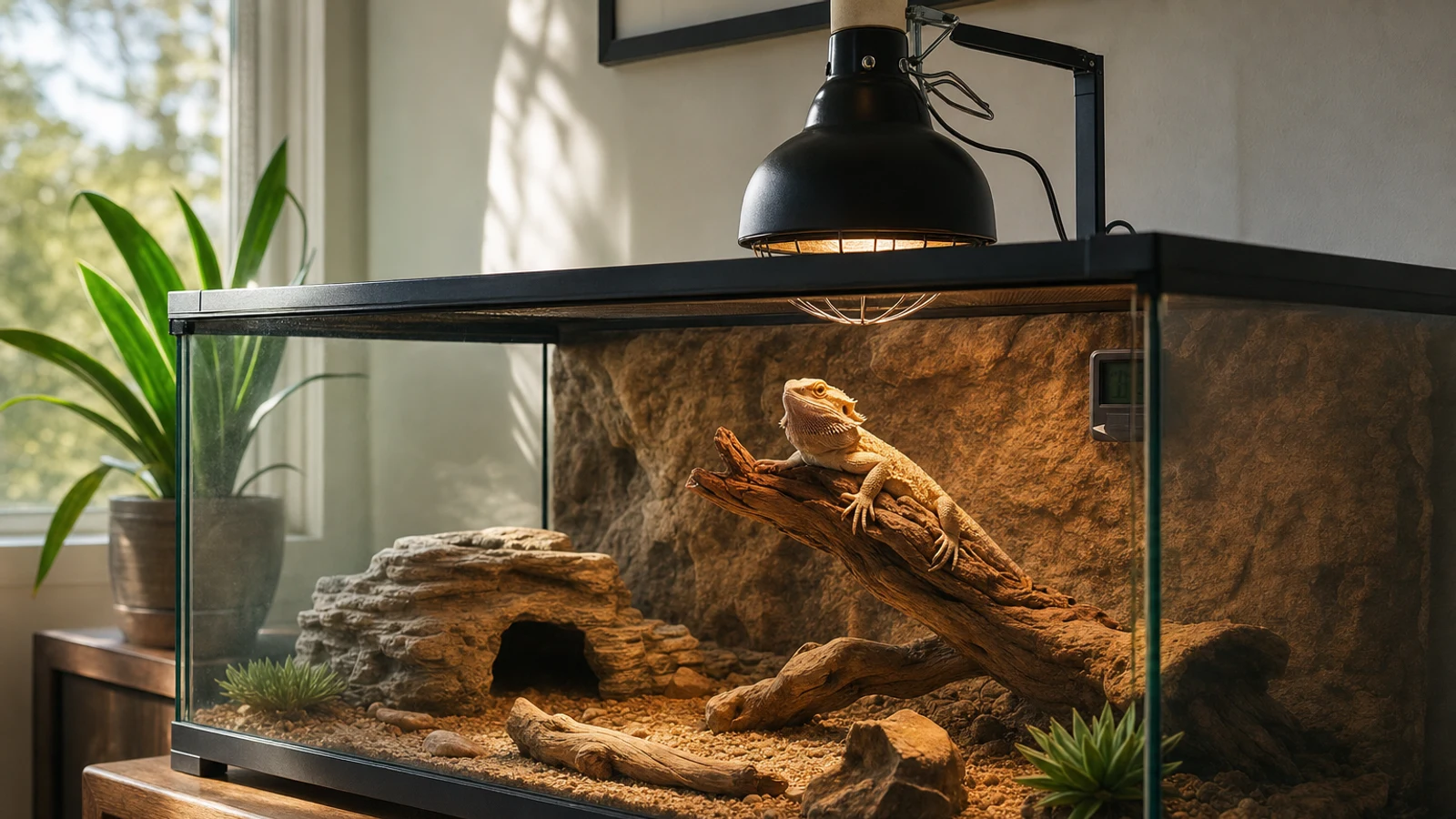
A heat lamp is usually the better primary source for reptiles that bask, while a heat mat may help provide localized or nighttime warmth for suitable species. The right setup depends on species, enclosure, room temperature, and whether UVB lighting is already covered.
Quick answer
Choose an overhead heat lamp when your reptile naturally basks or needs a defined warm surface and cooler escape area. Choose a heat mat only when localized under-tank warmth fits the species and enclosure, and use it as a controlled supplement or nighttime source where appropriate. Neither product replaces species-correct UVB lighting, and every heat source should be thermostat controlled, guarded against contact, and checked with reliable temperature measurements.
Shop this guide
Current Amazon options
Six current listings related to this buying decision. Use the guide to compare fit and trade-offs, then verify the latest seller, price, size, and availability on Amazon.
As an Amazon Associate I earn from qualifying purchases. Product availability, seller, price, and listing details can change.
Key decision checks
The practical difference: surface warmth versus overhead basking
A heat mat warms a surface from below or behind the enclosure. It can create a small warm hide, raise temperatures in a limited area, and provide heat without adding visible light. Its heat pattern is usually more localized and less representative of the overhead warmth many reptiles experience when basking.
A heat lamp warms from above and can create a brighter, more natural-looking basking zone with a warm-to-cool gradient across the enclosure. Depending on the bulb, it may provide visible light, UVA, UVB, or heat without visible light. “Heat lamp” is therefore a broad category: an incandescent basking bulb, ceramic heat emitter, deep heat projector, or mercury-vapor lamp will not produce the same combination of heat and light.
- Heat mat: localized conductive warmth, no visible light, and no UVB.
- Basking lamp: overhead heat and often visible light; some combination lamps also provide UVB.
- Ceramic heat emitter or other lightless overhead heater: overhead warmth without daytime illumination.
- UVB lamp: a separate lighting decision unless the selected heat source is specifically designed to provide UVB.
When an overhead heat lamp is usually the better primary source
An overhead source is generally the stronger starting point for lizards, turtles, and tortoises that bask, especially in an enclosure with useful vertical space. It lets the animal warm its upper body and move between a heated basking area, partial shade, and a cooler end. That arrangement supports behavioral thermoregulation better than heating the entire floor evenly.
For daytime baskers, the heat source should be positioned at one end rather than centered. The basking platform, lamp distance, screen top, enclosure height, and room temperature all change the result, so wattage alone cannot determine whether the setup is appropriate. A separate UVB fixture may need to overlap the basking area at the correct distance, depending on the species and lamp type.
- Best fit: species that regularly bask under overhead warmth.
- Useful for: creating a clear warm spot and a cooler retreat in taller or larger enclosures.
- Important limitation: heat and UVB targets may not occur at the same distance, so both need to be measured and positioned deliberately.
- Night use: visible bulbs should not be left on to provide nighttime heat; use a species-appropriate lightless option if supplemental night warmth is actually needed.
When a heat mat can make sense
A heat mat can be useful for a suitable snake or other reptile that benefits from a warm hide, particularly when the enclosure is low, the room becomes cool at night, or an overhead lamp would disrupt the desired light cycle. It can also supplement another heat source when the primary setup leaves the enclosure too cool. The mat should warm only part of the available area so the reptile can move away from it.
A mat is a poorer match when the animal needs a strong basking zone, when the enclosure has a thick or insulating floor, or when the animal can burrow directly against the heater. It also cannot provide visible daylight or UVB. A reptile that needs UVB still requires a correctly selected and positioned UVB system, even if the heat mat maintains an acceptable temperature.
- Best fit: localized warmth for compatible species, hides, or carefully controlled nighttime supplementation.
- Poor fit as the only source: active baskers and reptiles that need a strong overhead thermal gradient.
- Placement: normally outside the enclosure or behind an appropriate barrier, never where the animal can contact the heating element.
- Coverage: leave an unheated area so the reptile can choose a cooler temperature.
Match the choice to the reptile and enclosure
Species behavior matters more than product popularity. A bearded dragon, many other diurnal lizards, and basking turtles typically need an overhead basking arrangement. A nocturnal or crepuscular species may still benefit from overhead warmth, but a lightless heater can be preferable at night. Some snakes and geckos may use a warm hide effectively, yet enclosure height, substrate, ventilation, and the animal’s ability to reach the heat source can change whether a mat is safe and useful.
Enclosure construction is equally important. A glass tank may transmit heat from an external mat differently than a PVC or wooden enclosure. Mesh tops, screen guards, climbing branches, deep substrate, and elevated basking shelves all alter distances and temperatures. Before buying either product, identify the species-specific basking, warm-side, cool-side, and nighttime targets from a reputable care guide or reptile-qualified veterinarian.
- Species: basking lizard, turtle, tortoise, snake, gecko, amphibian, or another reptile.
- Behavior: daytime basking, nocturnal activity, burrowing, climbing, or use of warm hides.
- Enclosure: glass, PVC, wood, rack, front-opening vivarium, mesh top, height, and ventilation.
- Room: lowest overnight temperature and seasonal changes, not just the daytime reading.
- Lighting: whether separate UVB and visible-light fixtures are required.
Compare options for your pet
Heat Mat vs Heat Lamp for Reptiles: What Changes by Setup?
Compare current Amazon listings using the fit and safety checks in this guide. Confirm size, specifications, seller and availability before ordering.
See on Amazon →As an Amazon Associate I earn from qualifying purchases. Links open Amazon search results; individual listings have not been independently verified.
Thermostats and temperature checks are not optional extras
Both heat mats and heat lamps can overheat an enclosure or burn an animal when poorly installed. Merck Veterinary Manual recommends thermostat control, protective screening, and placement that creates a thermal gradient. A thermometer only reports temperature; it does not regulate the heater. The thermostat probe and its position must follow the heater manufacturer’s instructions and be secured so the animal cannot move it or press against it.
Use more than one measurement point: check the warm area and the cool end, then verify the actual basking surface rather than relying only on air temperature. An infrared temperature gun can help assess surfaces, but it does not replace fixed thermometers or a properly configured thermostat. Recheck after changing bulb height, substrate depth, décor, ventilation, or room temperature.
- Use a thermostat rated for the heater type; some light-producing bulbs require dimming or proportional control rather than simple on/off cycling.
- Guard overhead bulbs and keep the reptile from touching hot fixtures, guards, or exposed wiring.
- Confirm warm-side and cool-side temperatures separately.
- Check the hottest usable surface, not just the air near the heater.
- Recheck readings after seasonal room-temperature changes or enclosure modifications.
Safety and nighttime trade-offs
Heat mats can create hidden hot spots, especially when the thermostat probe is misplaced, the mat is covered by insulating material, or the reptile can press its body against the heated surface. Overhead heaters can cause burns if the animal climbs too close, if a guard becomes hot, or if the lamp is installed at the wrong distance. “No light” does not mean “no risk”; ceramic emitters and other lightless heaters can become extremely hot.
Nighttime heating should be considered only after confirming the species’ required overnight range and the lowest temperature in the room. A visible red or colored bulb may alter the light cycle and is not a substitute for species-specific husbandry. If night heat is needed, a lightless heater may be more appropriate, but it still requires thermostat control, shielding, and temperature verification.
- Keep electrical connections dry and route cords so the reptile cannot pull or chew them.
- Do not rely on touch to judge whether a heater is safe.
- Avoid placing décor, substrate, or hides where they can shift into direct contact with a heater.
- Replace damaged mats, sockets, guards, probes, and cords instead of improvising repairs.
- Ask a reptile-qualified veterinarian about unusual lethargy, burns, poor appetite, abnormal shedding, or persistent temperature problems.
A practical buying decision
For a basking reptile, start with an overhead heat source and a separate plan for UVB, then add a heat mat only if measured temperatures or nighttime conditions show a genuine need. For a species that uses warm hides and does not require visible daytime heat from the heater itself, a thermostat-controlled mat may be practical, provided it cannot be contacted directly and enough unheated space remains.
Do not choose by wattage, package claims, or the size of the heating element alone. The useful question is whether the complete setup produces safe, measurable zones that let the animal warm up, cool down, hide, and follow its normal day-night pattern. If you cannot measure the result reliably, the setup is not ready for the reptile.
- Choose a heat lamp first when basking behavior is central to the species’ care.
- Choose a heat mat when localized or nighttime warmth fits the species and enclosure.
- Use both only when each has a defined job and their combined output is measured.
- Budget for a thermostat, guards, thermometers, and any required UVB equipment—not just the heater.
- Have a reptile-qualified professional review the setup when species guidance is conflicting or the enclosure cannot maintain a gradient.
Common questions
FAQ
Can a heat mat replace a heat lamp?
Sometimes, but not universally. A mat can provide localized warmth for some species and enclosure designs, but it does not create overhead basking or provide visible light or UVB. Reptiles that naturally bask usually need an overhead setup rather than a mat alone.
Can I use a heat mat and heat lamp together?
Yes, if each source serves a specific purpose and the combined temperatures are measured. For example, an overhead daytime basking source may create the primary warm zone while a controlled lightless heater supports nighttime temperatures. Combining heaters without checking both zones can cause dangerous overheating.
Does a heat lamp provide UVB?
Only some specialized lamps provide meaningful UVB, and output depends on the bulb type, distance, age, screen, and positioning. Ordinary incandescent bulbs, ceramic heat emitters, and many other heat sources do not replace a species-appropriate UVB fixture.
Should a heat mat go inside or outside the enclosure?
Follow the heater manufacturer’s installation instructions, but the animal should not be able to contact the heating element directly. External placement or a secure barrier is commonly used to reduce contact and burn risks. Substrate, enclosure material, and ventilation can change how much heat reaches the animal.
Do all reptiles need heat at night?
No. Nighttime needs vary by species, life stage, health status, room temperature, and seasonal conditions. Some reptiles can tolerate or benefit from a nighttime temperature drop, while others may require supplemental warmth. Confirm the appropriate overnight range before adding a heater.
What should I do if my reptile is burned or the enclosure overheats?
Move the animal away from the heat source and contact a veterinarian experienced with reptiles promptly, especially for burns, weakness, breathing changes, or abnormal behavior. Do not apply household creams or attempt treatment based only on online advice. Correct the heater, thermostat, guard, and probe placement after the animal is safe.
Sources & further reading
Where the factual guidance comes from
Ready to choose?
Heat Mat vs Heat Lamp for Reptiles: What Changes by Setup?
Compare current Amazon listings using the fit and safety checks in this guide. Confirm size, specifications, seller and availability before ordering.
See on Amazon →As an Amazon Associate I earn from qualifying purchases. Links open Amazon search results; individual listings have not been independently verified.
Keep researching