Other Pets · Habitat
Cage Stand vs Tabletop Bird Cage Setup: Which Fits Your Room Better?
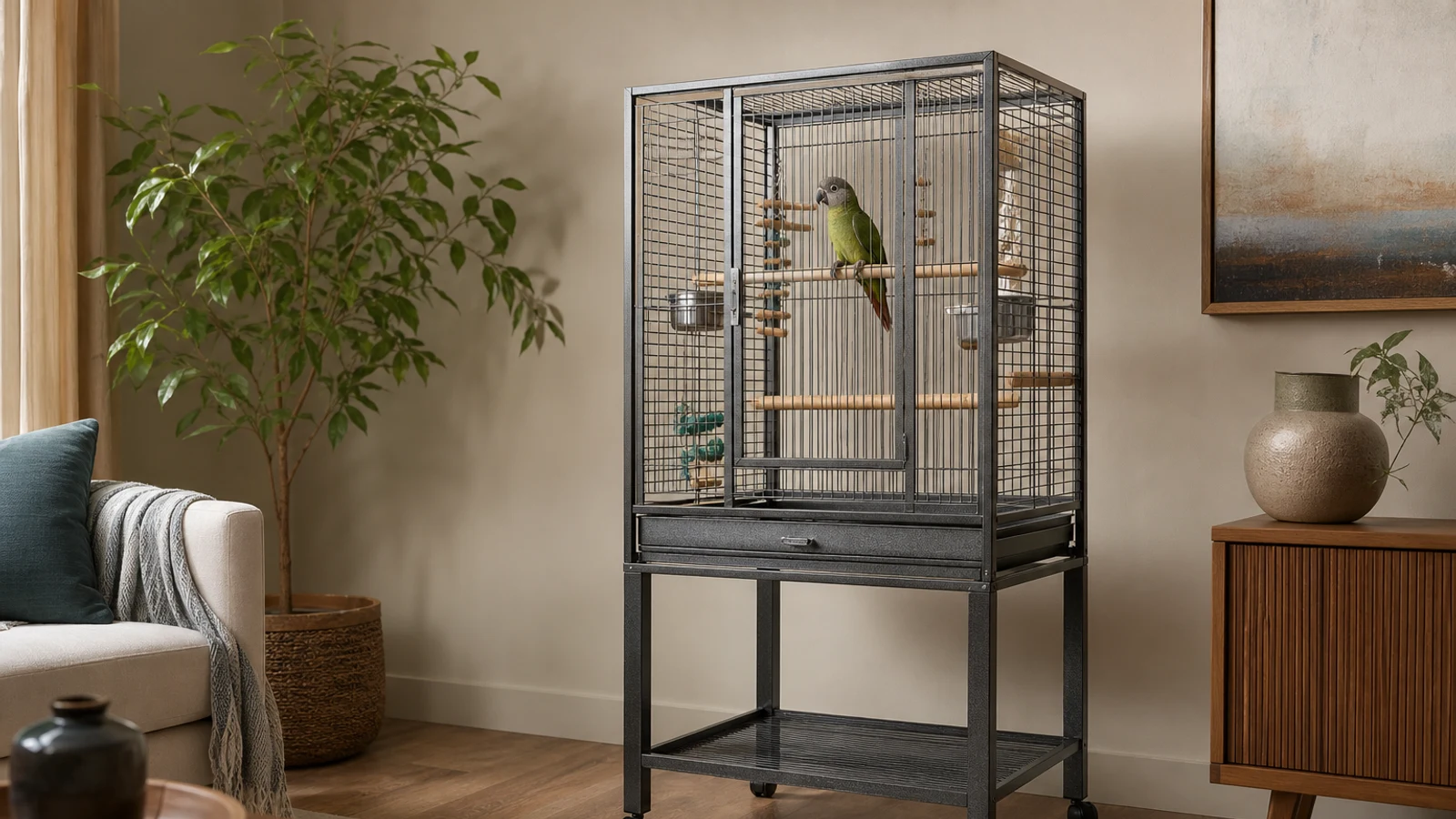
A cage stand usually makes it easier to place a bird at a secure social height, while a tabletop setup can be steadier and more space-efficient if the furniture is strong, stable, and safely positioned.
Quick answer
Choose a cage stand when your bird’s cage needs to sit at chest or eye level, you want floor clearance, or you need to move the setup without occupying a desk or cabinet. Choose a tabletop setup when you have a sturdy, dedicated surface in a quiet corner and want maximum stability with less separate equipment. In either case, the cage should be large enough for the bird, away from kitchens, fumes, drafts, direct heat, and household traffic, with protection from cats, dogs, and accidental knocks.
Shop this guide
Current Amazon options
Six current listings related to this buying decision. Use the guide to compare fit and trade-offs, then verify the latest seller, price, size, and availability on Amazon.
As an Amazon Associate I earn from qualifying purchases. Product availability, seller, price, and listing details can change.
Key decision checks
The practical difference is height versus furniture use
A cage stand raises the enclosure independently from the room’s furniture. That can place the bird closer to chest or eye level, keep the cage away from the floor, and leave desks, cabinets, and tables available for other uses. A stand is often the more flexible choice when the room has limited suitable surfaces or when the cage needs to be moved for cleaning or rearrangement.
A tabletop setup puts the cage on a sturdy desk, cabinet, console, or purpose-built table. It can provide a broad, stable base and may look more integrated with the room, but the furniture becomes part of the cage system. The surface must support the cage, bird, accessories, and any movement without rocking, sliding, bowing, or creating a fall risk.
- Choose a stand for independent placement, floor clearance, or easier room reconfiguration.
- Choose a tabletop setup when you already have a strong, stable surface in the right location.
- Do not treat either option as a substitute for an adequately sized cage or supervised out-of-cage exercise.
Choose a cage stand when height and flexibility matter most
A stand is usually the better fit when the cage would otherwise sit on the floor or in a low position. Birds can be unsettled when people, children, or other pets approach from above, and welfare guidance commonly favors positioning the cage around human chest or eye level rather than on the floor. A stand can also make routine access easier for feeding, interaction, and cleaning.
A rolling stand may help when one person needs to move the cage for cleaning or adjust the room layout, but mobility increases the importance of locking wheels and a wide, stable base. Move the cage only when the route is clear and the enclosure is secure. A tall, narrow stand may be a poor choice for a large or active bird if the bird’s movement can make the setup sway.
- Look for a base that is wider than the cage footprint and does not flex under load.
- Check whether the cage attaches securely to the stand rather than simply resting on it.
- Use wheel locks if the stand rolls, and confirm that the cage cannot shift during ordinary activity.
- Measure doorways, corners, and cleaning paths before choosing a large mobile setup.
Choose a tabletop setup when stability and compactness come first
A tabletop setup can work well in a living room, office, or other shared space when the furniture is strong enough and the cage can sit against a wall or in a protected corner. A solid surface may reduce wobble compared with a lightweight stand, and it can make the enclosure easier to access without bending or reaching too high.
The main trade-off is that the cage occupies valuable furniture permanently. A desk may become difficult to use, a cabinet may be exposed to droppings and spilled water, and a narrow surface may leave too little margin around the enclosure. Never place a cage where its door, tray, or accessories overhang the edge or interfere with drawers, cords, lamps, or walkways.
- Prefer furniture that is level, heavy, and wider and deeper than the cage base.
- Secure or manage nearby cords so the bird cannot reach and chew them.
- Protect finished furniture with a cleanable mat or tray that does not block ventilation or cage drainage.
- Avoid temporary surfaces such as folding tables, stacked boxes, unstable shelves, or furniture that tips when a door opens.
Place either setup in a bird-safe part of the room
The best support does not make a poor location safe. Keep the cage in a warm, draft-free area with household activity nearby, but not in a main traffic lane. A corner with the back of the cage against a wall can provide a retreat from movement behind the bird while still allowing the bird to see and interact with familiar people.
Do not place the cage in a kitchen or near cooking fumes, smoke, aerosols, scented products, cleaning chemicals, heaters, air-conditioning vents, or strong temperature changes. Keep it away from sunny windows that can overheat the enclosure. Cats and dogs should not be able to climb onto, knock over, or harass the cage.
- Favor a quiet social location over isolation, while avoiding constant noise and foot traffic.
- Keep the cage away from drafts, vents, radiators, fireplaces, and direct hot sunlight.
- Leave enough clearance to open the cage door and remove trays without striking walls or furniture.
- Use a bird-proofed area for out-of-cage time; turn off ceiling fans and secure windows and doors.
Compare options for your pet
Cage Stand vs Tabletop Bird Cage Setup: Which Fits Your Room Better?
Compare current Amazon listings using the fit and safety checks in this guide. Confirm size, specifications, seller and availability before ordering.
See on Amazon →As an Amazon Associate I earn from qualifying purchases. Links open Amazon search results; individual listings have not been independently verified.
Match the setup to your room’s cleaning routine
Bird cages create daily debris, including dropped food, feathers, and droppings. A stand can make it easier to place a washable mat underneath and clean around the entire enclosure. A tabletop can contain the setup at a convenient working height, but debris may collect on the furniture, fall behind it, or damage finished surfaces if water splashes.
Choose the arrangement that lets you inspect the cage, replace liner paper, wash dishes, and wipe the surrounding area without moving heavy furniture every day. The cage itself should remain accessible for routine cleaning, and paper-based liners are generally easier to remove and monitor than loose substrates. A location that looks tidy but discourages regular cleaning is not a practical success.
- Check the floor, wall, furniture, and nearby cords for cleanability before installation.
- Keep food and water access clear so dishes can be removed without tilting or twisting the cage.
- Use a removable protective surface under or around the cage, provided it cannot be chewed or become a trip hazard.
- Plan where dirty liner paper, wash water, and cleaning supplies will go before final placement.
The cage and bird matter more than the support style
A stand or tabletop is only the base. The enclosure still needs enough room for the bird to stretch and move, safe bar spacing and materials, suitable perches, and uncluttered areas for movement. A larger cage may favor a purpose-built stand or heavy furniture, while a small cage may fit a tabletop more easily; the bird’s species, size, behavior, and time outside the cage should determine the enclosure first.
Consider whether your bird is timid, highly active, destructive, elderly, or living with other pets. A nervous bird may benefit from a wall-backed position and fewer approaches from behind. An active bird may need a lower center of gravity and more clearance around the cage. If the cage is used for long periods, ask an avian veterinarian or species-qualified professional whether its dimensions and layout meet the bird’s needs.
- Confirm the cage’s weight, footprint, and attachment method before buying a stand or selecting furniture.
- Allow room for perches, toys, feeding stations, and normal wing movement without crowding.
- Inspect stand joints, tabletop surfaces, wheels, fasteners, and cage connections periodically.
- Treat manufacturer weight limits and assembly instructions as minimum requirements, not optional details.
A simple room-by-room decision rule
Pick a cage stand if the only suitable location is open floor space, your furniture is too light or narrow, or you want the cage height and position to remain independent of a desk or cabinet. A stand is also useful when you expect to rearrange the room, place a washable mat beneath the cage, or move the enclosure for scheduled cleaning.
Pick a tabletop setup if you have a stable, dedicated surface in a quiet corner and the cage will sit securely with clearance on every side. This choice can be especially convenient in a small room where a separate stand would consume more floor area. Do not choose it merely because the cage is small; the furniture must still support the complete setup and remain safe around the bird.
- Best for a cage stand: limited furniture, need for chest-level placement, floor-based room layout, or planned mobility.
- Best for tabletop: heavy dedicated furniture, compact room, strong surface, and easy access for cleaning.
- Neither is suitable if the location exposes the bird to kitchen fumes, drafts, direct heat, predators, or repeated collisions.
- When in doubt, prioritize stability, safe height, cleanability, and the bird’s ability to retreat from household activity.
Common questions
FAQ
Is it safe to put a bird cage on a table?
Yes, if the table is level, sturdy, wider and deeper than the cage, and positioned away from drafts, fumes, heat, traffic, and other pets. The cage should not overhang the edge or slide when the bird moves. Inspect the furniture and cage connection regularly.
Should a bird cage be higher than a person?
Usually, the cage should not be placed on the floor or so low that people and pets loom over the bird. Chest- to eye-level placement often provides a more secure social position, but the best height depends on the bird, room, cage design, and ability to provide a retreat area.
Are rolling bird-cage stands safe?
They can be safe when they have a broad, stable base, secure cage attachment, suitable weight capacity, and locking wheels. Keep the wheels locked during normal use, and do not roll the cage over uneven flooring, thresholds, or clutter while the bird is inside.
Can I put a bird cage near a window?
A window may provide light and visual interest, but avoid direct hot sunlight, drafts, temperature swings, and contact with open windows or screens. Large windows can also pose risks during out-of-cage flight, so they should be covered or otherwise bird-proofed.
Should the cage be in the living room or a quiet room?
Many birds benefit from regular interaction in a shared living area, but constant noise and heavy traffic can be stressful. A protected corner of a social room is often a useful compromise. A quieter sleeping cage or separate rest area may be appropriate for some birds; discuss individual needs with an avian veterinarian.
Sources & further reading
Where the factual guidance comes from
Ready to choose?
Cage Stand vs Tabletop Bird Cage Setup: Which Fits Your Room Better?
Compare current Amazon listings using the fit and safety checks in this guide. Confirm size, specifications, seller and availability before ordering.
See on Amazon →As an Amazon Associate I earn from qualifying purchases. Links open Amazon search results; individual listings have not been independently verified.
Keep researching