Other Pets · Feeding & Hydration
Bird Water Bowl vs Bottle: What Should You Consider?
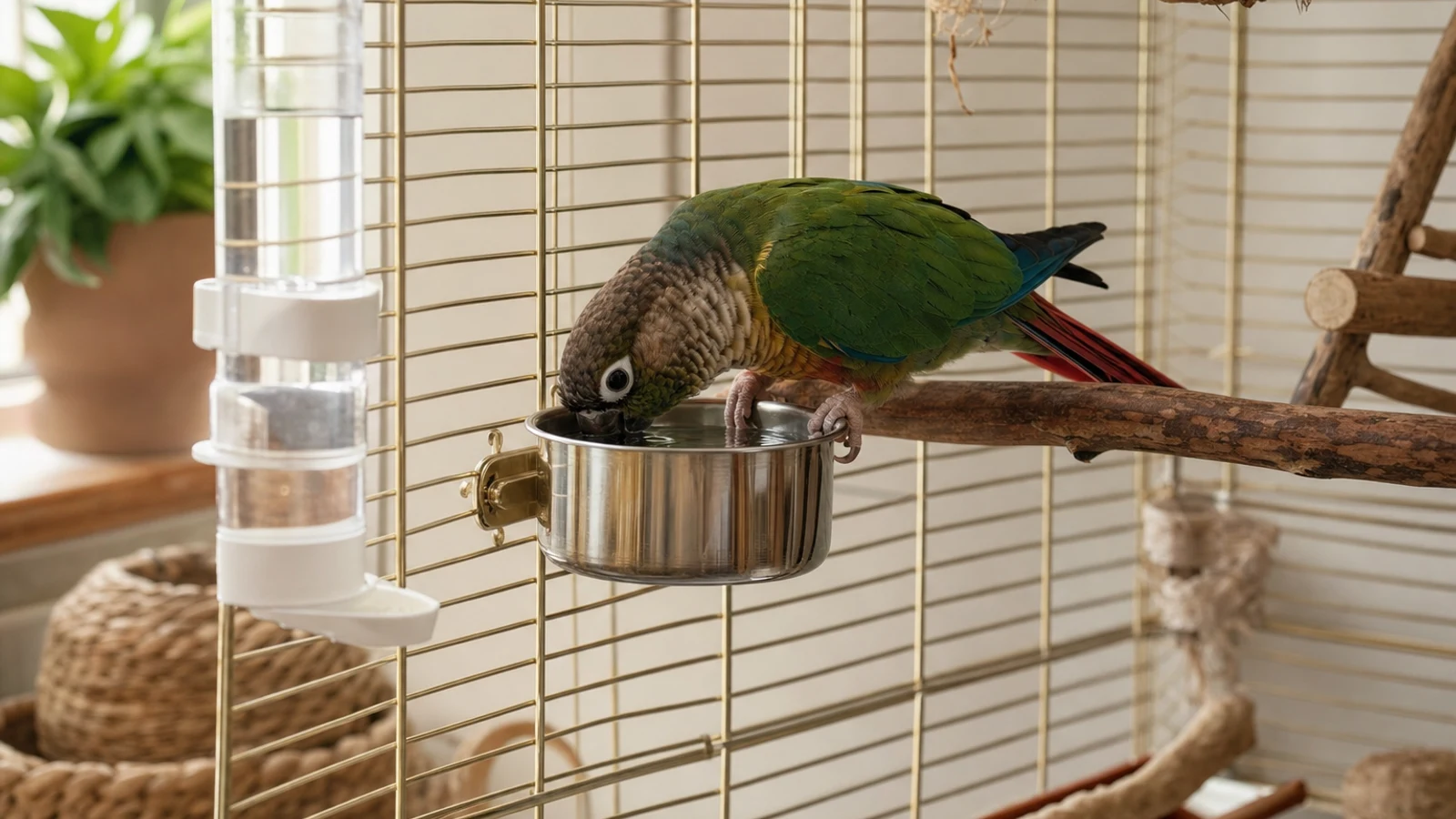
A bird water bowl is usually the simplest starting point, but a properly maintained bottle can keep water cleaner for birds that dunk food or soil open dishes. The better choice depends on whether your bird recognizes the water source, how reliably the product works, and how closely you can monitor and clean it.
Quick answer
For most pet birds, start with a secure, shallow bowl made from a sturdy, easy-to-clean material. Bowls are familiar, easy to refill, and let you see the water level and condition immediately. A bottle can be useful when a bird repeatedly drops food into its water, tips the dish, or lives in a cage where an outside-mounted dispenser saves space. Do not remove a bird’s familiar water source until you have directly confirmed that it is drinking from the replacement.
Shop this guide
Current Amazon options
Six current listings related to this buying decision. Use the guide to compare fit and trade-offs, then verify the latest seller, price, size, and availability on Amazon.
As an Amazon Associate I earn from qualifying purchases. Product availability, seller, price, and listing details can change.
Key decision checks
The practical difference: access versus contamination control
A bowl gives a bird an obvious, open water source. That can make it the easier option for a new bird, a bird moving into a new cage, or any bird whose drinking habits are not yet well established. You can quickly see whether the water is present and whether it contains food, feathers, or droppings. A securely attached, shallow dish is generally easier to introduce and troubleshoot.
A bottle separates the water from much of the cage debris. That can be helpful for birds that dunk pellets or seeds, bathe in their drinking dish, or knock open bowls from their holders. The trade-off is that the bird must learn the sipper, the tube must remain unobstructed, and the owner must inspect the mechanism rather than judging cleanliness only by the visible reservoir.
- Choose a bowl when immediate access, simple monitoring, and easy cleaning are the priorities.
- Consider a bottle when open water becomes contaminated quickly or interior cage space is limited.
- Treat either option as a daily-care item, not a set-and-forget water supply.
When a bowl is the better choice
A bowl is usually the more forgiving starting point because most birds can recognize and use open water without a training period. It also makes intake easier to observe: you can see the water level, notice debris, and replace the entire container quickly. For birds with unfamiliar equipment, recent adoption, illness, or any concern about drinking, that visibility is valuable.
The main weakness is contamination. Birds may drop food into the dish, splash it, perch above it, or tip it during normal activity. Place the water high enough to reduce droppings while keeping it comfortably reachable, and avoid putting it directly beneath a perch. The dish should be shallow enough to prevent a small bird from falling in or struggling to get out, while still allowing the bird to drink naturally.
- Look for a dish that attaches firmly to the cage rather than sitting loose on the floor.
- Prefer smooth, nonporous surfaces that can be scrubbed and rinsed thoroughly.
- Match the depth and opening to the bird’s size and beak strength.
- Keep food and water positioned to reduce deliberate dunking and accidental debris.
When a bottle is worth considering
A bottle can make sense when a bird consistently soils an open dish, when cage space is tight, or when the enclosure design makes an exterior-mounted water source convenient. Merck Veterinary Manual notes that some birds dip food into water and that a bottle may help keep drinking water cleaner. A bottle may also reduce spills, but cleaner-looking water is not proof that the tube, seal, cap, or valve is clean.
Bottle use depends on reliable behavior and reliable equipment. Some birds need time to learn that the tube provides water, and a bird may ignore a bottle even when it is correctly installed. Check the sipper for blockage from food or nesting material, verify that water actually flows, and watch the bird use it repeatedly before relying on it as the only source.
- Use a bottle only if the bird can reach the sipper without stretching, twisting, or climbing awkwardly.
- Check the tube and valve at every refill or routine inspection for clogs, leaks, and changed flow.
- Choose a design that can be disassembled enough to clean all water-contacting parts.
- Avoid assuming that a large reservoir means the water can remain unchanged for several days.
Cleaning and daily monitoring matter more than the format
Both bowls and bottles need fresh water and regular cleaning. Veterinary and animal-welfare guidance emphasizes that bird water and food equipment should be kept clean, and University of Florida guidance specifically advises changing bottle contents daily. A bowl may show contamination immediately, while a bottle can hide buildup inside narrow channels or around seals. The format changes the failure points; it does not remove the cleaning obligation.
Use the product maker’s cleaning instructions and rinse thoroughly so no cleaner residue remains. Keep a second clean waterer available if possible, making it easier to replace a dirty item without leaving the cage without water. If the bird has a medical condition, unusually high water needs, or a history of unreliable drinking, ask an avian veterinarian about the safest cleaning and monitoring routine.
- Replace visibly dirty water immediately rather than waiting for the normal schedule.
- Inspect bottle tubes, caps, threads, gaskets, brackets, and valves—not just the reservoir.
- Retire scratched, cracked, cloudy, or damaged parts that cannot be cleaned effectively.
- Clean cage water equipment away from food-preparation surfaces and store it dry.
Compare options for your pet
Bird Water Bowl vs Bottle: What Should You Consider?
Compare current Amazon listings using the fit and safety checks in this guide. Confirm size, specifications, seller and availability before ordering.
See on Amazon →As an Amazon Associate I earn from qualifying purchases. Links open Amazon search results; individual listings have not been independently verified.
How to switch from a bowl to a bottle safely
Do not make the switch by removing the bowl and hoping the bird figures out the bottle. Keep the familiar water source available while introducing the bottle in the same general area. Confirm that the bird can reach the sipper, then observe actual drinking rather than assuming interest in the device means successful use. A second bird using the bottle may encourage imitation, but it is not a guarantee.
During the transition, monitor the bird’s normal behavior, droppings, and water access without delaying veterinary care if anything seems abnormal. If the bird refuses the bottle, the sipper clogs, or you cannot confidently verify drinking, return to the known reliable setup and consult an avian veterinarian before trying again. Never use a product change to manage a suspected illness or reduced drinking.
- Introduce the bottle while the bowl remains available.
- Demonstrate or prime the flow only according to the manufacturer’s instructions; do not force the beak onto the tube.
- Observe repeated, purposeful drinking from the bottle at different times of day.
- Keep the bowl available until bottle use is clearly established.
What to look for when buying either type
The best waterer is one your bird can use comfortably and that you can clean completely every day. Product materials and attachment hardware matter, but so do cage placement and the bird’s habits. A strong chewer may damage lightweight parts; a bird that throws dishes needs a secure mount; and a messy eater may need separation between food and water more than a different container style.
Avoid choosing solely by capacity or appearance. A larger bottle is not automatically safer if its tube is hard to inspect, and a decorative bowl is not a good choice if it is unstable or difficult to scrub. Product pages should provide dimensions, attachment details, cleaning instructions, replacement-part information, and compatibility guidance for the cage and bird size.
- Secure attachment that resists tipping, chewing, and accidental dislodging.
- Smooth, durable, nonporous surfaces with no inaccessible crevices.
- A drinking opening sized for the bird without creating a trapping hazard.
- Easy access for refilling, removal, inspection, and thorough drying.
- Materials and finishes suitable for bird use, with no damaged or peeling surfaces.
- A design that lets you confirm water delivery rather than relying on appearance alone.
A simple decision rule for your household
Choose a bowl first if your bird already drinks from one reliably, you can refresh it promptly, and contamination is manageable. Choose a bottle when an open dish repeatedly becomes unusable, the bird is comfortable with the sipper, and you are prepared to check the mechanism as carefully as the water itself. Some households may use a bowl as the primary source and a separate shallow dish for bathing, rather than expecting one container to serve every purpose.
Species, age, beak strength, cage design, and individual preference all affect the decision. If your bird is newly acquired, not drinking normally, losing weight, producing unusual droppings, or showing lethargy, contact an avian veterinarian instead of experimenting with a new water system. Product guidance can help you choose equipment, but it cannot determine whether a change in drinking reflects illness.
- Start with the waterer your bird already understands unless there is a clear management problem.
- Prioritize verified access and cleanability over convenience or capacity.
- Use the least complicated setup that stays clean and works reliably in your cage.
- Ask an avian veterinarian before changing water access for a sick, recovering, or medically monitored bird.
Common questions
FAQ
Can birds use water bottles safely?
Yes, many pet birds can use a properly installed bottle, but they must learn the drinking method and the owner must verify that water flows. Keep a familiar bowl available during the transition and do not rely on the bottle until repeated drinking is confirmed.
Is a bird water bottle more hygienic than a bowl?
It can reduce contamination from food, droppings, and splashing, but it is not automatically more hygienic. Narrow tubes, valves, seals, and caps can collect buildup or become blocked, so the entire water-contacting system needs regular inspection and cleaning.
How often should bird water be changed?
Fresh water should be provided daily at minimum, and immediately whenever it becomes dirty. Warm conditions, heavy cage activity, food dunking, or visible debris may require more frequent changes. Follow your avian veterinarian’s advice for birds with special health needs.
Should a bird have both a bowl and a bottle?
A temporary bowl-and-bottle setup is useful during training or when you are verifying bottle use. A second water source may also be appropriate for some households, but extra equipment creates extra cleaning duties. Ask an avian veterinarian before using multiple sources to manage a bird with medical concerns.
Can the water bowl go under a perch?
It is better to avoid placing it directly beneath a perch because droppings can contaminate the water. Attach the dish securely in a location the bird can reach comfortably, while keeping it away from likely debris and allowing you to remove and clean it easily.
Sources & further reading
Where the factual guidance comes from
Merck Veterinary Manual discussion of food dunking and how a bottle may help keep drinking water cleaner.
VCA guidance on sturdy, cleanable bird dishes, cage attachment, placement away from droppings, and appropriate depth.
University of Florida Small Animal Hospital guidance on bird water bowls, bottle training, placement, contamination, and daily water changes.
Ready to choose?
Bird Water Bowl vs Bottle: What Should You Consider?
Compare current Amazon listings using the fit and safety checks in this guide. Confirm size, specifications, seller and availability before ordering.
See on Amazon →As an Amazon Associate I earn from qualifying purchases. Links open Amazon search results; individual listings have not been independently verified.
Keep researching