Cats · Feeding & Hydration
Shallow vs Deep Cat Bowl: Which Is Easier for Everyday Feeding?
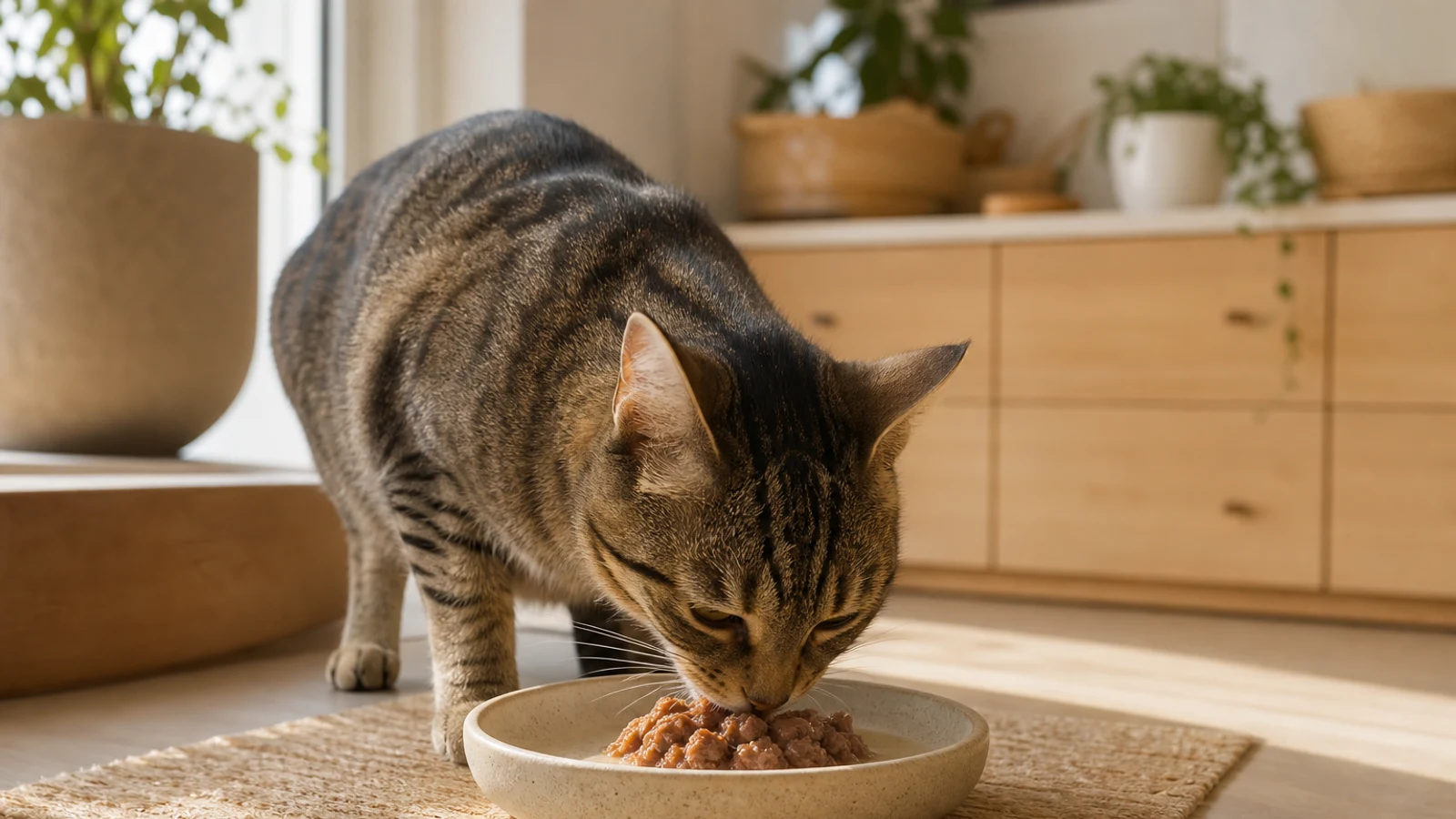
For most cats, a wide, stable bowl that lets the face stay clear of the sides is the practical starting point. A shallow bowl is often easier for wet food and cats that paw food out, while a deeper bowl can help contain dry food and spills if it is still wide enough. Let your cat’s behavior, body shape and cleaning routine decide.
Quick answer
Choose a wide, shallow bowl if your cat’s whiskers touch the sides, your cat pulls food onto the floor, or your cat has a short, flat face. Choose a deeper bowl only when it is broad enough for comfortable access and its extra height helps contain dry food or water. Bowl depth is not a guaranteed health solution: a 2021 study found no overall feeding advantage from a marketed whisker-friendly dish, although some cats preferred it. If appetite or drinking changes suddenly, contact a veterinarian rather than assuming the bowl is the cause.
Shop this guide
Current Amazon options
Six current listings related to this buying decision. Use the guide to compare fit and trade-offs, then verify the latest seller, price, size, and availability on Amazon.
As an Amazon Associate I earn from qualifying purchases. Product availability, seller, price, and listing details can change.
Key decision checks
The practical difference: access versus containment
A shallow cat bowl gives your cat a broad, open eating surface. That makes it easier to reach wet food without pushing the face into the sides and can reduce the chance that whiskers brush the rim. It is usually the simpler choice for cats that eat pâté, leave food around the edge, or move food onto the floor before eating.
A deeper bowl can hold more food and may contain some crumbs, gravy or splashing better. But depth becomes a problem when the opening is narrow, the sides are steep, or the bowl forces your cat to reach down and press the face against the rim. A bowl can be technically deep yet comfortable if its opening is wide; the opening matters as much as the measurement from rim to base.
- Shallow bowls prioritize easy access and an unobstructed view.
- Deep bowls prioritize containment and capacity.
- Wide openings are generally more useful than extra depth for everyday comfort.
- A stable base matters with either shape.
When a shallow bowl is the better fit
Start with a shallow bowl or flat feeding dish when your cat repeatedly paws food out, eats only from the center, circles the bowl, or seems more willing to eat from a plate. These behaviors do not prove whisker discomfort, but changing the bowl is a low-risk preference test for an otherwise healthy cat. Offer the new dish beside the old one rather than removing a familiar setup abruptly.
Wide, low-sided dishes are also practical for flat-faced cats that may have difficulty reaching into a deep container. A broad surface can make food easier to see and access. For cats with a short muzzle, look for a generous opening and a low front edge rather than relying on a product label such as “whisker friendly.”
- Cats that pull food onto the floor or leave food around the rim.
- Cats with short, flat facial anatomy.
- Wet-food meals that spread across the dish.
- Cats that approach food but hesitate once their face enters the bowl.
When a deeper bowl can work well
A deeper bowl can be suitable for a cat that eats comfortably from it and does not show bowl-avoidance behavior. Some households prefer the extra containment for dry kibble, toppers or water, particularly when a cat pushes a lightweight dish across the floor. Choose a broad, gently sloped interior rather than a narrow cup-shaped design.
Depth may also help when the main problem is mess rather than access. A heavier bowl with a non-skid base can reduce tipping, while a modestly raised rim can keep food from being swept onto the floor. Do not make the bowl progressively deeper to solve every spill: if the cat is reaching awkwardly, a wider dish or feeding mat is usually a better first adjustment.
- Your cat eats from it normally without pawing, hesitation or face rubbing.
- You need extra containment for dry food or water.
- The bowl is wide enough that whiskers do not continually press against the sides.
- The base is heavy or non-skid enough to stay in place.
What the evidence says about “whisker fatigue”
Cats’ whiskers are specialized sensory structures, so it is reasonable to test whether a particular bowl seems unpleasant to an individual cat. But “whisker fatigue” is not an established diagnosis, and the evidence is limited. In a 2021 study of 40 indoor cats, a marketed whisker-friendly dish did not increase eating time, reduce dropped food or increase the amount eaten during the observation period. Some cats did show a preference for the alternative dish.
That finding supports a measured approach: a shallow bowl may be more appealing to some cats, but it is not automatically healthier or necessary for every cat. Avoid making a purchase based only on a marketing claim. Compare the cat’s actual behavior, keep the dish clean and make sure a feeding change is not masking dental pain, nausea, illness or stress from other pets.
- Treat bowl shape as an individual preference, not a universal medical requirement.
- Do not trim or alter a cat’s whiskers to make a bowl fit.
- If your cat suddenly eats less, drops weight or seems painful, seek veterinary advice.
- A bowl experiment should not delay care for a cat that is unwell.
Compare options for your pet
Shallow vs Deep Cat Bowl: Which Is Easier for Everyday Feeding?
Compare current Amazon listings using the fit and safety checks in this guide. Confirm size, specifications, seller and availability before ordering.
See on Amazon →As an Amazon Associate I earn from qualifying purchases. Links open Amazon search results; individual listings have not been independently verified.
Choose the shape around the food and the cat
For wet food, a shallow, wide dish is often easiest because food spreads across the surface and can be reached without pushing the muzzle downward. A gently curved or sloped interior can help a cat collect the last portion. For dry food, a slightly deeper but still wide bowl may reduce scattered pieces, although a shallow dish can work just as well if the cat eats neatly.
Water deserves a separate decision. Many cats prefer a wide bowl with enough water near the top that the whiskers do not touch the sides. Place water where the cat can approach from different directions, and consider more than one station in a multi-cat home. Bowl shape will not compensate for stale water, a noisy location or another pet guarding access.
- Wet food: favor width, low sides and easy access to the last bites.
- Dry food: choose the least depth that contains the food adequately.
- Water: use a wide opening and keep the bowl filled and clean.
- Multiple cats: provide enough separate feeding and drinking locations to reduce competition.
Material, stability and cleaning still matter
Shape is only one part of a usable cat bowl. A bowl that slides, tips or retains food odors may be rejected even if its depth is ideal. Ceramic, glass and metal are commonly used options, but each needs regular cleaning and inspection. Plastic can scratch more easily and may retain odors; if you use it, replace it when the surface becomes damaged or difficult to clean.
Choose a size that fits the meal without leaving a thick layer of food smeared around the edges. Wash food bowls after meals when practical, especially for wet food, and provide fresh water in a clean container. Keep food and water away from litter boxes and place feeding stations in a quiet area where the cat is not cornered by dogs, children or another cat.
- Look for a heavy, stable base or a non-skid underside.
- Avoid chipped ceramic, cracked plastic or scratched surfaces that are hard to clean.
- Use a dishwasher-safe design only if the manufacturer permits it.
- Inspect rims and interiors for residue, sharp damage or persistent odor.
A simple bowl test for your household
If you are unsure, compare a wide shallow dish with your current bowl for several meals. Keep the food, location and portion consistent, and observe whether your cat eats normally, leaves less behind, paws food out, or returns more readily. Do not force a switch if the cat refuses the new dish. Preference can vary with food texture, meal size, age, facial shape and the presence of other pets.
The best everyday bowl is the one your cat uses comfortably and your household can keep clean and stable. For many cats, that means a shallow or moderately shallow bowl with a broad opening. A deeper bowl remains reasonable when the cat clearly accepts it and its containment benefits outweigh any mess or access problems.
- Offer the new bowl beside the familiar one during the transition.
- Compare behavior across several meals, not one unusual feeding.
- Measure food separately if you need to know whether intake has changed.
- Choose comfort and reliable use over a label or fashionable design.
Common questions
FAQ
Is a shallow bowl always better for cats?
No. Many cats do well with ordinary bowls, and one controlled study did not find an overall feeding advantage from a marketed whisker-friendly dish. A shallow bowl is most useful when your individual cat appears uncomfortable with a narrow or deep design, has a flat face, or prefers eating from a plate.
Can a deep bowl cause whisker fatigue?
A deep, narrow bowl may cause whisker contact that some cats appear to dislike, but “whisker fatigue” is not a confirmed veterinary diagnosis. If your cat avoids the bowl, try a wider, shallower dish while also considering other causes of changed eating behavior.
Should wet food and dry food use different bowl shapes?
They can, but they do not have to. Wet food often works well in a shallow, wide dish because it spreads across the surface. Dry food may be easier to contain in a slightly deeper bowl, provided the opening remains broad and the cat can eat without pressing against the sides.
What bowl is best for a flat-faced cat?
A wide, shallow dish with a low front edge is usually easier to access than a narrow, deep bowl. Watch how the cat reaches the food rather than relying only on breed-focused product claims. If eating remains difficult, ask your veterinarian whether dental, airway or other health issues could be involved.
When should I call a veterinarian instead of changing the bowl?
Contact a veterinarian if your cat suddenly eats or drinks less, loses weight, drools, paws at the mouth, seems painful, vomits, has trouble swallowing or acts unwell. Bowl preference can be real, but these signs may indicate dental disease, gastrointestinal illness or another problem that a different dish will not fix.
Sources & further reading
Where the factual guidance comes from
Ready to choose?
Shallow vs Deep Cat Bowl: Which Is Easier for Everyday Feeding?
Compare current Amazon listings using the fit and safety checks in this guide. Confirm size, specifications, seller and availability before ordering.
See on Amazon →As an Amazon Associate I earn from qualifying purchases. Links open Amazon search results; individual listings have not been independently verified.
Keep researching