Cats · Grooming
Slicker Brush vs Rubber Grooming Brush for Cats: Which Job Does Each Do?
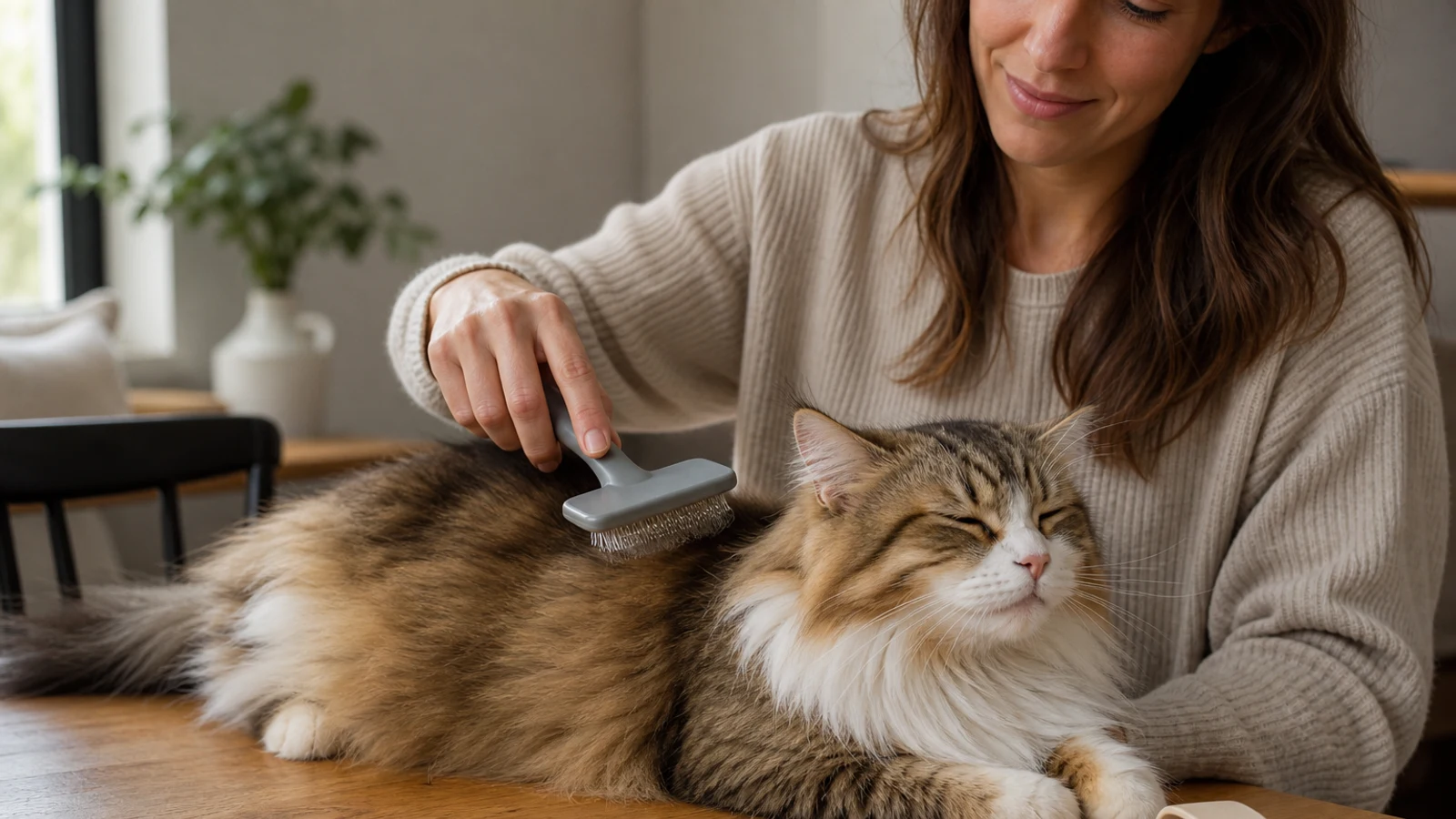
A slicker brush and a rubber grooming brush do different jobs. Slickers reach deeper into medium and long coats to lift loose hair and smooth minor tangles, while rubber brushes offer a gentler, surface-level groom that many short-haired or brush-sensitive cats tolerate better.
Quick answer
Choose a rubber grooming brush for a short-haired cat, light shedding, surface-level loose fur, or a cat that dislikes metal pins. Choose a soft slicker brush for a medium- or long-haired cat when you need to lift loose undercoat or work through small tangles. Neither tool is the right answer for severe mats, painful skin, or a cat that cannot safely tolerate grooming; those situations call for veterinary or qualified grooming advice.
Shop this guide
Current Amazon options
Six current listings related to this buying decision. Use the guide to compare fit and trade-offs, then verify the latest seller, price, size, and availability on Amazon.
As an Amazon Associate I earn from qualifying purchases. Product availability, seller, price, and listing details can change.
Key decision checks
The practical difference: coat access versus gentle contact
A slicker brush uses many fine wire pins to reach farther into the coat. Its main job is to lift loose hair, separate strands, and help loosen minor tangles, especially in medium- and long-haired cats. A rubber grooming brush uses flexible rubber teeth or nubs that make broader, softer contact with the coat and skin. It is usually better for collecting surface-level loose fur than for untangling a dense coat.
That makes the decision less about which brush is universally better and more about the job in front of you. If your cat has a short, close coat and mainly needs a quick loose-hair cleanup, start with rubber. If your cat has feathering, a fluffy tail, a longer coat, or small recurring tangles, a gentle slicker may be more useful, often followed by a comb for checking the coat.
- Rubber brush: surface shedding, short coats, gentle grooming, and cats that prefer stroking-like contact.
- Slicker brush: loose undercoat, longer fur, minor tangles, and areas where hair mats easily.
- For either tool, use light pressure and stop if your cat shows discomfort or tries to escape.
When a rubber grooming brush is the better fit
Rubber brushes are a sensible first choice for many short-haired cats. Their flexible teeth can gather loose fur while providing a softer sensation than exposed wire pins. They can also suit cats that accept petting but resist a conventional brush, because the motion and contact may feel more like a massage than a sharp, combing action.
The trade-off is reach. A rubber brush generally will not separate a dense long coat as effectively as a slicker, and it should not be expected to remove established mats. It may reduce loose hair on the surface, but the coat can still hide tangles underneath. For a long-haired cat, use it as a comfort-friendly finishing tool only if another tool is needed to reach the undercoat safely.
- Choose rubber when your cat has a short or sparse coat and needs routine loose-fur removal.
- Choose rubber when grooming acceptance is the main obstacle and the cat enjoys a stroking motion.
- Avoid treating rubber bristles as a substitute for a comb or professional help when long fur is tangling.
When a slicker brush earns its place
A slicker brush is more capable when the grooming job involves coat separation. Its fine pins can lift dead hair from deeper in the coat and help tease apart small tangles. Veterinary guidance commonly places slicker-style brushes among the useful options for cats with medium or long hair, while also emphasizing gentle handling and avoiding excessive pulling.
Slickers require more technique than rubber brushes. Work in small sections, begin at the ends of longer fur, and keep the brush moving lightly rather than pressing down toward the skin. Pay attention to the belly, armpits, behind the ears, back legs, and tail base, where movement and friction can encourage tangling. A slicker is not permission to repeatedly rake over one painful knot.
- Look for a cat-sized brush with flexible or protected pins rather than an oversized, rigid tool.
- Use short strokes on small sections and check the skin frequently.
- Pair a slicker with a suitable comb when you need to confirm that a long coat is clear from skin outward.
- Do not use force to pull through a tight mat, because the skin beneath it may be sore or easily injured.
Match the brush to your cat’s coat and tolerance
Coat length is the starting point, but it is not the whole decision. A short-haired cat with heavy seasonal shedding may benefit from a rubber brush for routine sessions, while a short-haired cat with a dense undercoat may tolerate a soft slicker better. A long-haired cat generally needs a tool that can reach and separate the coat, but the most comfortable option may still be a combination of tools introduced gradually.
Your cat’s response matters as much as the brush design. A technically suitable slicker is not useful if your cat hides whenever it appears. Begin with brief sessions, let the cat investigate the tool, and reward calm behavior. Keep restraint to a minimum. If grooming becomes a struggle, pause instead of escalating the pressure or duration.
- Short coat plus brush sensitivity: start with rubber.
- Medium or long coat plus minor tangles: consider a soft slicker, then check with a comb.
- Older, overweight, painful, or less-mobile cats may need more grooming support but can also be sensitive in specific areas.
- A sudden change in grooming tolerance or coat condition deserves attention beyond a brush purchase.
Compare options for your pet
Slicker Brush vs Rubber Grooming Brush for Cats: Which Job Does Each Do?
Compare current Amazon listings using the fit and safety checks in this guide. Confirm size, specifications, seller and availability before ordering.
See on Amazon →As an Amazon Associate I earn from qualifying purchases. Links open Amazon search results; individual listings have not been independently verified.
How to use either brush without irritating the skin
Brush in the direction of hair growth and use enough pressure to move the coat, not enough to scrape the skin. With a slicker, part longer fur into manageable sections and use a few strokes at a time. With rubber, use slow, even passes and clean accumulated fur from the brush so it continues to contact the coat rather than dragging a clump across it.
Inspect the brush before each session. Bent, broken, rough, or excessively sharp pins can catch skin and hair. Rubber teeth should remain flexible, clean, and free from cracks or torn edges. Wash the tool according to its material and allow it to dry fully; a dirty brush can transfer oils, debris, and shed hair back into the coat.
- Start when your cat is calm, not during a chase or forced capture.
- Brush sensitive areas lightly and leave difficult areas for another short session.
- Stop for skin redness, repeated flinching, vocalization, hiding, or defensive behavior.
- Do not cut mats with household scissors; cat skin can be drawn tightly into a mat and cut accidentally.
Mats, skin changes, and when a brush is not enough
Small, loose tangles may sometimes be eased out gently, but a tight mat is a different problem. Pulling can hurt, and repeated brushing may irritate the skin without solving the underlying knot. If mats are extensive, close to the skin, foul-smelling, moist, or associated with redness or wounds, ask a veterinarian or qualified cat groomer for a safe removal plan rather than switching to a more aggressive brush.
Changes in grooming can also signal a health or mobility issue. A cat that suddenly stops grooming, becomes unusually unkempt, overgrooms one area, develops bald patches, or reacts painfully to touch may need veterinary assessment. Product choice can support routine coat care, but it cannot diagnose why the coat or skin has changed.
- Use a brush for routine maintenance and minor loose tangles, not severe or painful matting.
- Ask a veterinarian about skin lesions, bald patches, persistent dandruff, painful grooming, or sudden coat changes.
- For a cat that cannot be groomed safely at home, a veterinary team or suitably qualified groomer may be appropriate.
A simple buying decision
For most short-haired cats, a rubber grooming brush is the lower-risk starting point when the goal is a comfortable weekly tidy-up and loose-fur collection. For medium- or long-haired cats, a soft slicker is usually the more capable of these two options because it can reach farther into the coat and address minor tangles. That does not make it the only tool required: a comb may be better for checking the full depth of a long coat.
If you are choosing only one brush, prioritize the job your cat actually needs and the tool your cat will accept. A comfortable rubber brush that gets used regularly may be more valuable than a slicker that causes avoidance. Conversely, a long-haired cat that remains tangled after rubber brushing needs a deeper-reaching grooming plan, not simply longer sessions with the same surface tool.
- Best starting point for short hair: rubber brush.
- Best starting point for medium or long hair: soft slicker brush, with a comb as needed.
- Best choice for a brush-averse cat: the gentlest tool the cat accepts, introduced in short sessions.
- Best choice for severe mats or painful grooming: professional guidance rather than a stronger brush.
Common questions
FAQ
Can a rubber brush remove mats from a cat?
Usually not. Rubber brushes can collect loose surface fur and may help with very loose hair, but they generally do not separate dense, tight mats. Do not pull repeatedly at a painful knot; ask a veterinarian or qualified cat groomer how it should be removed.
Is a slicker brush safe for cats?
A cat-appropriate slicker can be useful when used gently, but the fine pins can irritate skin if pressed too hard or used repeatedly over one area. Use light strokes, inspect the skin, and stop when your cat shows discomfort.
Which brush is better for a short-haired cat?
A rubber brush is often the easiest starting point for a short-haired cat because it offers broad, gentle contact and can gather loose fur. A soft slicker may still suit a short-haired cat with a dense coat or heavier shedding if the cat tolerates it.
Which brush is better for a long-haired cat?
A slicker brush is generally more useful than a rubber brush for reaching into longer fur and loosening minor tangles. Long-haired cats may also need a comb to check the coat down to the skin, particularly around the ears, legs, tail, and belly.
How often should I brush my cat?
The schedule depends on coat length, shedding, age, mobility, and individual tolerance. Short-haired cats often need less frequent grooming, while long-haired cats commonly need frequent or daily attention to reduce tangling. Follow the coat’s condition and keep sessions short and comfortable.
What if my cat suddenly hates grooming?
Pause and consider whether the cat may be painful, unwell, or sensitive in a particular area. Sudden grooming changes, bald spots, skin sores, or an increasingly unkempt coat warrant veterinary advice rather than a more forceful brush.
Sources & further reading
Where the factual guidance comes from
Ready to choose?
Slicker Brush vs Rubber Grooming Brush for Cats: Which Job Does Each Do?
Compare current Amazon listings using the fit and safety checks in this guide. Confirm size, specifications, seller and availability before ordering.
See on Amazon →As an Amazon Associate I earn from qualifying purchases. Links open Amazon search results; individual listings have not been independently verified.
Keep researching