Dogs · Grooming
Pin Brush vs Slicker Brush for Dogs: Which Job Does Each Tool Do?
A pin brush is usually a better everyday tool for working through and finishing longer coats, while a slicker brush is better at separating dense hair, removing loose coat, and preventing small tangles. Many dogs need both, plus a comb to confirm the brush reached the skin.
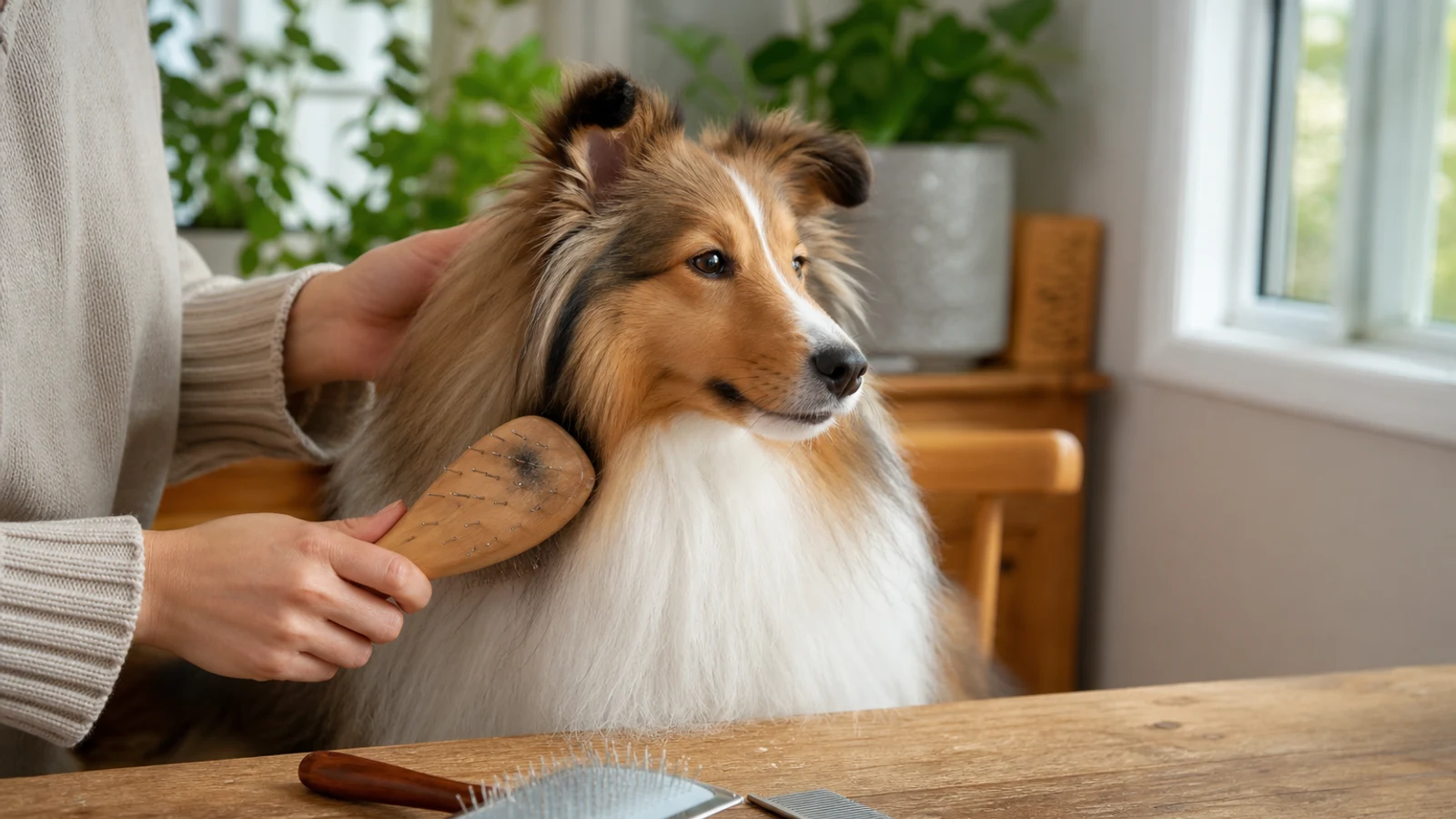
Quick answer
Choose a pin brush when your main job is routine brushing through a longer coat, lifting debris, or finishing feathering without aggressively disturbing the hair. Choose a slicker brush when your dog has a dense, curly, wavy, wire, or easily tangled coat and you need more coat separation or light dematting. For many long-coated and double-coated dogs, the practical answer is a pin brush for bulk brushing, a slicker for trouble spots, and a comb for the final check.
Shop this guide
Current Amazon options
Six current listings related to this buying decision. Use the guide to compare fit and trade-offs, then verify the latest seller, price, size, and availability on Amazon.
As an Amazon Associate I earn from qualifying purchases. Product availability, seller, price, and listing details can change.
Key decision checks
The basic difference: reach versus separation
A pin brush has longer, more widely spaced pins that move through the coat with relatively little resistance. It is commonly useful for routine brushing on long-haired dogs, feathering, furnishings, and coats that need to be lifted and arranged rather than aggressively detangled. Pin length and spacing matter: a shallow pin brush may skim the surface of a thick coat instead of reaching its lower layers.
A slicker brush has many short, fine wire pins, usually angled across a flat or slightly curved head. The dense pin arrangement separates packed hair and catches loose coat, making it more useful for small tangles, early mats, curly coats, and dense areas such as behind the ears, under the legs, or around the tail. Its effectiveness also makes pressure control more important.
- Pin brush: longer, more spaced pins for working through and finishing longer coats.
- Slicker brush: dense, fine wires for coat separation, loose hair, and light tangling.
- Neither brush replaces a metal comb when you need to confirm that the coat is clear to the skin.
When a pin brush is the better first tool
Start with a pin brush when your dog has a long, silky, feathered, or flowing coat that is generally maintained and not heavily matted. The longer pins can pass through larger sections efficiently, lift dirt or plant debris, and help organize the coat after bathing or outdoor activity. This makes a pin brush a sensible everyday choice for dogs whose main problem is routine coat maintenance rather than stubborn knots.
A pin brush can also be a useful bulk-brushing tool for some double-coated dogs, but only if its pins are long enough for the coat and your technique reaches the undercoat without dragging. Work in small sections and check the result with a comb. If the comb stops near the skin, the pin brush has not done the whole job, even if the top looks smooth.
- Choose a pin brush when the coat is long but mostly free of mats.
- Look for a size that fits the dog’s body and a pin length suited to the coat’s depth.
- Use a comb afterward if the dog has dense hair, furnishings, or a history of hidden tangles.
- Do not assume a smooth surface means the coat is brushed through.
When a slicker brush earns its place
Choose a slicker brush when the coat packs, curls, mats, or collects loose hair. Its closely set wires are designed to separate hair more thoroughly than a widely spaced pin brush, which can make it more effective around friction areas and in coats that are difficult to keep open. Curly-coated dogs and many medium-, long-, wire-, and double-coated dogs may benefit from slicker brushing as part of their regular routine.
A slicker is not a license to scrub. Use a light touch and short, controlled strokes, lifting the coat in small sections so you can see what you are doing. Brushing repeatedly over the same skin area, pressing down, or forcing the tool through a knot can cause discomfort and may irritate the skin. If your dog flinches, repeatedly turns away, or develops redness, stop and reassess.
- Use a slicker for early tangles, coat separation, loose hair, and dense or curly areas.
- Brush small sections rather than sweeping hard across the entire body.
- Work on the hair, not directly against the skin.
- A serious or tight mat may require a professional groomer rather than more brushing.
Which brush fits common coat types?
Coat type should decide the tool more than breed name alone. A long-haired dog with a straight, maintained coat may do well with a pin brush for most sessions and a slicker for trouble spots. A poodle-type curly coat often needs a slicker to open the coat, followed by a comb. A double-coated dog may need a slicker, pin brush, undercoat tool, or comb depending on coat density and the specific grooming goal.
Short-coated dogs usually do not need either brush as their main tool. A rubber grooming brush, bristle brush, or another short-coat tool may be more appropriate for removing surface hair and debris. A slicker can be too specialized for a short, close coat, while a pin brush may simply pass over it without doing much. Ask a groomer familiar with your dog’s coat if you are unsure.
- Long, silky, feathered coat: pin brush for routine work; slicker for tangles; comb for verification.
- Curly or wavy coat: slicker is often the primary brush, followed by a comb.
- Dense double coat: match pin length and brush type to the undercoat; a slicker may help with separation.
- Short, close coat: consider a bristle or rubber brush instead of either option.
Compare options for your pet
Pin Brush vs Slicker Brush for Dogs: Which Job Does Each Tool Do?
Compare current Amazon listings using the fit and safety checks in this guide. Confirm size, specifications, seller and availability before ordering.
See on Amazon →As an Amazon Associate I earn from qualifying purchases. Links open Amazon search results; individual listings have not been independently verified.
Can one brush replace the other?
Sometimes, but not reliably. A well-maintained, lightly textured coat may be manageable with one brush, especially if the dog has short or moderately long hair and receives regular grooming. However, pin and slicker brushes solve different problems. Using only a pin brush may leave small tangles hidden beneath the topcoat; using only a slicker may make routine brushing slower or less comfortable on a long coat that mainly needs to be worked through.
For many owners, a two-tool routine is more practical than searching for one universal brush. Use the pin brush to move through the bulk of a long coat, use the slicker where hair is compacted or beginning to tangle, then run a suitable comb through the coat. The comb is not redundant: it tells you whether the brush actually reached the lower layers.
- One brush may be enough for a simple, short, or consistently maintained coat.
- Two brushes are often useful when the coat is long, dense, curly, or prone to mats.
- A comb is the best final check for hidden resistance close to the skin.
- A de-shedding rake is a separate tool and should not be treated as a substitute for either brush in every coat.
Buying and using either brush safely
Look for a brush that matches your dog’s size, coat depth, and tolerance for grooming. The head should be large enough to work efficiently but small enough to control around legs, ears, and the face. Pins should be smooth and intact, with no bent wires, rough edges, or exposed damage. A comfortable handle matters because rushed or awkward strokes can lead to excess pressure.
Introduce the brush gradually and keep sessions short enough that the dog remains comfortable. Brush clean, dry coat unless a groomer has recommended a specific product or technique. Remove hair from the brush during use, wash it according to the manufacturer’s directions, and inspect it regularly. Product choice cannot compensate for an unsuitable technique or an untreated mat.
- Match brush size and pin length to the dog, not just the breed label.
- Inspect pins before every session; discard or repair a brush with damaged wires or rough surfaces.
- Use gentle, section-by-section strokes and stop when the dog shows pain or distress.
- Keep grooming tools clean and dry so accumulated hair and debris do not interfere with brushing.
When home brushing is not the right job
Do not keep brushing through a tight mat, widespread felting, skin wounds, parasites, or unexplained painful areas. Mats can hide irritated skin, and cutting them out with household scissors can injure a moving dog. A professional groomer is the safer choice for substantial matting or for a coat that requires specialized clipping and line-brushing technique.
A veterinarian is appropriate when brushing reveals persistent redness, sores, bleeding, odor, swelling, intense scratching, hair loss, or pain. This article addresses brush selection, not diagnosis or treatment. Dogs with a fearful grooming history, severe sensitivity, or behavior that makes brushing unsafe may also need a coordinated plan from a veterinarian and a qualified groomer or behavior professional.
- Use a groomer for tight, widespread, or skin-level mats.
- Ask a veterinarian about painful skin, lesions, bleeding, odor, or sudden coat changes.
- Stop if grooming causes fear, struggling, or pain rather than trying a stronger brush.
- For a breed-specific routine, request a demonstration from a groomer familiar with that coat.
Common questions
FAQ
Is a pin brush gentler than a slicker brush?
Not automatically. A pin brush may feel less dense on some long coats, but comfort depends on pin design, coat condition, pressure, and technique. A slicker can be comfortable when used lightly in small sections, while either brush can hurt if pressed into the skin or forced through a mat.
Should I use a pin brush or slicker brush first?
For a maintained long coat, many owners can start with a pin brush, use a slicker on tangled or compacted areas, and finish with a comb. For a curly or heavily dense coat, a slicker may be the primary brush. The correct order depends on which tool can reach the coat without pulling.
Can a slicker brush remove mats?
It can help with small, loose tangles and early mats when used gently from the outer edge inward. It should not be used to force apart tight mats attached close to the skin. Stop if the dog is uncomfortable and use a professional groomer for substantial matting.
Why does my dog look brushed but still fail the comb test?
The brush may be smoothing the topcoat without reaching the undercoat or hair near the skin. Work in smaller sections, lift the coat as you brush, and check with a comb. If the comb repeatedly stops, the coat may need a different pin length, a slicker, or professional help.
Do short-haired dogs need a pin or slicker brush?
Usually neither is the first choice for a very short, close coat. A bristle or rubber grooming brush may remove loose surface hair more appropriately. A slicker or pin brush becomes more relevant when the dog has a longer, denser, feathered, curly, or double coat.
Sources & further reading
Where the factual guidance comes from
Ready to choose?
Pin Brush vs Slicker Brush for Dogs: Which Job Does Each Tool Do?
Compare current Amazon listings using the fit and safety checks in this guide. Confirm size, specifications, seller and availability before ordering.
See on Amazon →As an Amazon Associate I earn from qualifying purchases. Links open Amazon search results; individual listings have not been independently verified.
Keep researching