Cats · Feeding & Hydration
Stainless Steel vs Plastic Cat Water Fountain: Which Is Easier to Maintain?
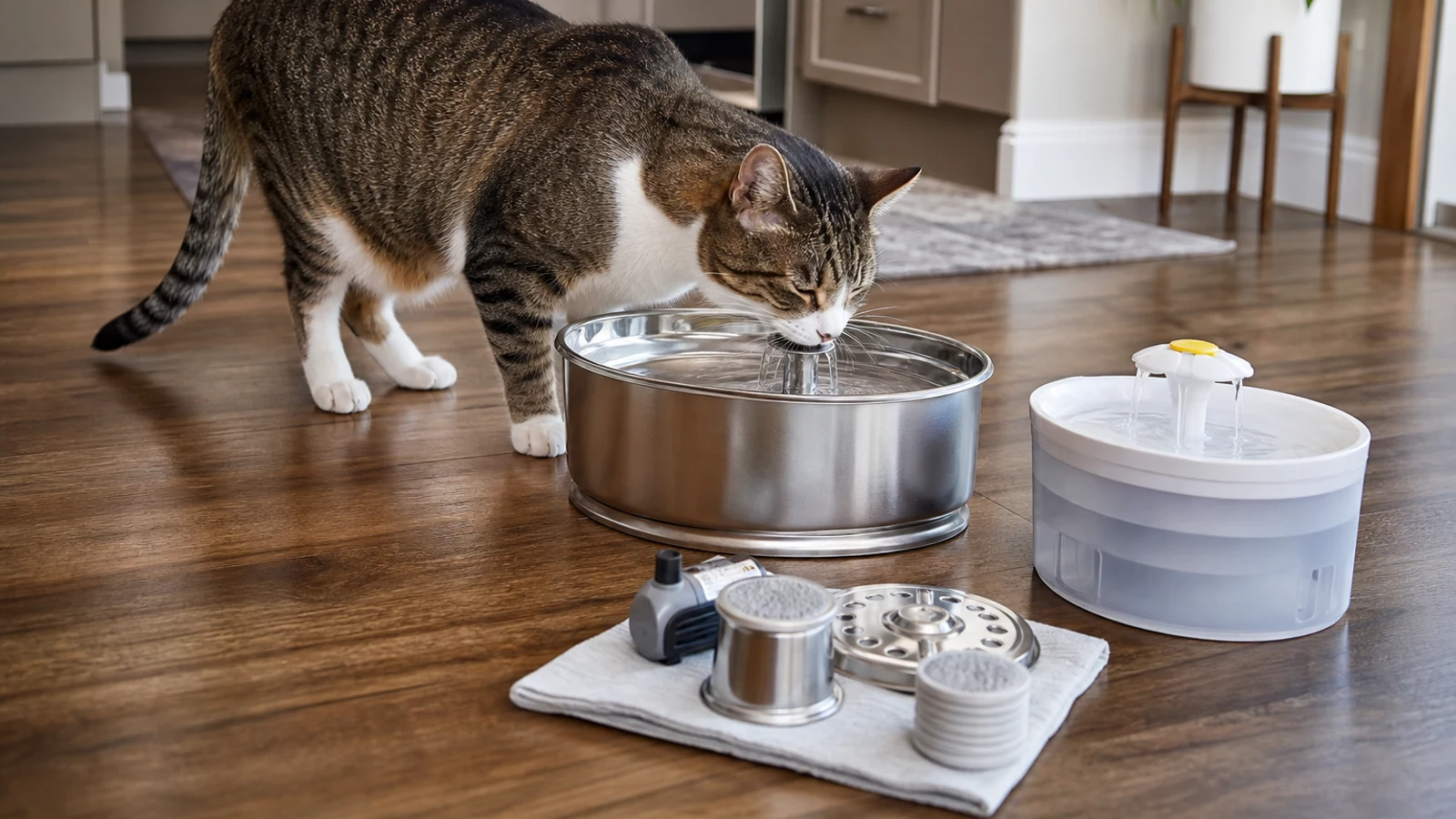
Stainless steel usually makes the drinking surface easier to keep smooth and inspect, but material alone does not determine maintenance. A plastic fountain with fewer parts and better pump access can be easier to clean than a complicated stainless-topped model.
Quick answer
For most households, a stainless steel drinking surface is the easier long-term choice because it resists scratches and is less likely to retain residue in a damaged surface. However, many fountains combine stainless steel with plastic reservoirs, lids, tubing, and pumps, so the design matters more than the label. Choose stainless steel when your cat has chin irritation, the fountain will be used heavily, or you want a durable drinking surface. Choose plastic when lower weight, lower upfront cost, or a simple dishwasher-safe design matters more. Either material still needs regular water changes, washing, filter replacement, and pump cleaning.
Shop this guide
Current Amazon options
Six current listings related to this buying decision. Use the guide to compare fit and trade-offs, then verify the latest seller, price, size, and availability on Amazon.
As an Amazon Associate I earn from qualifying purchases. Product availability, seller, price, and listing details can change.
Key decision checks
The practical difference is the drinking surface, not just the label
Stainless steel is usually easier to maintain at the surface your cat drinks from. It is smooth, non-porous, and less vulnerable to the deep scratches that can make plastic harder to inspect and scrub. That does not make it self-cleaning: food particles, hair, saliva residue, and mineral scale can still collect around the spout, seams, filter housing, and pump.
A product marketed as a stainless steel fountain may contain only a stainless steel top or bowl. The reservoir, pump cover, tubing, filter holder, and other wet components may still be plastic. Before comparing materials, identify which parts touch the water and which parts can be removed, brushed, rinsed, or placed in the dishwasher according to the manual.
- Best maintenance advantage of stainless steel: a smooth, durable drinking surface that is easier to inspect for residue.
- Best practical advantage of plastic: lighter weight and often simpler, lower-cost construction.
- Most important shared issue: the pump and hidden channels can collect debris regardless of the outer material.
Choose stainless steel when scratches, skin irritation, or heavy use are concerns
Stainless steel is the stronger default when you want a durable drinking surface that will tolerate repeated washing. It is also worth considering if your cat develops chin bumps or irritation while using plastic. Veterinary guidance notes that plastic dishes may be associated with feline chin acne in some cats, while replacing them with smooth, non-porous glass or stainless steel may help. Chin lesions still deserve veterinary assessment because several skin problems can look similar.
A stainless surface can be especially useful in a multi-cat home, where more drinking, shedding, and food debris create a heavier cleaning load. It may stay presentable longer than scratched plastic, but hard-water scale can still appear. Do not use abrasive pads or harsh cleaners unless the manufacturer specifically permits them; rinse thoroughly so detergent or cleaner residue does not remain where your cat drinks.
- Consider stainless steel if your cat has recurring chin irritation, blackheads, or inflamed skin around the mouth.
- Consider stainless steel for households expecting frequent washing or use by multiple pets.
- Do not treat stainless steel as a substitute for daily water attention or weekly disassembly.
Choose plastic when simplicity, weight, or replacement cost matters
A well-designed plastic fountain can be a sensible choice, particularly when it has few parts, broad openings, accessible corners, and clearly identified dishwasher-safe components. Plastic is also lighter and may be easier to lift, empty, or move for cleaning. For renters, small spaces, or households that need to place the fountain on a low shelf, that lower weight can be a genuine convenience rather than a compromise.
The trade-off is that plastic can scratch, discolor, or develop worn areas over time. Scratches do not automatically make a fountain unsafe, but they can make residue harder to remove and inspection more difficult. Replace a plastic part if it is cracked, warped, persistently cloudy, or damaged in a way that prevents thorough cleaning. Look for food-safe construction and follow the specific care instructions instead of assuming all plastics tolerate the same dishwasher cycle.
- Plastic may fit better when the fountain must be moved often or cleaned in a small sink.
- Prefer broad, open pieces over narrow channels and decorative crevices that trap hair or slime.
- Inspect plastic after washing; a fountain that is technically dishwasher-safe may still have parts that require hand cleaning.
The pump and filter determine most of the real maintenance
The pump is commonly the least convenient part of a cat fountain because it contains an impeller, intake area, and small passages where hair and mineral deposits can collect. A stainless steel bowl will not solve a clogged pump. The better choice is the model that lets you remove the pump easily, open it without special tools, and reach the impeller with a small brush.
Filters also create an ongoing task. Manufacturer instructions vary, but current fountain guidance commonly calls for routine filter replacement and periodic pump cleaning. A filter that looks clean may still be exhausted, and rinsing it does not restore every filtering material. Check replacement-filter availability before buying, and keep a spare filter on hand if the fountain is your cat’s primary water source.
- Check whether the pump can be removed without turning the whole fountain upside down.
- Look for an accessible impeller cover and enough clearance for a small cleaning brush.
- Confirm the filter shape, replacement schedule, and whether filters are easy to obtain.
- Prefer a water-level design that makes it difficult for the pump to run dry.
Compare options for your pet
Stainless Steel vs Plastic Cat Water Fountain: Which Is Easier to Maintain?
Compare current Amazon listings using the fit and safety checks in this guide. Confirm size, specifications, seller and availability before ordering.
See on Amazon →As an Amazon Associate I earn from qualifying purchases. Links open Amazon search results; individual listings have not been independently verified.
Use a maintenance routine that works with either material
Material choice matters less than whether the fountain is maintained consistently. Change or top up water as needed so the pump remains covered, and inspect the water daily for hair, food, cloudiness, or odor. At least weekly, unplug the fountain, take apart the removable components, wash them with mild unscented soap and warm water, rinse thoroughly, and allow parts to dry as directed.
Clean the pump on the schedule in the fountain’s manual; some manufacturers specify every two weeks, while others specify monthly. Hard water, several cats, long hair, or wet food near the fountain may require more frequent attention. Never wash or submerge an electrical adapter, and unplug the unit before cleaning or removing parts. If flow drops or the pump becomes noisy, clean and inspect it rather than simply adding more water.
- Daily: check water level, remove visible debris, and confirm normal flow.
- Weekly: wash the fountain’s removable wet parts and inspect seams, corners, and the spout.
- Every two to four weeks, or as directed: replace the filter when due.
- Regularly: disassemble and clean the pump, especially if flow slows or noise increases.
How to compare two fountains before buying
If maintenance is your main goal, compare the construction diagram and care manual rather than relying on the material listed in the title. A stainless steel top paired with a sealed plastic reservoir may offer a better drinking surface but still be difficult to clean. Conversely, an all-plastic model with a wide basin, removable pump, washable filter screen, and few hidden channels may require less time per cleaning.
The best fountain is the one your cat will use and your household will maintain. Some cats prefer moving water, while others may ignore a fountain or dislike its pump noise. Introduce it beside the existing water source and do not remove all other water until you know your cat is drinking from it. A fountain is a product-choice aid, not treatment for poor intake or dehydration.
- Prioritize easy disassembly over a premium-sounding material claim.
- Check dishwasher guidance for every removable part, not just the bowl or top.
- Inspect the underside for trapped-water pockets, narrow channels, and inaccessible filter recesses.
- Compare pump noise, cord placement, refill access, and stability where the fountain will sit.
- Keep a regular bowl available during introduction and whenever the fountain is being cleaned.
Bottom line: stainless steel is the safer maintenance bet, but design wins
Choose stainless steel when you want the drinking surface to resist scratches, your cat has possible plastic-related chin irritation, or the fountain will receive heavy daily use. Choose plastic when the model is lighter, easier to disassemble, and better suited to your cleaning setup. In either case, avoid a fountain that has many hidden recesses or a pump you cannot open.
A veterinarian should assess persistent chin inflammation, reduced drinking, repeated vomiting, lethargy, or other signs of illness. If your cat is dehydrated or has a condition such as kidney disease, diabetes, or urinary disease, a fountain may support access to water but should not replace veterinary advice about hydration, diet, or treatment.
- Best overall maintenance default: stainless steel drinking surface with a simple, accessible plastic pump system.
- Best value decision: the easiest model for your household to disassemble and clean correctly.
- Do not buy on material alone; inspect the wet pathway from reservoir to spout.
Common questions
FAQ
Are stainless steel cat fountains easier to clean than plastic fountains?
Usually, the stainless steel drinking surface is easier to keep smooth and inspect because it resists scratches. The complete fountain may not be easier if its pump, filter housing, or reservoir has narrow channels. Compare access to every wet component, not just the visible bowl.
Do stainless steel cat fountains contain any plastic?
Many do. Pumps, power cords, filter holders, tubing, lids, and reservoirs are often plastic even when the drinking tray is stainless steel. Read the product diagram or manual if the amount of water-contact plastic matters to you.
Can plastic cat fountains cause chin acne?
Plastic may be associated with chin acne in some cats, especially when its surface is scratched or difficult to keep clean. Switching to a smooth, non-porous material may help, but persistent or painful chin lesions should be evaluated by a veterinarian.
How often should I clean a cat water fountain?
A practical starting point is daily water and debris checks, weekly washing of removable wet parts, and pump cleaning plus filter replacement according to the manufacturer’s schedule. Heavy use, hard water, long hair, or visible residue may require more frequent cleaning.
Is a stainless steel fountain safer than a plastic fountain?
Neither material is automatically safe when neglected. A food-safe, intact plastic fountain can be appropriate, while stainless steel can still develop residue, mineral scale, or contamination in the pump. Consistent cleaning, complete rinsing, and timely replacement of damaged parts matter most.
Should I use a fountain if my cat is not drinking?
A fountain may encourage some cats to drink, but refusal to drink or a sudden change in water intake can signal illness. Keep fresh water available and contact your veterinarian promptly if your cat appears dehydrated, is lethargic, is vomiting, or has other concerning symptoms.
Sources & further reading
Where the factual guidance comes from
Ready to choose?
Stainless Steel vs Plastic Cat Water Fountain: Which Is Easier to Maintain?
Compare current Amazon listings using the fit and safety checks in this guide. Confirm size, specifications, seller and availability before ordering.
See on Amazon →As an Amazon Associate I earn from qualifying purchases. Links open Amazon search results; individual listings have not been independently verified.
Keep researching