Cats · Litter & Cleanup
Clumping vs Non-Clumping Cat Litter: Which Is Easier to Live With?
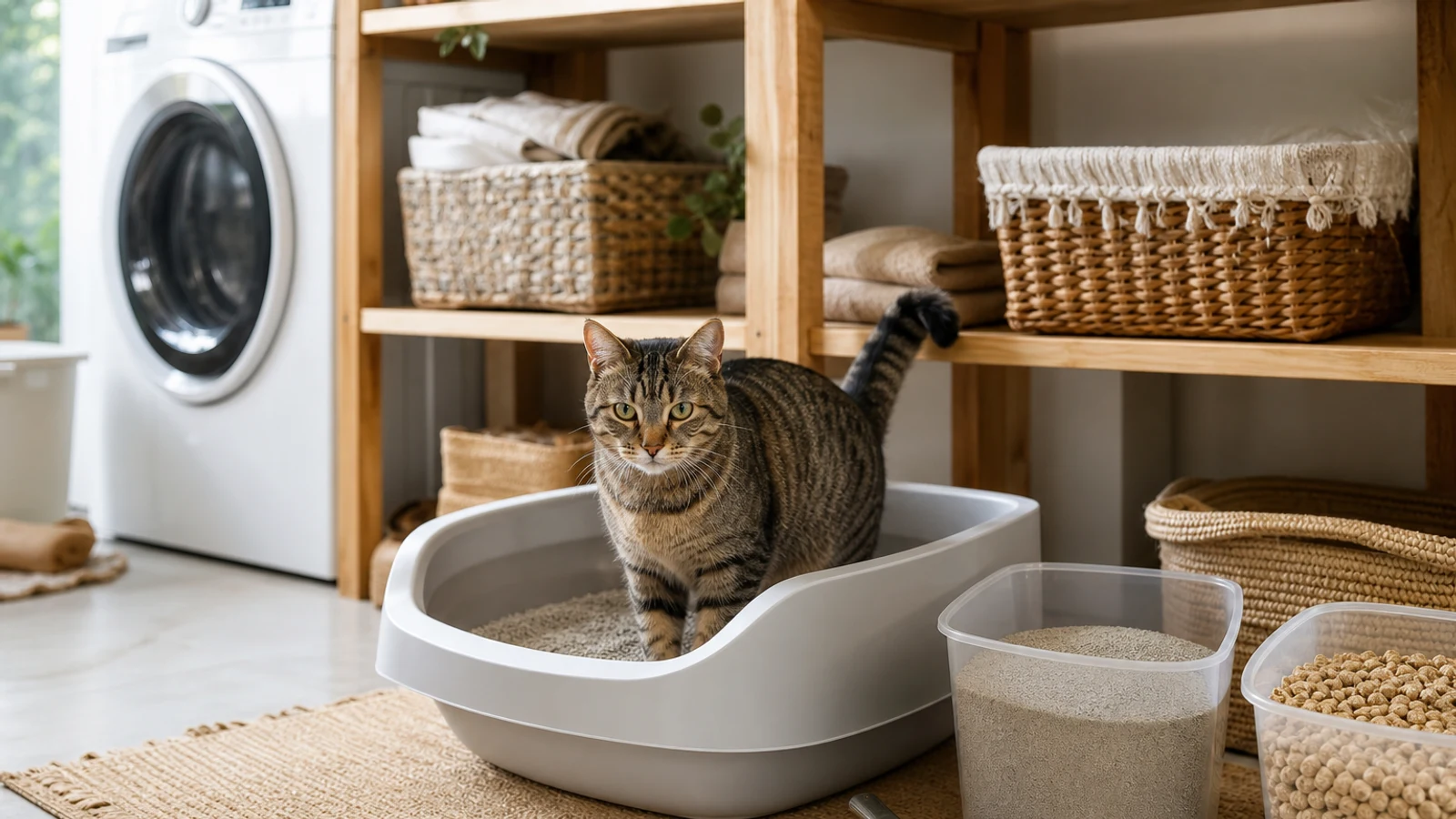
Clumping litter usually makes daily cleanup easier because urine can be removed without replacing the whole box. Non-clumping litter can still suit cats and households that prefer pellets, simpler dumping and refilling, or a specific texture. The better choice depends on your cat’s acceptance and the cleaning routine you can maintain consistently.
Quick answer
For most adult cats and busy households, unscented clumping litter is usually easier to live with because you can remove urine clumps and stool while leaving the clean litter in place. Non-clumping litter may be a better fit if your cat prefers its texture, your household uses a pellet-style system, or you would rather perform more complete litter changes than scoop daily. Neither type is automatically best: cat acceptance, low odor, manageable dust and consistent cleaning matter more than the label alone.
Shop this guide
Current Amazon options
Six current listings related to this buying decision. Use the guide to compare fit and trade-offs, then verify the latest seller, price, size, and availability on Amazon.
As an Amazon Associate I earn from qualifying purchases. Product availability, seller, price, and listing details can change.
Key decision checks
The practical difference is how urine is removed
Clumping litter binds with urine and forms a scoopable mass. You remove the wet clump and stool, then top up the box as needed. The remaining litter stays usable, so the everyday task is targeted removal rather than emptying the entire tray.
Non-clumping litter absorbs urine without forming a removable ball. Moisture is distributed through the material, which means the box eventually needs a full change instead of having only wet areas removed. Some non-clumping products, including paper, wood or crystal styles, handle moisture differently, but they still do not offer the same urine-scooping routine.
- Clumping: scoop wet clumps and stool, then replenish lost litter.
- Non-clumping: remove stool, monitor saturation and replace the full litter more often.
- Both types still require a clean, accessible box and a routine your cat will accept.
Which type is easier to clean every day?
Clumping litter usually wins on daily convenience. If you can scoop consistently, most of the box remains clean between full changes, and you can see exactly what has been removed. This is especially useful in a multi-cat home or when the box is located in a frequently used living area.
Non-clumping litter shifts more of the work to full-box changes. That can be straightforward for someone who prefers a dump-and-refill routine, but it may become less convenient when several cats use the same box or when nobody can monitor moisture and odor closely. A product that seems simpler at first can require more frequent complete cleaning.
- Choose clumping if you prefer short, frequent maintenance.
- Choose non-clumping if you dislike separating urine clumps and can reliably schedule full changes.
- Whichever type you use, remove stool promptly and follow the product’s maintenance instructions.
Odor control depends on removal, not just litter type
Clumping litter can help control odor because urine is removed from the box instead of remaining mixed through the substrate. That advantage disappears when clumps are left for too long, the box is underfilled, or the litter is not replenished. Strong fragrance may mask odor for people without making the box more acceptable to a cat.
Non-clumping litter can control odor when the material is absorbent and changed before it becomes saturated. Its performance depends heavily on the box size, number of cats, ventilation and replacement schedule. A coarse pellet or crystal product may produce a different odor and tracking profile than traditional non-clumping clay, so compare the actual material rather than assuming every non-clumping litter behaves the same way.
- Prioritize unscented options when possible, especially if your cat avoids strongly scented products.
- Check whether urine is pooling at the bottom or remaining damp after cleaning.
- Do not use fragrance as a substitute for removing waste and changing saturated litter.
Cat preference should decide close calls
Cats often care more about texture, scent and cleanliness than the clumping label. The 2021 AAHA/AAFP feline life-stage guidelines note that most adult cats prefer clumping litter and that most cats prefer plain, unscented litter, while also emphasizing individual variation. A cat that already uses a non-clumping product comfortably may have no reason to change.
Fine, sand-like litter is often a practical starting point, but some cats prefer larger pellets or a different material. If you are unsure, offer separate boxes with different litter types rather than mixing a new product into the only available box. Watch which box your cat chooses and whether use remains normal during the transition.
- Keep the familiar litter available while testing a new one.
- Avoid changing litter, box style and box location all at once.
- Treat refusal, repeated accidents or sudden changes in box use as a reason to investigate rather than punish.
Compare options for your pet
Clumping vs Non-Clumping Cat Litter: Which Is Easier to Live With?
Compare current Amazon listings using the fit and safety checks in this guide. Confirm size, specifications, seller and availability before ordering.
See on Amazon →As an Amazon Associate I earn from qualifying purchases. Links open Amazon search results; individual listings have not been independently verified.
Kittens, seniors and cats with health concerns need more care
For kittens, familiarity and supervision matter more than choosing a universal winner. AAHA/AAFP guidance recommends starting with unscented clumping sand litter and/or the litter the kitten previously used, while allowing kittens to show their preferences. If a kitten repeatedly eats litter, has digestive signs or cannot use the box reliably, ask a veterinarian for individualized advice before making a product decision.
Older cats may need a low-entry box, a nearby location and a softer substrate if joint pain or mobility limits make digging uncomfortable. Litter choice can also matter when a cat has respiratory signs, a history of litter eating, urinary problems or unexplained elimination outside the box. Product guidance is not a diagnosis; new or persistent changes in urination, defecation or box use warrant veterinary attention.
- Kittens: preserve the familiar texture and monitor exploration or litter eating.
- Senior cats: prioritize easy access, a stable box and a comfortable substrate.
- Health concerns: ask your veterinarian before relying on litter changes to solve the problem.
Waste, tracking and household fit
Clumping litter can reduce the amount of clean litter discarded during each cleaning because you remove only the wet portions. However, it may produce more loose granules around the box, and clay-based versions can be heavy to carry. The quality of the clumps also varies: weak clumps may break apart, while very hard clumps can stick to the box bottom if the litter depth or cleaning routine is poor.
Non-clumping litter may appeal to households seeking pellets, paper or other larger-textured materials that can track differently from fine clay. It may also simplify a full reset because there are no urine clumps to separate. The trade-off is that more usable litter may be discarded during each complete change, and odor can worsen if replacement is delayed. Consider the chore you are most likely to perform reliably, not the one that sounds easiest on the package.
- For apartments or small homes, compare odor, tracking and storage space together.
- For multiple cats, plan for faster saturation and more frequent cleaning regardless of type.
- For automated boxes, check the manufacturer’s required litter type; many systems are designed around clumping material.
How to choose without making the box a trial-and-error problem
Start with the cat’s current litter, then identify the household problem you want to solve. If the main issue is daily cleanup, try an unscented clumping litter with a texture your cat already accepts. If the main issue is tracking, dust or pellet preference, compare non-clumping materials as well as clumping alternatives rather than assuming clumping is the only option.
Make one change at a time and keep enough of the old setup available during the transition. Scoop clumping litter regularly, remove stool from either type promptly, and replace non-clumping litter before it becomes saturated. If your cat stops using the box, returns to frequent accidents or shows pain, straining or unusual urine output, stop treating the problem as a shopping decision and contact a veterinarian.
- Best starting point for many adult cats: unscented, fine-textured clumping litter.
- Best reason to stay with non-clumping: your cat prefers it or your litter system depends on it.
- Best buying checklist: texture, scent, dust, tracking, scoopability, full-change effort and supply storage.
- Best transition rule: preserve access to a familiar option until the new litter is clearly accepted.
Common questions
FAQ
Is clumping litter better for most cats?
It is often a practical starting point for adult cats because urine can be removed with a scoop, and feline guidelines report that most adult cats prefer clumping litter. Individual preference still matters, so a cat that uses a suitable non-clumping litter comfortably does not automatically need to switch.
Does non-clumping litter smell worse?
It can develop odor sooner if urine saturates the box and full changes are delayed, but performance varies by material and cleaning schedule. A well-maintained non-clumping box may work well, while neglected clumping litter can also smell.
Should kittens use non-clumping litter?
Do not assume that all kittens need non-clumping litter. Current AAHA/AAFP guidance supports starting with unscented clumping sand litter and/or the kitten’s previous litter while allowing preference. Ask a veterinarian for advice if the kitten eats litter or has digestive or elimination problems.
Can I switch from non-clumping to clumping litter?
Yes, but make the change gradually when possible. Keep a box with the familiar litter while introducing the new option in a separate box or by slowly blending materials, and watch for avoidance or accidents.
Is unscented litter usually better than scented litter?
Many cats prefer plain, unscented litter, and fragrance can be aversive to some cats. Unscented litter also makes it easier to notice changes in urine or stool odor. Choose based on your cat’s response rather than using fragrance as the main odor-control strategy.
When should a veterinarian be involved?
Contact a veterinarian for sudden box avoidance, repeated accidents, straining, frequent small urinations, blood, pain, diarrhea, constipation or suspected litter eating. These signs may reflect a medical or behavioral problem that changing litter alone will not resolve.
Sources & further reading
Where the factual guidance comes from
Ready to choose?
Clumping vs Non-Clumping Cat Litter: Which Is Easier to Live With?
Compare current Amazon listings using the fit and safety checks in this guide. Confirm size, specifications, seller and availability before ordering.
See on Amazon →As an Amazon Associate I earn from qualifying purchases. Links open Amazon search results; individual listings have not been independently verified.
Keep researching