Dogs · Home & Comfort
Dog Crate vs Playpen: Which Setup Fits Your Home and Routine?
A crate offers tighter containment and supports sleep, travel, and focused house-training. A playpen gives a dog more room to move, play, and settle, but it needs more space and may be easier for an active or determined dog to escape. Many homes benefit from using both.
Quick answer
Choose a crate when you need compact, secure containment for sleep, travel, short rest periods, or focused house-training. Choose a playpen when your dog needs more room to stand, move, play quietly, and use a puppy-proofed area while you remain nearby or cannot provide continuous supervision. For many puppies, a crate inside a properly secured playpen combines the two jobs. Neither setup replaces exercise, social contact, training, or bathroom breaks.
Shop this guide
Current Amazon options
Six current listings related to this buying decision. Use the guide to compare fit and trade-offs, then verify the latest seller, price, size, and availability on Amazon.
As an Amazon Associate I earn from qualifying purchases. Product availability, seller, price, and listing details can change.
Key decision checks
The practical difference: tight containment versus usable floor space
A dog crate is a small, enclosed resting space. It is usually the better fit when the job is to help a dog settle, prevent access to household hazards, support a predictable nap routine, or provide a familiar space during travel. A correctly sized crate should allow the dog to stand, turn around, lie down, and change position comfortably without becoming a second room.
A playpen, also called an exercise pen, creates a larger boundary around the dog. It can hold a bed, safe chew, water, and selected toys while leaving room for brief movement. That extra space can make it more practical for a puppy who cannot yet manage a long interval between bathroom breaks, or for a calm dog who becomes distressed when confined tightly. More space, however, does not automatically make a pen safe or suitable for every dog.
- Crate: best for compact rest, travel, nighttime routines, and close management.
- Playpen: best for a larger puppy-safe zone, supervised independent time, and gradual access to the home.
- Both: useful when a dog needs a secure sleeping space inside a larger controlled area.
Choose a crate for these household jobs
A crate is usually the clearer choice when your priority is teaching a puppy where to settle and reducing opportunities for chewing or indoor accidents while you are actively managing the routine. Dogs often avoid soiling their sleeping area, which is why a properly sized crate can support house-training. It still requires frequent outdoor trips and supervision; using a crate as a substitute for a bathroom schedule can create problems rather than solve them.
Crates are also practical when space is limited, when you need to transport the dog, or when visitors, contractors, travel, or household activity make a smaller retreat useful. Introduce the crate gradually with rewards and an open door at first. If the dog shows panic, persistent escape attempts, heavy drooling, or other clear distress, stop increasing confinement and seek qualified behavior help rather than forcing longer sessions.
- Small homes where a larger enclosure would block walkways or furniture.
- Nighttime rest or short periods when the dog cannot be watched closely.
- Travel, boarding, grooming, or other situations where a familiar crate may be useful.
- Dogs that voluntarily choose the crate as a quiet retreat after positive introduction.
Choose a playpen when room to move matters
A playpen fits households that need controlled freedom rather than the tightest possible confinement. It can give a puppy room to change position, play with an appropriate toy, and settle near the family while reducing access to wires, stairs, furniture, and other hazards. It may also suit a calm adult dog who is trustworthy in a limited area but not ready for full access to the home.
The trade-off is that a pen demands more floor space and more careful setup. A determined puppy may climb, push, chew, or move lightweight panels. A pen also gives more opportunity for a dog to eliminate away from its bed, so it may be less helpful than a crate for a household focused on outdoor house-training. If your dog needs to be alone longer than it can comfortably hold its bladder, arrange a break or professional care rather than relying on either product for an extended stretch.
- Work-from-home periods when the dog should remain nearby but cannot roam freely.
- Puppies who need a larger puppy-proofed area between supervised activities.
- Calm dogs that become frustrated or fearful in a tightly enclosed crate.
- Homes with enough clear floor space for stable placement and easy cleaning.
For many puppies, a crate-and-pen setup is more flexible
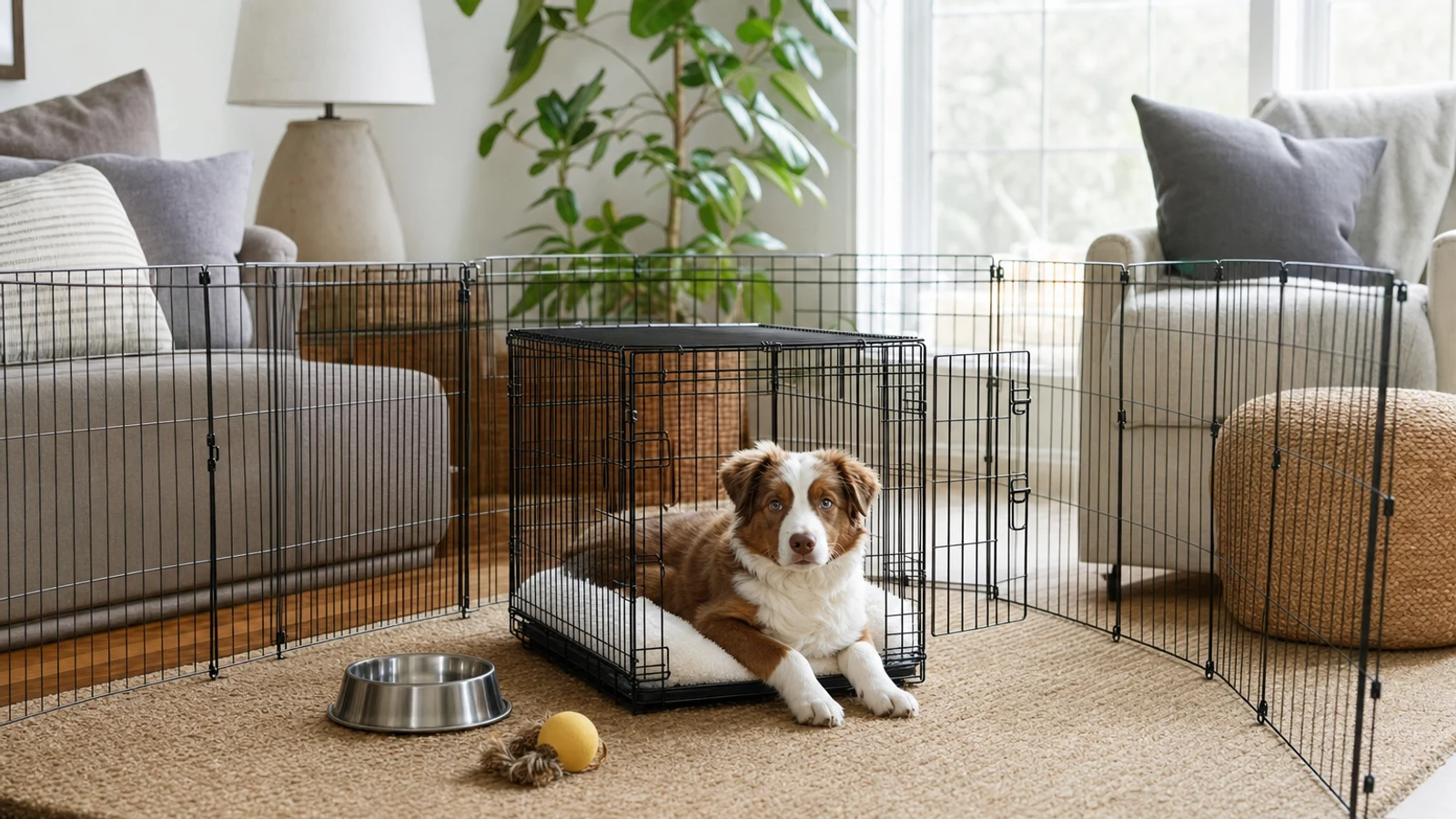
A crate inside a playpen can separate two jobs: the crate becomes the sleep and retreat area, while the pen provides limited movement around it. This arrangement can work well when a puppy needs a safe place to rest but also needs more room during a longer interval. The crate door can remain open during selected supervised periods, allowing the dog to choose the resting space without treating the crate as the entire enclosure.
This combination is not automatically safer. Secure the pen so it cannot slide, tip, or create gaps, and remove anything the puppy can pull through the sides. Keep collars, harnesses, and dangling accessories away from unsupervised confinement if they could catch on the enclosure. Introduce the whole setup in short, positive sessions while you are home before using it during an absence.
- Use the crate for naps, overnight rest, and short focused periods.
- Use the pen for controlled awake time when the puppy has already had a bathroom opportunity.
- Keep the area uncluttered and inspect it whenever the dog learns a new escape or chewing behavior.
- Increase freedom gradually instead of assuming a larger area is suitable for an unsupervised dog.
Compare options for your pet
Dog Crate vs Playpen: Which Setup Fits Your Home and Routine?
Compare current Amazon listings using the fit and safety checks in this guide. Confirm size, specifications, seller and availability before ordering.
See on Amazon →As an Amazon Associate I earn from qualifying purchases. Links open Amazon search results; individual listings have not been independently verified.
Match the setup to your dog, not just your floor plan
The best choice depends on how the individual dog responds to confinement. A calm, small puppy in a stable pen may do well with more room, while a large, active, or escape-prone dog may defeat a pen quickly. Conversely, a dog that panics when a door closes may need a larger puppy-proofed area and a gradual behavior plan rather than more time in a crate.
Consider the dog’s age, size, mobility, chewing strength, previous confinement experience, and ability to settle. Senior dogs may need easier entry and a comfortable surface; puppies need frequent bathroom opportunities; newly adopted dogs may require slower introductions. If the setup is being used for post-surgical restriction, injury recovery, or any prescribed activity limit, follow the veterinarian’s instructions instead of choosing based only on convenience.
- Behavior: Does the dog settle, vocalize, scratch, climb, chew, or attempt to escape?
- Routine: How often can someone provide bathroom breaks, exercise, meals, and interaction?
- Space: Can the enclosure sit away from drafts, heat sources, door traffic, and hazards?
- Growth: Will the setup remain appropriate as the dog becomes larger, stronger, or more mobile?
Safety and comfort checks before regular use
Place either setup in a social part of the home rather than isolating the dog for long periods. The dog should receive daily exercise, training, interaction, and opportunities to rest outside the enclosure. Confinement should manage access and support a routine, not become the dog’s default environment for an entire workday.
Inspect the product and surrounding area regularly. Check for bent panels, broken latches, sharp edges, loose fasteners, chewable coatings, climbing opportunities, and nearby cords or furniture. Avoid leaving bedding, toys, or chews that the particular dog can shred or swallow when unsupervised. A veterinarian or qualified behavior professional is appropriate when confinement causes panic, repeated self-injury risk, severe separation-related distress, or when medical recovery is the reason for restricting movement.
- Use positive introduction; never use the crate or pen as punishment.
- Provide bathroom breaks based on the dog’s age, health, and individual ability.
- Keep water and enrichment choices appropriate for the dog and the length of the session.
- Stop and reassess if the dog shows escalating distress, overheating, injury, or repeated escape attempts.
Bottom line: pick the job first
Choose the crate if your main need is a compact den for sleep, travel, short rest, or closely managed house-training. Choose the playpen if your dog needs a larger controlled zone and can remain calm without climbing, pushing, or chewing the enclosure. If your home routine changes throughout the day, using both can provide a crate for rest and a pen for limited awake time.
Neither option is a complete answer to long absences, under-exercise, separation anxiety, or a medical restriction plan. The right setup is the one your dog can use calmly, fits the available space, and supports the bathroom, exercise, social, and training schedule you can realistically maintain.
Common questions
FAQ
Can a playpen replace a dog crate?
Sometimes, but not for every job. A playpen can replace a crate for controlled home access if the dog settles safely and the pen is secure. It is less convenient for travel and may be less effective for focused house-training because it provides room to eliminate away from the sleeping area.
Should I put a crate inside a playpen?
This can be a practical arrangement for puppies and some adult dogs. The crate provides a quiet resting space while the pen gives limited room for movement. Introduce both gradually, secure the pen, and monitor the dog before leaving the setup unattended.
Is a crate or playpen better for a puppy at night?
A crate often supports a clearer nighttime sleep and bathroom routine, provided the puppy receives appropriate breaks and has been introduced positively. A pen may suit a puppy who cannot yet manage the interval or who becomes distressed in a smaller space, but it may make outdoor house-training less direct.
How long can my dog stay in a crate or playpen?
There is no single safe time limit for every dog. Age, bladder control, health, temperament, exercise, and prior training matter. A dog should not be confined longer than it can remain physically comfortable or emotionally settled. Ask a veterinarian or qualified trainer for individualized guidance, especially for puppies, seniors, or dogs with anxiety.
What should I do if my dog panics in the crate?
Do not simply increase the duration or force the dog inside. Return to short, reward-based steps with the door open, and consider a larger puppy-proofed area while you seek help. Signs such as frantic scratching, biting at the door, persistent howling, shaking, or heavy drooling warrant guidance from a qualified behavior professional.
Sources & further reading
Where the factual guidance comes from
Ready to choose?
Dog Crate vs Playpen: Which Setup Fits Your Home and Routine?
Compare current Amazon listings using the fit and safety checks in this guide. Confirm size, specifications, seller and availability before ordering.
See on Amazon →As an Amazon Associate I earn from qualifying purchases. Links open Amazon search results; individual listings have not been independently verified.
Keep researching