Dogs · Play & Enrichment
Snuffle Mat vs Puzzle Toy for Dogs: Which Adds Better Enrichment?
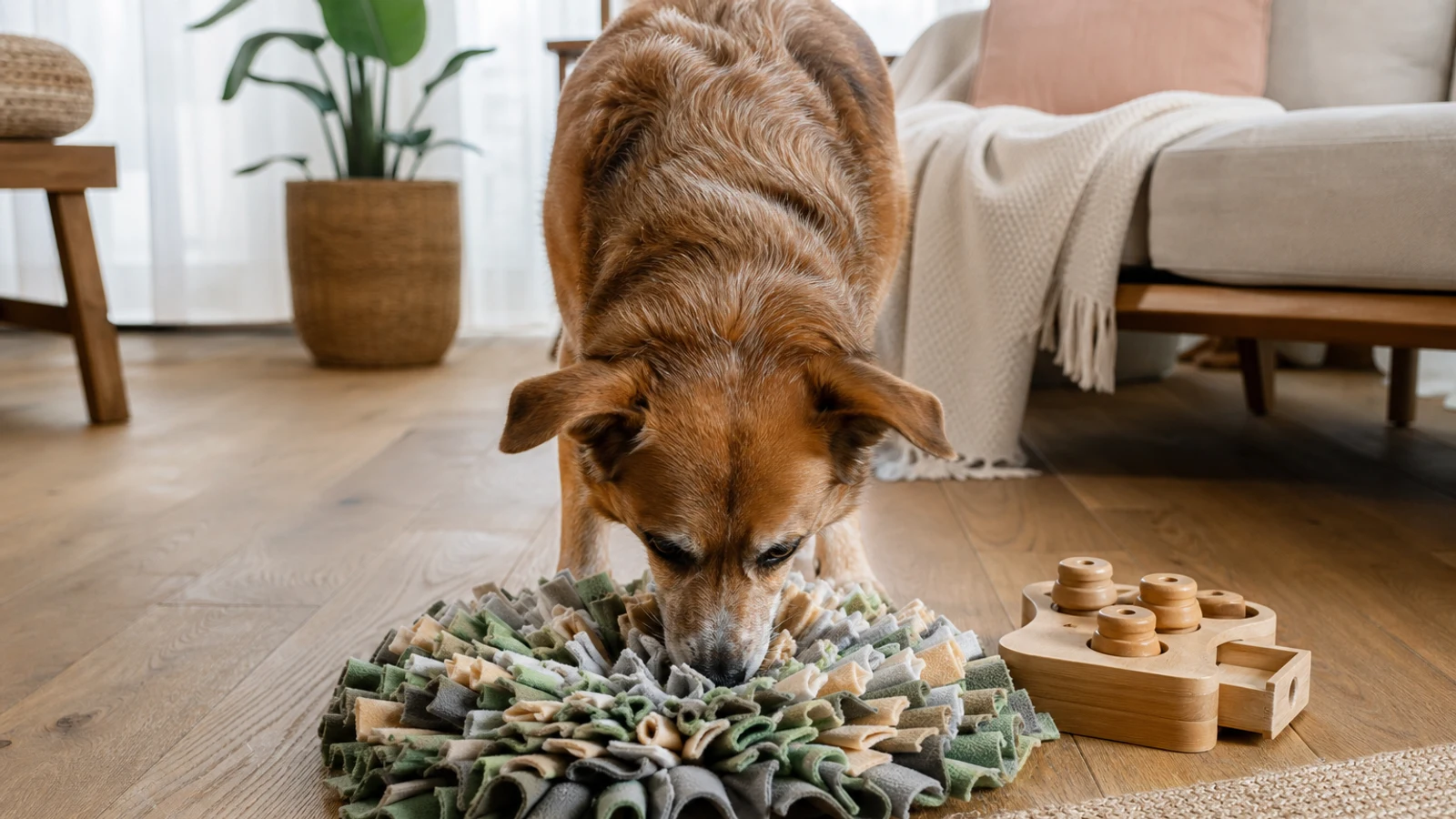
Snuffle mats make dogs search with their noses, while puzzle toys ask them to move, lift, slide, or roll parts to reach food. The better choice depends on whether your dog needs an easy sniffing activity, a more hands-on challenge, or both.
Quick answer
Choose a snuffle mat if your dog enjoys sniffing, is new to food enrichment, or benefits from a low-impact activity in a small space. Choose a puzzle toy if your dog likes manipulating objects and needs a more structured challenge. Many households can use both: a snuffle mat for easy daily foraging and a puzzle toy for supervised variety. Neither replaces walks, training, play, or veterinary care, and both should be matched to the dog’s chewing habits and difficulty tolerance.
Shop this guide
Current Amazon options
Six current listings related to this buying decision. Use the guide to compare fit and trade-offs, then verify the latest seller, price, size, and availability on Amazon.
As an Amazon Associate I earn from qualifying purchases. Product availability, seller, price, and listing details can change.
Key decision checks
The practical difference comes down to how your dog gets the food
A snuffle mat hides kibble or small dry treats among fleece strips, so the main job is searching with the nose. A puzzle toy usually requires a dog to push, slide, lift, flip, roll, or otherwise manipulate parts before food is released. Both are food-based enrichment, but they exercise different problem-solving routes and create different cleanup and supervision demands.
For most dogs, a snuffle mat is the easier starting point. A puzzle toy becomes more useful when your dog already understands that interacting with an object makes food appear and still wants a more involved challenge. The best choice is not the product with the highest difficulty; it is the one your dog can use successfully without becoming frustrated, destructive, or uninterested.
- Best first option for many dogs: a simple snuffle mat with visible or lightly hidden kibble.
- Best for dogs that enjoy hands-on tasks: an appropriately sized puzzle toy with movable parts.
- Best overall approach for variety: rotate both, using part of the regular daily food allotment rather than adding large amounts of treats.
Choose a snuffle mat for sniffing, simple setup, and low-impact foraging
A snuffle mat is usually the better fit for dogs that naturally enjoy nose work, scatter feeding, searching around the house, or calmly working through a soft surface. Because the mat stays in place, the dog does not need to chase or push a moving object. That can make it practical for smaller rooms, older dogs with limited mobility, or households looking for a quiet enrichment activity.
The trade-off is that a snuffle mat may provide less variety for a dog that quickly learns where food is hidden or prefers active object manipulation. It also requires close attention to the fabric and backing. A dog that pulls out fleece, chews the mat, or tries to swallow pieces should not be left with it unsupervised. Remove damaged mats and follow the maker’s washing instructions.
- Good fit: sniffing-oriented dogs, beginners, calm indoor enrichment, and dogs that dislike noisy or moving toys.
- Possible limitation: less challenge for experienced foragers unless hiding patterns and food placement are varied.
- Household consideration: fabric can retain food particles, so regular cleaning and complete drying matter.
Choose a puzzle toy for manipulation and a more structured challenge
A puzzle toy is often the better choice for a dog that enjoys using its paws and nose together, nudging objects, opening simple compartments, or rolling a dispenser for food. The challenge can be increased by choosing a design with more steps, smaller openings, or multiple compartments. This makes puzzle toys useful when a dog has mastered simple searching and needs a different kind of engagement.
More difficulty is not automatically better. A puzzle that is too complex can cause a dog to quit, paw aggressively, chew the product, or become tense around the food. Begin with an easy design and demonstrate the basic action if needed. Supervise early sessions, especially with puppies, strong chewers, dogs that guard food, or dogs likely to swallow broken pieces.
- Good fit: dogs that enjoy learning object-based tasks and remain interested after easy foraging games.
- Possible limitation: movable parts can be lost, damaged, or swallowed if the product is poorly matched to the dog.
- Household consideration: hard surfaces may be easier to wipe clean, but inspect seams, hinges, lids, and dispensing openings after use.
Match the option to your dog, not just the product category
Temperament, body size, eating style, and physical ability matter more than the label on the package. A food-motivated dog may work enthusiastically with either option, while a dog that is cautious around new objects may accept a mat more readily. A dog with neck, dental, paw, or mobility concerns may need a gentler setup, and a veterinarian can help determine whether a particular motion is appropriate.
Use your dog’s behavior during the first few sessions as the decision test. Interest, relaxed body language, steady progress, and successful food retrieval suggest a suitable difficulty. Repeated frustration, frantic pawing, chewing the equipment, guarding, or abandoning the activity indicate that the setup should be simplified, changed, or stopped.
- For a beginner: spread food loosely across a mat or use a puzzle with obvious openings.
- For a fast eater: use a food-based activity that slows access while still allowing steady success.
- For a persistent chewer: avoid soft or fragile designs that can be shredded and swallowed.
- For a dog that guards food: use the activity in a separate area and seek qualified behavior guidance if guarding is serious.
Compare options for your pet
Snuffle Mat vs Puzzle Toy for Dogs: Which Adds Better Enrichment?
Compare current Amazon listings using the fit and safety checks in this guide. Confirm size, specifications, seller and availability before ordering.
See on Amazon →As an Amazon Associate I earn from qualifying purchases. Links open Amazon search results; individual listings have not been independently verified.
Use regular meals, supervise early, and control the difficulty
Both products can be used with part or all of a dog’s regular dry-food ration when the design allows it. Counting that food as part of the daily diet helps avoid unintentionally adding calories through treats. If you use treats, account for them in the dog’s overall feeding plan. Dogs on prescription diets, dogs with food allergies, and dogs with weight concerns should have enrichment foods reviewed with a veterinarian.
Start when your dog is mildly interested in food rather than highly distressed or overexcited. Show the dog an easy success, then let it continue independently. Increase difficulty gradually by hiding food more deeply in a mat or selecting a puzzle with an additional step. If the dog repeatedly fails, return to an easier version instead of assuming it needs more persistence.
- Inspect before every session for loose fleece, cracked plastic, detached pieces, damaged stitching, or sharp edges.
- Supervise new products and any dog that chews, guards, or tries to ingest parts of the activity.
- Stop if the dog shows distress, pain, repeated frustration, or sudden reluctance to use a previously enjoyed item.
- Keep food-based toys away from other pets when competition or guarding could develop.
Cleaning and storage can decide which option works better at home
A snuffle mat usually needs more hands-on cleaning because crumbs and moisture can settle between fabric strips. Use only food that will remain safe during the planned session, remove leftover pieces, and wash and dry the mat as directed. A damp or food-contaminated mat should not be stored for the next use. Rotating two washable mats can make regular cleaning easier.
Puzzle toys vary widely. Simple wipe-clean designs may be convenient for dry kibble, while crevices and enclosed compartments can retain food. Wet food may require more thorough washing and faster cleanup. Store either type out of reach between sessions if your dog is likely to chew it when unsupervised; putting the item away also helps preserve novelty.
- Dry-food use is generally simpler to clean than moist fillings.
- Choose a design whose parts you can inspect and clean without guessing.
- Retire any enrichment product once damage creates a swallowing or injury risk.
Bottom line: start with the easier tool, then add variety
For most households choosing one first product, a simple snuffle mat offers an accessible introduction to scent-based foraging and is often easy to scale down for beginners. A puzzle toy is the stronger choice when the dog clearly enjoys object manipulation, needs a more structured challenge, or loses interest in straightforward searching. The right difficulty should produce engagement and successful food retrieval, not exhaustion or frustration.
There is no need to make the choice permanent. Use a mat for short, calm enrichment sessions and a puzzle toy for supervised variety, adjusting the food amount so enrichment fits the dog’s daily diet. If your dog stops using an activity because of apparent pain, dental trouble, neck discomfort, or a sudden behavior change, pause the product and contact your veterinarian rather than treating the issue as a training problem.
- Pick a snuffle mat first for easy sniffing, quiet use, and beginner-friendly foraging.
- Pick a puzzle toy first for hands-on problem solving and dogs that enjoy manipulating objects.
- Use both when your dog enjoys variety and you can supervise, clean, and maintain each one safely.
Common questions
FAQ
Can a snuffle mat replace a puzzle toy?
Sometimes, but they do not provide exactly the same experience. A snuffle mat emphasizes sniffing and searching through fabric, while many puzzle toys emphasize moving or manipulating parts. A dog may enjoy one more than the other, so observe which activity produces relaxed, sustained engagement.
Are snuffle mats good for puppies?
They can be a suitable beginner enrichment option when the mat is durable, appropriately sized, and used under supervision. Puppies may chew or ingest fleece, backing, or loose pieces, so remove the mat if chewing begins and choose a simpler setup that allows easy success.
Can dogs eat every meal from a snuffle mat or puzzle toy?
A food-based activity can replace some or all of a meal when the product is appropriate and the dog receives a complete daily ration. Track the amount provided, prevent food from spoiling, and ask a veterinarian about the best approach for dogs with medical conditions, special diets, or weight-management needs.
What if my dog gets frustrated with a puzzle toy?
Make the task easier immediately. Use larger or more visible food rewards, open compartments, demonstrate one successful action, or switch temporarily to a snuffle mat. Persistent frustration, guarding, chewing, or sudden reluctance means the toy may be a poor fit or the dog may need professional guidance.
Should I leave a snuffle mat or puzzle toy out while I am away?
Do not assume either product is safe for unsupervised use. Dogs that chew, swallow fabric or plastic, damage parts, or guard food should use enrichment only with active supervision. Follow the manufacturer’s instructions and remove the item when the session ends.
Sources & further reading
Where the factual guidance comes from
Ready to choose?
Snuffle Mat vs Puzzle Toy for Dogs: Which Adds Better Enrichment?
Compare current Amazon listings using the fit and safety checks in this guide. Confirm size, specifications, seller and availability before ordering.
See on Amazon →As an Amazon Associate I earn from qualifying purchases. Links open Amazon search results; individual listings have not been independently verified.
Keep researching