Dogs · Feeding
Slow Feeder Bowl vs Lick Mat: Which Better Fits the Job?
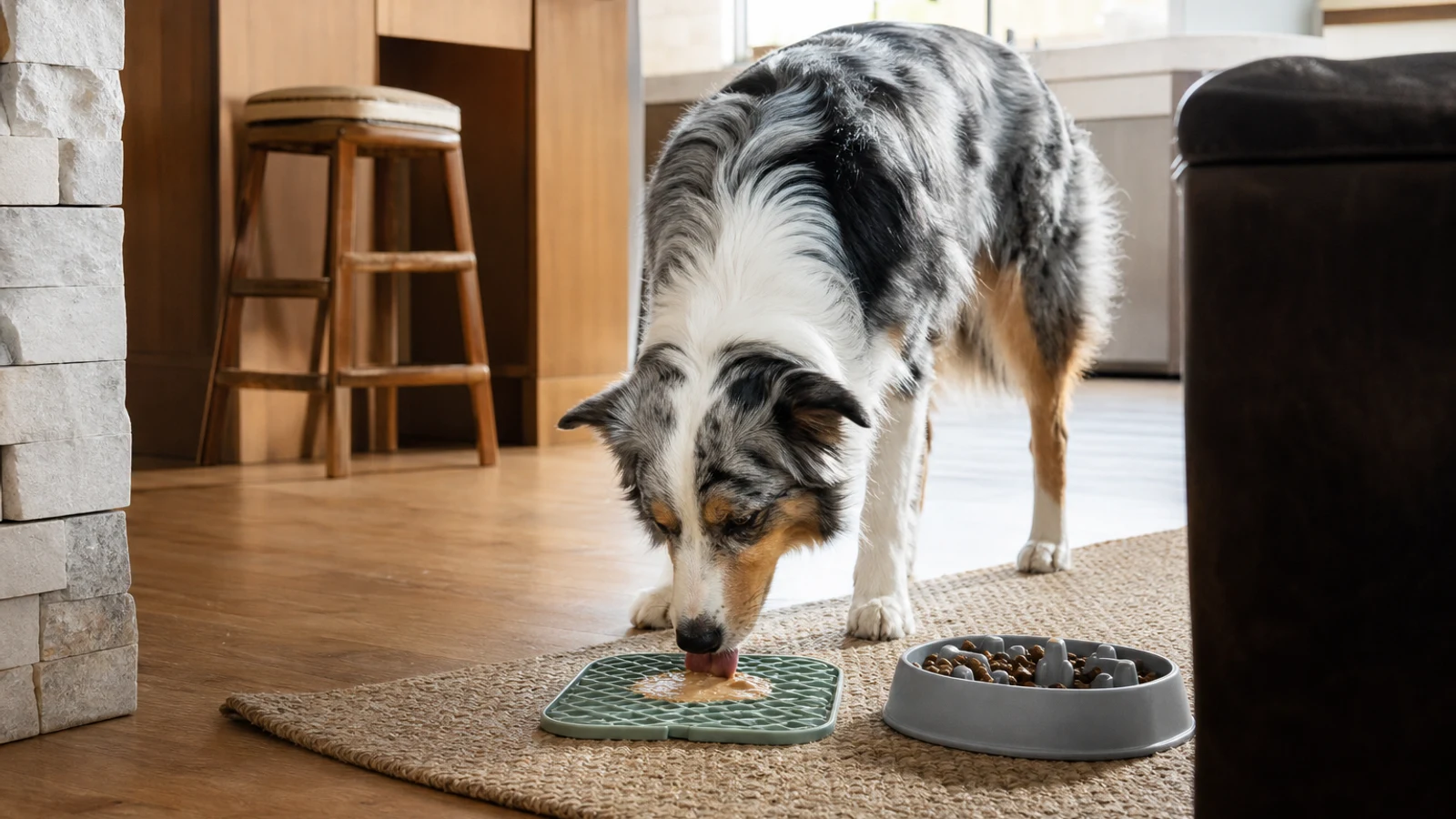
A slow feeder bowl is usually the better first choice for a dog that gulps regular meals. A lick mat is better for spreading soft food into a longer, lower-intensity licking activity, especially during grooming, crate time, or predictable household disruptions.
Quick answer
Choose a slow feeder bowl when the main job is pacing a regular meal, especially dry kibble or a full wet-food portion. Choose a lick mat when the job is providing a short, stationary licking activity with soft food during grooming, quiet time, travel preparation, or predictable low-level stress. Neither product prevents bloat or treats anxiety, and both require a design your dog can use comfortably plus supervision for dogs that chew.
Shop this guide
Current Amazon options
Six current listings related to this buying decision. Use the guide to compare fit and trade-offs, then verify the latest seller, price, size, and availability on Amazon.
As an Amazon Associate I earn from qualifying purchases. Product availability, seller, price, and listing details can change.
Key decision checks
Start with the job: meal pacing or licking enrichment
The practical difference is simple: a slow feeder bowl controls access to a meal, while a lick mat spreads a soft food over a textured surface. Bowl ridges, channels, or compartments interrupt rapid bites and make dry food easier to serve as a complete meal. A lick mat turns wet food or another spreadable option into repeated licking, usually over a smaller and more stationary area.
That makes the slow feeder bowl the more direct fit for a dog that finishes dinner almost immediately. The lick mat is the more flexible fit when you need a quiet activity during brushing, bathing, crate settling, visitors, or another predictable event. It may slow consumption, but its main job is not the same as a meal-pacing bowl.
- Main problem is gulping kibble or wet food: start with a slow feeder bowl.
- Main problem is needing a calm, hands-off activity: consider a lick mat.
- Main problem is significant anxiety, food aggression, vomiting, regurgitation, or digestive symptoms: involve a veterinarian or qualified behavior professional rather than relying on either product.
Choose a slow feeder bowl for regular meals
A slow feeder bowl usually makes the most sense when your dog eats too quickly from a standard bowl. The molded obstacles create pauses and require the dog to work around sections of the bowl rather than taking large mouthfuls at once. Research on slow-feeding bowls has found that they can reduce eating speed, although dogs may become faster as they learn the pattern.
This option also fits households that want one repeatable setup for breakfast and dinner. It can hold a measured portion of kibble, and many designs also accommodate wet food. Look for an opening pattern that lets your dog reach the food without repeatedly scraping the muzzle, gums, or whiskers against sharp or cramped edges.
- Best fit: complete meals, dry food, mixed meals, or larger wet-food portions.
- Useful when: the dog is a persistent gulper but can eat comfortably from a structured bowl.
- Potential drawback: an overly difficult maze can frustrate a dog or leave food trapped in areas it cannot reach.
- Practical check: the bowl should stay stable, sit flat, and be easy for you to wash thoroughly.
Choose a lick mat for soft-food activities
A lick mat is designed for soft food spread thinly across grooves, ridges, or pockets. The dog works through the surface with repeated licking rather than taking normal bites. Freezing a prepared mat can extend the activity, but the suitable portion still depends on the dog’s daily calorie needs and the food used.
Lick mats are particularly useful when you need the dog occupied in one place. Veterinary behavior resources describe them as tools for distraction and positive reinforcement during handling and routine husbandry. That makes them helpful for grooming or other manageable situations, but they should not be presented as a stand-alone treatment for separation anxiety, noise phobia, aggression, or another serious behavior problem.
- Best fit: canned dog food, a portion of the dog’s regular wet diet, or another veterinarian-approved spreadable food.
- Useful when: you need stationary enrichment during brushing, bathing, nail care, crate rest, or a predictable household interruption.
- Potential drawback: some dogs pull, fold, chew, or carry the mat instead of licking it.
- Practical check: use a mat large and stable enough for the dog’s size, then remove it when the food is gone.
Food texture and portion size decide the better match
Food type is one of the fastest ways to narrow the choice. Dry kibble is naturally suited to a slow feeder bowl because the portion can be measured and served without preparation. A lick mat can work with moistened or mashed food, but turning a complete dry-food ration into a spreadable mixture may add mess and preparation without improving the feeding job.
Wet food can work in either product, though the experience differs. In a slow feeder, it remains a meal interrupted by barriers. On a lick mat, it becomes a thin, repetitive licking task. If the mat is being used for enrichment rather than as the entire meal, measure the food as part of the dog’s daily ration instead of treating toppings or spreads as extras.
- For a full dry-food meal, favor a slow feeder bowl or another food-dispensing feeder.
- For a modest soft-food portion used during handling, favor a lick mat.
- For prescription diets, food allergies, weight management, pancreatitis history, or other medical nutrition needs, use only foods and portions approved by the veterinary team.
- If your dog leaves food behind, drools heavily, paws frantically, or appears unable to reach the food, simplify the setup rather than increasing difficulty.
Compare options for your pet
Slow Feeder Bowl vs Lick Mat: Which Better Fits the Job?
Compare current Amazon listings using the fit and safety checks in this guide. Confirm size, specifications, seller and availability before ordering.
See on Amazon →As an Amazon Associate I earn from qualifying purchases. Links open Amazon search results; individual listings have not been independently verified.
Safety matters more than added challenge
Neither product should be treated as bloat prevention. Rapid ingestion of large meals is one factor associated with gastric dilatation-volvulus, a life-threatening emergency, but risk is multifactorial. Deep-chested conformation, family history, age, meal size, feeding frequency, stress, and other factors matter. For a dog at elevated risk, ask a veterinarian about meal size, feeding schedule, exercise timing, and whether preventive surgery is appropriate.
Keep meals on the floor unless your veterinarian has given a specific reason to feed from an elevated position. Merck Veterinary Manual lists avoiding elevated feed bowls among recommendations for dogs at risk of gastric dilatation-volvulus. A slow feeder may help pace access to food, but it does not remove the need for a broader veterinary plan.
- Supervise the first several uses and watch for biting, tearing, carrying, or swallowing pieces.
- Stop using the item if it develops cracks, sharp edges, loose parts, or damage that could be ingested.
- Separate dogs if competition causes rushing, guarding, or repeated interruption.
- Seek emergency veterinary care for a swollen abdomen, repeated unproductive retching, marked restlessness, weakness, collapse, or other possible bloat signs.
Cleaning and everyday practicality
A slow feeder bowl is usually easier to make part of every meal because it replaces the normal bowl. The trade-off is that grooves and corners can trap food residue. A lick mat may be quicker to rinse when used with a thin layer, but its flexible surface can fold over food and may be harder to inspect if the texture is deep or heavily patterned.
Follow the manufacturer’s cleaning instructions rather than assuming every silicone or plastic product is dishwasher-safe. Wash after use, especially when moist foods are spread into crevices, and inspect the surface regularly. A product that takes too long to clean, slides across the floor, or cannot be dried properly may not remain useful in a busy household.
- Check whether the surface has reachable food pockets rather than deep areas your dog cannot access.
- Choose a non-slip base or place the item on a surface where it will not slide into furniture.
- Use a washable tray beneath a lick mat if mess is likely.
- Keep a second feeding option available if the dog is ill, recovering, or temporarily unable to use the enrichment product comfortably.
A decision guide by dog and household
For most dogs that simply inhale meals, choose the easiest slow feeder bowl the dog can use without frustration. A flat, stable design with moderate barriers is often a more practical starting point than a highly complicated maze. If the dog eats at a reasonable pace but needs a quiet activity during grooming or visitors, choose a lick mat and reserve it for those situations.
Some households will benefit from both. The bowl can handle ordinary meals, while the mat can provide a measured soft-food activity when you need the dog settled in one place. Introduce either item gradually, keep the food familiar at first, and judge success by comfortable eating, reliable access, manageable cleanup, and whether the product solves the original problem.
- Pick the slow feeder bowl when meal pacing, repeatable daily use, and kibble compatibility matter most.
- Pick the lick mat when stationary licking, soft-food enrichment, and handling support matter most.
- Pick neither as a substitute for veterinary assessment when the dog has digestive symptoms, suspected pain, serious anxiety, guarding, or possible bloat.
- If unsure, start with the simpler option and increase challenge only when the dog uses it calmly and finishes the food comfortably.
Common questions
FAQ
Can a lick mat replace a slow feeder bowl?
Sometimes, but not for every dog or every meal. A lick mat can slow soft food and provide licking enrichment, but it may be messy, difficult to use with dry kibble, or unsuitable for a dog that chews flexible products. A slow feeder bowl is usually the more direct tool for pacing a complete everyday meal.
Is a slow feeder bowl better for dogs at risk of bloat?
It may help reduce rapid food intake, but it does not prevent gastric dilatation-volvulus. Dogs with deep chests, a family history of bloat, previous stomach problems, or other risk factors need an individualized veterinary discussion about meal size, frequency, exercise, feeding height, and preventive options.
What can I put on a lick mat?
Use a measured portion of the dog’s regular wet food or another spreadable food that fits the dog’s diet. Avoid adding calorie-dense toppings casually, especially for dogs on weight-control or prescription diets. Ask your veterinarian before changing foods for a dog with allergies, pancreatitis, kidney disease, or another medical condition.
Should my dog use a lick mat unsupervised?
Not at first, and not if the dog chews, tears, carries, or swallows pieces. Watch how the dog interacts with the mat, remove it when the food is gone, and inspect it for damage. Even a product marketed as durable is not appropriate to leave with a determined destructive chewer.
Sources & further reading
Where the factual guidance comes from
Ready to choose?
Slow Feeder Bowl vs Lick Mat: Which Better Fits the Job?
Compare current Amazon listings using the fit and safety checks in this guide. Confirm size, specifications, seller and availability before ordering.
See on Amazon →As an Amazon Associate I earn from qualifying purchases. Links open Amazon search results; individual listings have not been independently verified.
Keep researching