Dogs · Feeding
Raised Feeder vs Slow Feeder for Dogs: Which Problem Does Each Solve?
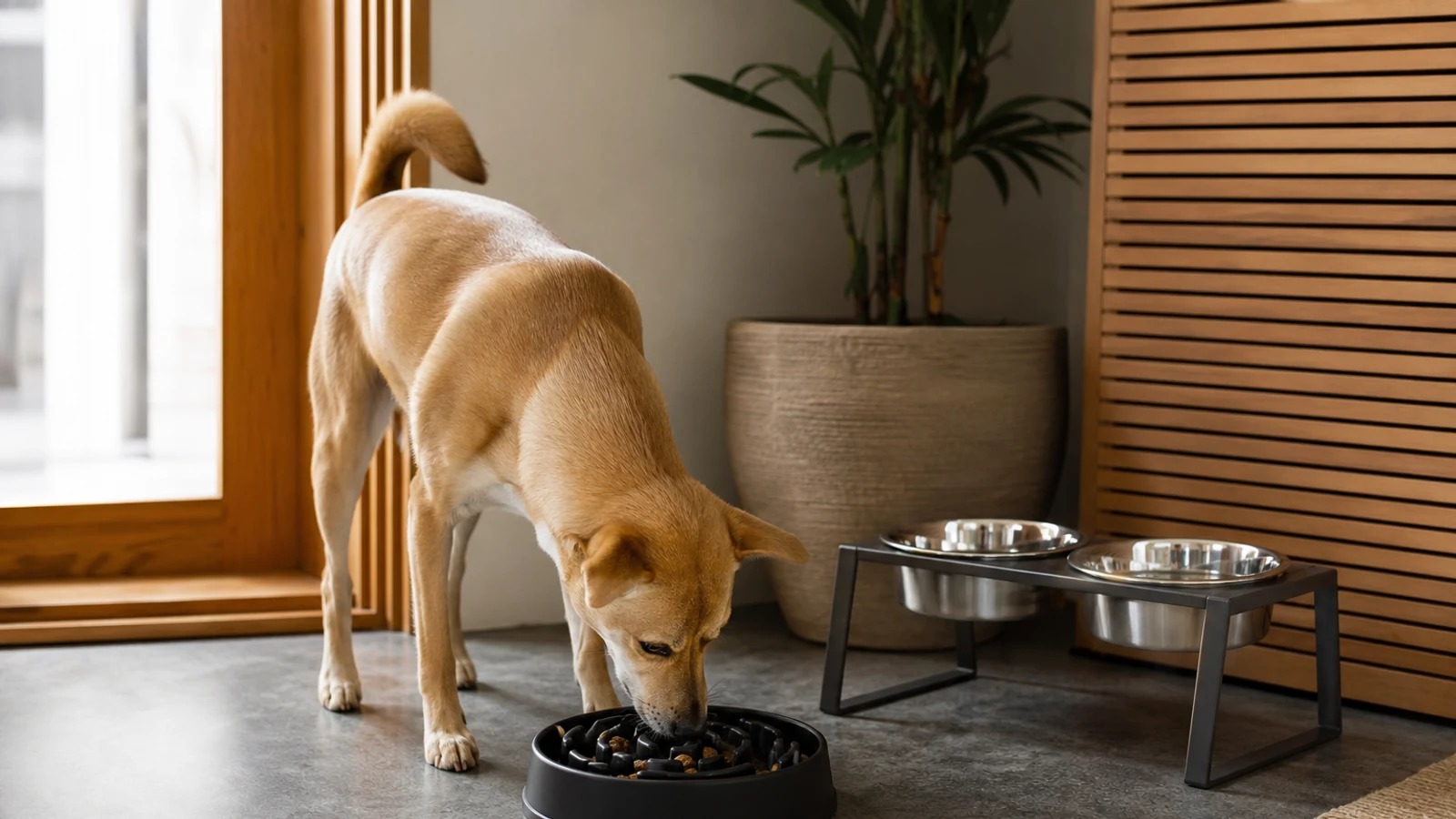
A raised feeder changes how far your dog bends to eat. A slow feeder changes how quickly your dog can eat. Choosing between them depends on whether the problem is posture, rapid gulping, or a veterinarian-diagnosed condition.
Quick answer
Choose a slow feeder when your dog gulps meals, swallows air, vomits after eating, or needs more mealtime enrichment. Choose a raised feeder only when reducing the bend is genuinely useful for your dog or a veterinarian has prescribed elevated or upright feeding, such as for some dogs with neck pain or megaesophagus. A raised feeder is not a general-purpose solution for fast eating or bloat prevention, and neither feeder replaces veterinary care for repeated vomiting, regurgitation, pain, weight loss, or signs of GDV.
Shop this guide
Current Amazon options
Six current listings related to this buying decision. Use the guide to compare fit and trade-offs, then verify the latest seller, price, size, and availability on Amazon.
As an Amazon Associate I earn from qualifying purchases. Product availability, seller, price, and listing details can change.
Key decision checks
The practical difference: height versus eating speed
A raised feeder lifts the bowl off the floor. Its job is to change your dog’s feeding posture, potentially reducing the amount of neck and shoulder flexion needed to reach food or water. It does not inherently slow a meal, reduce gulping, provide a puzzle, or control portion size.
A slow feeder uses ridges, channels, pockets, or other barriers to make food harder to collect quickly. Its job is to stretch out mealtime and encourage smaller bites. Most slow feeders sit on the floor, so they address eating speed without changing bowl height. Some products combine both features, but the two functions should still be evaluated separately.
- Raised feeder: primarily a posture and access tool.
- Slow feeder: primarily a pace and enrichment tool.
- Combination feeder: useful only if your dog needs both features and can eat comfortably from the design.
Choose a slow feeder for a dog who eats too fast
A slow feeder is usually the more direct choice when your dog empties a bowl in seconds, gulps air, coughs or gags while eating, regurgitates soon afterward, or becomes frantic around meals. Slowing the meal can reduce gulping and may make feeding more manageable, but it is not a guarantee against bloat or other digestive emergencies.
Start with a design your dog can use without becoming distressed. Wide, shallow channels are generally a more reasonable starting point for a short-muzzled dog, a puppy, or a dog new to slow feeding than a deep maze with narrow openings. Watch one complete meal: your dog should be able to reach the food, breathe normally, and finish without scraping the mouth or repeatedly tipping the bowl.
- Use a slow feeder for rapid eating, food competition, or a need for more mealtime engagement.
- Choose simpler patterns for puppies, senior dogs, short-muzzled dogs, and dogs that give up easily.
- If the bowl causes frustration, excessive pawing, coughing, or refusal to eat, switch designs or ask your veterinarian for alternatives.
- Smaller, more frequent meals and feeding dogs separately may also help when speed is driven by hunger or competition.
Choose a raised feeder only for a clear posture or medical reason
A raised feeder may be useful when bending to floor level is uncomfortable or difficult. That can include some dogs with neck or back problems, substantial mobility limitations, or other conditions for which a veterinarian recommends changing feeding position. The correct height is individual; a stand that is too high can be awkward, unstable, or counterproductive.
Megaesophagus is a different situation from ordinary preference for a taller bowl. Dogs with this disorder may need a veterinarian-directed upright feeding plan, sometimes involving a Bailey chair, a specific food consistency, small meals, and remaining upright after eating. A standard raised bowl alone may not provide the body position or monitoring required.
- Ask your veterinarian before using elevated feeding as part of treatment.
- Do not assume a large or giant breed automatically needs a raised bowl.
- Measure for stable, comfortable access rather than choosing the tallest stand available.
- Treat food and water elevation as separate decisions if your dog has a diagnosed condition.
GDV changes the raised-versus-slow-feeder decision
Gastric dilatation-volvulus, commonly called GDV or bloat, is a life-threatening emergency in which the stomach becomes distended and may twist. Large, deep-chested dogs and dogs with certain family or behavioral risk factors may be more vulnerable. Rapid eating, once-daily meals, stress, and other factors have been associated with GDV, but no bowl can eliminate the risk.
Evidence and professional guidance do not support treating a raised feeder as a universal bloat-prevention device. Some veterinary resources list elevated feeding among factors associated with GDV, while other discussions note conflicting evidence. For a dog with GDV risk, discuss bowl height, meal frequency, exercise timing, food competition, and preventive options with your veterinarian rather than relying on a marketing claim.
- For a fast-eating dog, a slow feeder or puzzle-style feeding method is the more targeted product category.
- Feed the daily ration according to your veterinarian’s or food manufacturer’s guidance, often divided into more than one meal when appropriate.
- Keep meals calm and separate dogs that compete or become anxious around food.
- Seek emergency veterinary care for repeated unproductive retching, a swollen or painful abdomen, marked restlessness, weakness, collapse, or excessive drooling.
Compare options for your pet
Raised Feeder vs Slow Feeder for Dogs: Which Problem Does Each Solve?
Compare current Amazon listings using the fit and safety checks in this guide. Confirm size, specifications, seller and availability before ordering.
See on Amazon →As an Amazon Associate I earn from qualifying purchases. Links open Amazon search results; individual listings have not been independently verified.
When neither feeder is the right first answer
A dog that suddenly becomes ravenous, begins vomiting or regurgitating, loses weight, coughs during meals, or struggles to swallow needs evaluation rather than a new bowl. A feeder can change how food is presented, but it cannot diagnose dental pain, gastrointestinal disease, esophageal dysfunction, parasites, medication effects, or other causes of altered eating.
Likewise, a dog that eats slowly but has neck pain may need a veterinary examination and a carefully chosen feeding height, not a slow feeder. If your dog has megaesophagus, recurrent aspiration, a history of GDV, orthopedic disease, or recent surgery, use the product as part of a professional plan rather than experimenting with bowl height or food texture on your own.
- Repeated regurgitation: discuss esophageal disease and aspiration risk with a veterinarian.
- Pain or reluctance to lower the head: ask about orthopedic, neurologic, dental, or neck causes.
- New food obsession or weight change: have the underlying cause assessed.
- Known megaesophagus or prior GDV: follow the individualized feeding plan exactly.
Buying and setup checks that matter
For a slow feeder, prioritize a design that matches your dog’s muzzle, food type, and patience. Dry kibble may work well in channels or pockets, while wet food can be harder to remove and may require more frequent washing. A bowl that is impossible to clean is a poor daily choice, even if it slows the meal effectively.
For a raised feeder, prioritize stability, easy cleaning, and a height that lets your dog eat without stretching, crouching, or leaning heavily into the stand. Avoid treating a tall stand, non-slip base, or stainless-steel insert as proof of health benefit; those are practical design features, not a diagnosis or prevention claim.
- Check that the feeder cannot slide, tip, or trap a paw.
- Look for smooth, accessible surfaces without deep crevices that retain food.
- Confirm that the bowl opening is wide enough for the dog’s muzzle and comfortable head movement.
- Use the dog’s normal measured daily food amount; a feeder should not silently increase calories.
- Observe the first several meals and reassess if eating becomes stressful or physically awkward.
Bottom line: match the feeder to the problem
For most healthy dogs that eat too quickly, start with a slow feeder, food puzzle, spread-out meal, or another portion-controlled method that slows access without adding unnecessary height. Introduce it gradually and choose a simple pattern if your dog is young, short-muzzled, elderly, or easily frustrated.
A raised feeder makes more sense when the central issue is bending, access, or a veterinarian-diagnosed condition requiring elevation or upright feeding. It is not a default upgrade for every large dog and should not be selected as a blanket strategy for preventing GDV. If the problem involves pain, regurgitation, choking, abdominal swelling, or a sudden change in appetite, veterinary guidance comes before product selection.
- Fast eater: slow feeder first.
- Difficulty bending: ask about a carefully sized raised feeder.
- Megaesophagus or other diagnosed condition: follow the veterinary feeding plan.
- Possible bloat or breathing trouble: seek emergency care immediately.
Common questions
FAQ
Can a dog use a slow feeder on a raised stand?
Sometimes, but only if your dog needs both slower eating and a changed feeding height. Check that the combined setup is stable and that the dog can reach food without stretching, twisting, coughing, or becoming frustrated. For dogs with medical conditions, confirm the arrangement with your veterinarian.
Do raised bowls prevent bloat in dogs?
They should not be treated as a general bloat-prevention measure. Veterinary sources report associations between GDV and several feeding factors, including rapid eating and, in some guidance, elevated bowls. Ask your veterinarian about your dog’s breed, body shape, family history, meal schedule, and other risk factors.
Is a slow feeder safe for puppies?
Many puppies can use a slow feeder, but the pattern should be simple enough for the puppy to access food without excessive frustration. Supervise the first meals, especially if the puppy chews the bowl, paws aggressively, coughs, or cannot collect food. A muffin pan, spread-out meal, or training-based feeding may be a better temporary option.
Should dogs with megaesophagus use a raised feeder?
Dogs with megaesophagus often need an individualized elevated or upright feeding plan, but a normal raised bowl may not be sufficient. Food consistency, meal size, water access, upright positioning, and post-meal posture can all matter. Work with your veterinarian or a veterinary internal-medicine professional.
What if my dog eats too fast and also has neck pain?
Ask your veterinarian to help balance the two needs. A slow feeder may slow eating but still require uncomfortable bending, while a raised feeder may improve access without addressing gulping. A stable, appropriately sized combination setup or a different feeding method may be recommended.
Sources & further reading
Where the factual guidance comes from
Ready to choose?
Raised Feeder vs Slow Feeder for Dogs: Which Problem Does Each Solve?
Compare current Amazon listings using the fit and safety checks in this guide. Confirm size, specifications, seller and availability before ordering.
See on Amazon →As an Amazon Associate I earn from qualifying purchases. Links open Amazon search results; individual listings have not been independently verified.
Keep researching