Other Pets · Beds & Comfort
Paper vs Aspen Bedding for Small Pets: Which Trade-Offs Matter?
Paper is often the more forgiving default, while low-dust aspen can offer useful structure and a natural wood texture. The better choice depends on species, respiratory sensitivity, burrowing needs, enclosure ventilation, and how reliably the bedding stays dry and clean.
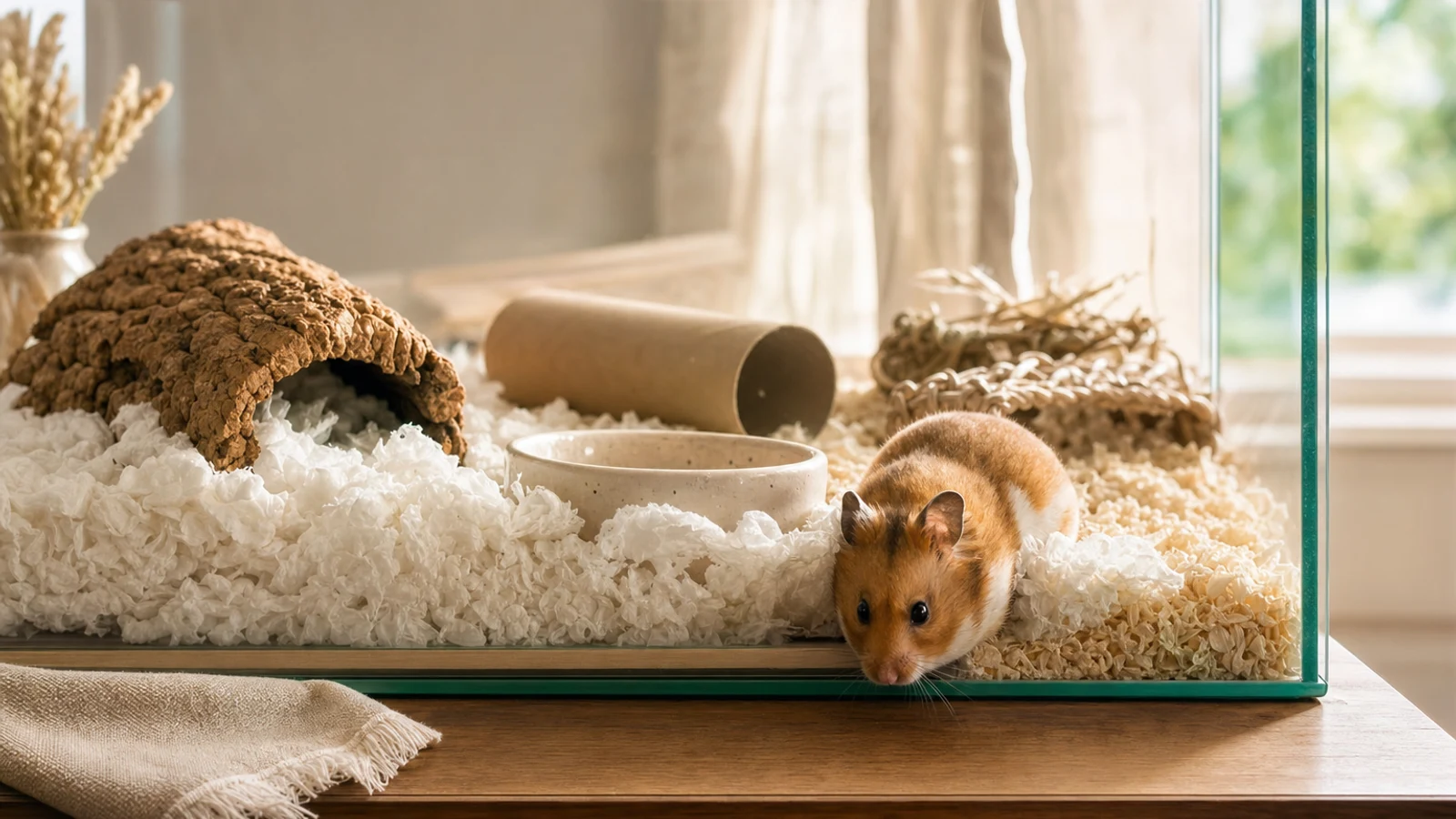
Quick answer
Choose unscented, low-dust paper bedding when softness, low splinter risk, and a cautious starting point matter most. Choose clearly labeled, low-dust aspen when your small pet benefits from wood shavings, you want a lighter bedding option, or you need more structure in a burrowing area. Do not treat either material as automatically safe: inspect every bag, avoid added fragrance and cedar, and change course if your pet develops sneezing, eye or nasal discharge, skin irritation, damp fur, or sore feet. Species-specific veterinary guidance should take priority, particularly for guinea pigs, rabbits, chinchillas, and pets with respiratory disease.
Shop this guide
Current Amazon options
Six current listings related to this buying decision. Use the guide to compare fit and trade-offs, then verify the latest seller, price, size, and availability on Amazon.
As an Amazon Associate I earn from qualifying purchases. Product availability, seller, price, and listing details can change.
Key decision checks
Paper and aspen solve different problems
Paper bedding is usually the easier starting point because it is soft, absorbent, and available in forms designed for small-pet enclosures. It has no wood splinters and is commonly recommended for hamsters, while some veterinary guidance specifically recommends unscented, dye-free paper for guinea pigs. Its main weaknesses are variable dust, bulk, and the possibility that loose paper will compress or collapse in deep tunnels.
Aspen is a hardwood shaving that can provide a lighter, more textured substrate and may work well for hamsters, gerbils, mice, rats, or selected guinea-pig setups when the product is genuinely low-dust and free of sharp pieces. It can be useful for animals that dig through loose substrate, but “aspen” on the label does not guarantee identical particle size, dust control, or softness from one product to another.
Start with the species, not the bag
The right comparison changes with the animal. Hamsters need clean, low-dust substrate that supports digging and nesting; paper is a straightforward default, while suitable aspen can also be considered. Guinea pigs spend more time on the floor and produce substantial moisture and waste, so dryness, softness, and frequent spot cleaning become especially important. Rabbits commonly use bedding in litter areas rather than across the entire living space, and chinchillas have different habitat requirements again.
Before buying, confirm what applies to your species and enclosure. A recommendation that works for a burrowing hamster may be unsuitable as a full-floor solution for a guinea pig, and a bedding material tolerated by one individual may irritate another. If your pet has recurring sneezing, wheezing, nasal discharge, skin problems, or a history of respiratory disease, ask an exotic-animal veterinarian before experimenting with a new substrate.
- Hamsters: prioritize deep, low-dust bedding that supports burrowing and nesting.
- Guinea pigs: prioritize a dry, soft walking surface and manageable urine control; some veterinary sources favor unscented paper, while other guidance accepts aspen.
- Gerbils, mice, and rats: assess dust, texture, odor, and whether the bedding supports normal digging without irritating the airways.
- Rabbits and chinchillas: use species-specific housing guidance rather than assuming a hamster bedding recommendation transfers directly.
Paper bedding: strongest when softness and caution matter
Paper is often the more forgiving choice for a new setup or a pet that seems sensitive to coarse material. Shredded or fluffed paper can provide nesting comfort, and paper-based products avoid the aromatic wood compounds associated with cedar and many pine products. For hamsters, reputable veterinary guidance lists paper bedding and shredded paper among suitable choices. For guinea pigs, unscented and dye-free paper is specifically recommended by North Carolina State University’s veterinary hospital.
The trade-offs are practical rather than trivial. Paper can be expensive or bulky for large enclosures, and its odor control depends heavily on enclosure size, ventilation, depth, and cleaning. Some paper products release noticeable fine particles when poured or fluffed. Deep paper bedding may also need packing or mixing with suitable nesting material to hold tunnels, so do not judge it only by how soft it feels in the bag.
- Prefer unscented products with no added fragrance or deodorizing perfume.
- Look for bedding marketed specifically for the relevant small-pet species.
- Fluff a small amount before use and reject a product that creates a visible dust cloud.
- Keep paper dry in storage; discard material that becomes damp, moldy, or musty.
- For guinea pigs, check the enclosure floor daily because wet areas can contribute to foot and skin problems.
Aspen bedding: strongest when texture and structure matter
Aspen can be a reasonable wood-based option because it is hardwood rather than cedar, and it is included among acceptable bedding materials in some veterinary and animal-care guidance. It may feel less compact than paper and can add texture to a digging area. For owners managing large habitats, it may also be easier to move and spot-clean in selected zones, although the actual experience depends on the product and the animal’s habits.
Aspen is not automatically dust-free, soft, or splinter-free. Reject bags with sharp fragments, excessive powder, strong unexplained fragrance, or pieces large enough to create a puncture risk. It is also a poor choice if your particular pet begins sneezing or develops eye or nasal discharge after introduction. Remove the suspected substrate and contact a veterinarian if signs persist, worsen, or are accompanied by reduced appetite, lethargy, breathing difficulty, or abnormal urination.
- Choose clearly identified aspen rather than an unspecified wood-shaving blend.
- Inspect several handfuls, including material from the bottom of the bag.
- Avoid scented, chemically deodorized, dusty, or visibly sharp products.
- Use a gradual transition when practical, while keeping enough familiar clean bedding to reduce stress.
- Do not substitute cedar or ordinary pine simply because it looks similar; veterinary references commonly advise avoiding those materials for hamsters.
Compare options for your pet
Paper vs Aspen Bedding for Small Pets: Which Trade-Offs Matter?
Compare current Amazon listings using the fit and safety checks in this guide. Confirm size, specifications, seller and availability before ordering.
See on Amazon →As an Amazon Associate I earn from qualifying purchases. Links open Amazon search results; individual listings have not been independently verified.
Compare the trade-offs that affect daily care
Paper generally wins on softness and beginner-friendliness, while aspen may win on texture, lighter handling, and the preference some owners have for wood shavings. Neither material eliminates cleaning. Urine-soaked patches should be removed promptly, food should not be left to spoil inside the substrate, and the enclosure must remain dry enough that the animal is not walking or sleeping on damp bedding.
Odor is not a reliable safety test. A pleasant-smelling product may contain added fragrance, while a neutral product can still become unsafe if moisture and ammonia accumulate. Ventilation, enclosure size, bedding depth, the number of animals, and spot-cleaning habits often matter as much as the material itself. A bedding change cannot compensate for a cramped or poorly ventilated habitat.
- For respiratory sensitivity: begin with the lowest-dust option you can verify and monitor closely.
- For burrowing: prioritize sufficient depth and a substrate that holds shape without becoming compacted or wet.
- For urine management: choose the material that lets you identify and remove damp zones quickly.
- For foot comfort: avoid sharp particles, wire flooring, and persistently wet surfaces.
- For household cleanup: consider how much bedding scatters outside the enclosure and whether storage space is available.
How to choose and introduce a bedding product
Treat the first bag as a quality check, not proof that the whole category is suitable. Read the material description, check for added scent, and inspect the texture before filling the habitat. If the bedding produces visible airborne dust, contains sharp fragments, or smells strongly of perfume or chemicals, return it if possible rather than hoping the animal will adapt.
Introduce a new substrate when you can observe your pet for several days. Keep the enclosure especially clean during the transition, and watch breathing, eyes, nose, skin, appetite, activity, and feet. Product-choice advice is not a diagnosis: persistent sneezing, wheezing, discharge, sores, urine scald, or other changes warrant prompt advice from a veterinarian experienced with the species.
- Buy from a package with a clear material name and intended small-pet use.
- Open and inspect the product before placing your pet in it.
- Keep a small amount of clean familiar bedding during a transition when appropriate.
- Record which product was used if symptoms appear, then stop using the suspected material.
- Ask a species-qualified veterinarian about bedding for pets with chronic respiratory or skin concerns.
Bottom line: choose the safer fit, not a universal winner
For many households, unscented paper is the safer first trial because it is soft, widely accepted in veterinary guidance, and less likely to contain sharp wood fragments. Low-dust aspen can be a sensible alternative for certain small mammals and enclosure zones when its quality is clear and the animal tolerates it. The meaningful winner is the material that stays dry, produces little dust, supports normal behavior, and can be cleaned consistently.
If you keep guinea pigs, rabbits, chinchillas, or a pet with ongoing health signs, do not rely on a broad “small-pet bedding” label alone. Confirm the species-specific setup with an exotic-animal veterinarian or qualified rescue professional. Whichever material you choose, fragrance-free, low-dust, clean, dry bedding is more important than a simple paper-versus-aspen label.
Common questions
FAQ
Is paper bedding safer than aspen for all small pets?
No. Paper is often the more cautious default, especially when softness and low splinter risk matter, but species and individual tolerance differ. Some veterinary guidance accepts aspen for selected small mammals, while guinea-pig guidance may specifically favor unscented paper. Product dust and cleaning practices can change the outcome.
Can paper and aspen bedding be mixed?
A mixture may be useful in some hamster or small-rodent enclosures, but it is not automatically better. Mixing can change dust, absorbency, tunnel stability, and cleaning behavior. Introduce one product at a time when possible so you can identify what your pet tolerates and whether the enclosure stays dry.
Is kiln-dried pine the same as aspen?
No. Aspen and pine are different woods, and a kiln-dried claim does not make every wood product interchangeable. Veterinary references commonly advise avoiding cedar and pine for hamsters. Choose a clearly identified product intended for the animal rather than relying on a similar-looking shaving.
What bedding is best for a guinea pig?
There is no single answer for every enclosure, but unscented, dye-free paper is specifically recommended by North Carolina State University’s veterinary hospital. Some veterinary and welfare guidance also accepts aspen. Whichever option is used, keep the walking surface dry, remove wet areas promptly, and monitor the feet and skin.
How can I tell if bedding is too dusty?
Handle a small amount in a well-ventilated area and look for a visible cloud or a layer of fine powder on nearby surfaces. Also monitor your pet after introduction for sneezing, eye irritation, nasal discharge, or breathing changes. Remove the product and seek veterinary advice if signs continue or are severe.
Does bedding control odor by itself?
No. Odor depends on moisture removal, enclosure ventilation, habitat size, animal numbers, and cleaning frequency as well as bedding material. Added fragrance can mask odor without solving wetness or ammonia. Spot-clean damp areas and keep the full enclosure clean according to the species’ needs.
Sources & further reading
Where the factual guidance comes from
Ready to choose?
Paper vs Aspen Bedding for Small Pets: Which Trade-Offs Matter?
Compare current Amazon listings using the fit and safety checks in this guide. Confirm size, specifications, seller and availability before ordering.
See on Amazon →As an Amazon Associate I earn from qualifying purchases. Links open Amazon search results; individual listings have not been independently verified.
Keep researching