Other Pets · Feeding
Hay Feeder vs Loose Hay for Rabbits: Which Setup Is Easier to Manage?
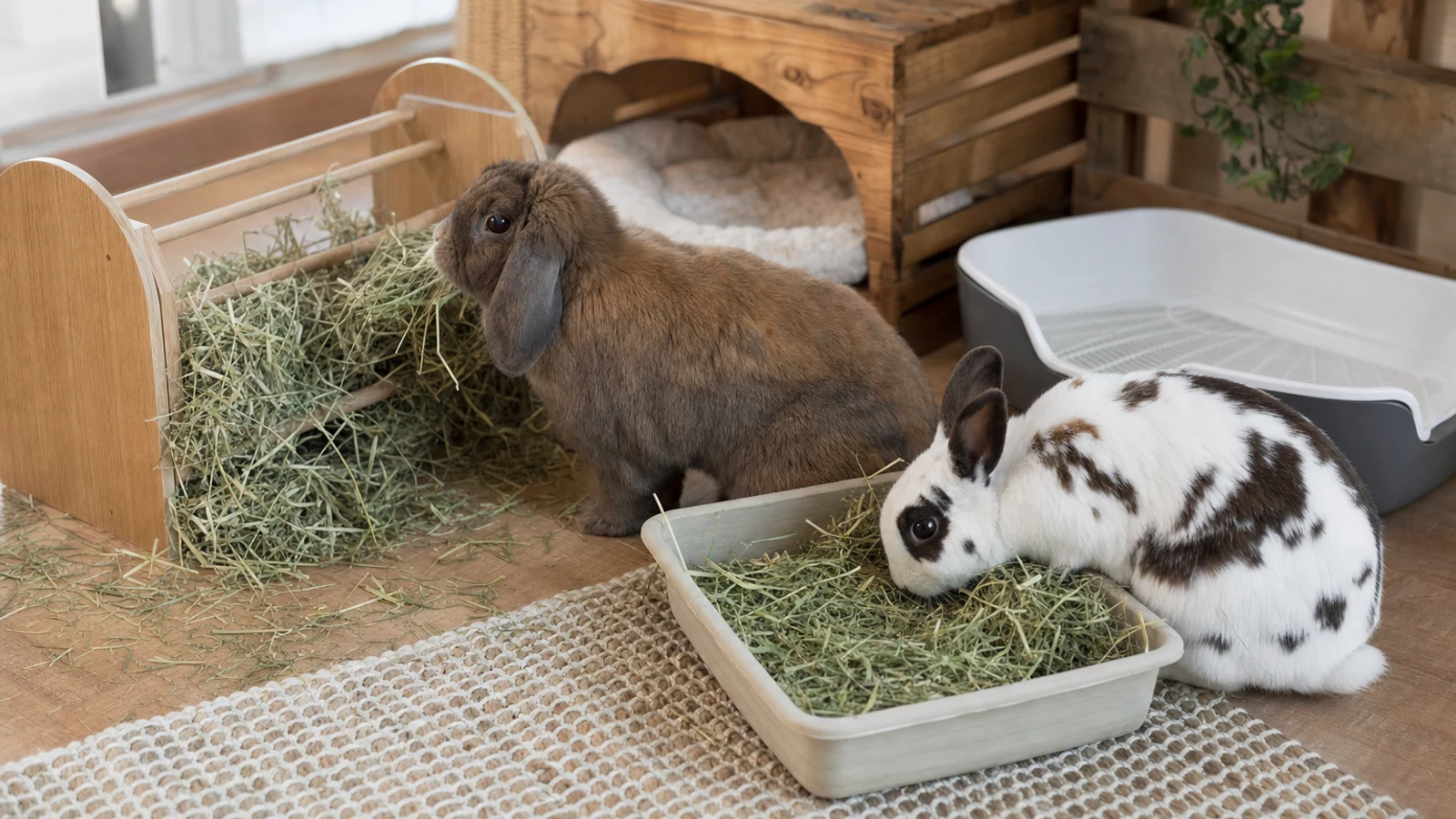
A hay feeder can reduce mess, but loose hay is often easier for rabbits to reach and forage through. For many homes, the most manageable setup combines a stable feeder with a small, fresh loose-hay station.
Quick answer
A hay feeder is usually easier to keep tidy, while loose hay is usually easier for a rabbit to access, sort, and forage through. Neither option is best for every rabbit. A stable, low, roomy feeder placed beside or over the litter box can work well, but it should not make hay difficult to reach. For the most forgiving setup, offer contained hay plus a fresh loose pile or shallow tray, then remove damp, soiled, dusty, or rejected hay daily.
Shop this guide
Current Amazon options
Six current listings related to this buying decision. Use the guide to compare fit and trade-offs, then verify the latest seller, price, size, and availability on Amazon.
As an Amazon Associate I earn from qualifying purchases. Product availability, seller, price, and listing details can change.
Key decision checks
The practical difference: tidiness versus freedom to graze
A hay feeder holds hay above or beside the rabbit’s living surface. That can reduce scattering and keep more of the supply away from urine, litter, and bedding. It also makes the remaining hay easier to inspect before you refill it. The trade-off is that a feeder can restrict the rabbit’s posture, slow access, or become frustrating if the opening is small or the hay packs tightly.
Loose hay puts the food at floor level, usually in a litter box, shallow tray, cardboard box, or clean corner. It gives the rabbit more freedom to pull, sort, and graze naturally, and it can be especially useful for rabbits that dislike reaching through bars or slots. The drawbacks are greater waste, more contact with litter or flooring, and more frequent removal of soiled strands.
- Choose a feeder when reducing scattered hay and protecting a larger supply from contamination are your main goals.
- Choose loose hay when your rabbit needs easy, unrestricted access or enjoys searching and sorting through a pile.
- Use both when you want a cleaner main supply without making the rabbit depend on one restricted opening.
When a hay feeder is easier to manage
A feeder is generally the tidier option for a pen, rabbit room, or litter-box station. A rack or basket can keep hay visible, aired, and close to the toilet area, where many rabbits naturally eat and eliminate. This arrangement can support litter training while reducing the amount of hay that gets mixed into bedding or tracked across the room.
Management is easiest when the feeder is roomy, stable, easy to remove, and simple to inspect. A small container that needs constant refilling may create more work than a larger open rack. A rabbit that repeatedly pulls hay out, refuses the remaining pieces, or cannot reach the best strands may also turn a supposedly tidy design into a wasteful one.
- Look for a broad opening that allows comfortable head and neck movement without trapping the head, ears, or feet.
- Position the feeder low enough for relaxed eating and close enough to the litter box that the rabbit does not need to stretch or climb.
- Check attachment points, wire ends, hinges, seams, and edges for sharp or chewable parts.
- Refill before the feeder is nearly empty so the rabbit is never left with only crushed, dusty, or unwanted pieces.
When loose hay is the better choice
Loose hay is often the simplest way to confirm that a rabbit can reach food comfortably. It works well for rabbits with limited mobility, long ears, body-size changes, or a strong preference for floor-level grazing. It also lets you spread hay across a larger area, which can help bonded rabbits eat together instead of competing for one feeder.
The cost is ongoing cleanup. Hay placed directly on a floor can become damp or contaminated quickly, especially near a water bowl or litter box. A shallow, washable tray or clean open box can provide the access benefits of loose hay while giving you a defined area to empty and replace. Cardboard can be useful when it is plain, clean, and free of staples, tape, and unsafe coatings, but it should be discarded when damp or heavily chewed.
- Use a shallow tray or open box rather than a deep container that forces the rabbit to reach awkwardly.
- Offer enough hay for continuous access, but remove portions that are wet, moldy, dusty, urine-soaked, or heavily contaminated.
- Place the pile where the rabbit can eat naturally without stepping into water or getting trapped between the container and a wall.
- For multiple rabbits, provide more than one accessible hay station so one rabbit cannot control the supply.
Safety checks matter more than feeder style
A hay feeder is not automatically safer or cleaner than loose hay. The design must prevent entanglement, head trapping, sharp-edge injuries, tipping, and difficult access. Avoid relying on a narrow opening, spring-loaded part, loose hook, or fabric component without observing how your rabbit uses it. A rabbit that climbs into a feeder, chews its fasteners, or becomes distressed while pulling hay needs a different setup.
Inspect the station every day, including after cleaning or rearranging the enclosure. Hay can hide broken wires, splinters, damp patches, or contamination. Manufacturer instructions can help with materials and attachment, but your rabbit’s actual behavior determines whether the setup is suitable. If the rabbit cannot eat comfortably, the design has failed even if it looks tidy.
- Prefer smooth, washable surfaces and secure construction with no exposed sharp points.
- Do not use a feeder that can tip, swing into the rabbit, or leave a gap where a head or limb could become stuck.
- Supervise initial use and any new design, especially with persistent chewers, young rabbits, or rabbits that climb.
- Replace damaged feeders rather than trying to cover dangerous edges with tape or loose protective material.
Compare options for your pet
Hay Feeder vs Loose Hay for Rabbits: Which Setup Is Easier to Manage?
Compare current Amazon listings using the fit and safety checks in this guide. Confirm size, specifications, seller and availability before ordering.
See on Amazon →As an Amazon Associate I earn from qualifying purchases. Links open Amazon search results; individual listings have not been independently verified.
The easiest setup for litter-box management
For many indoor rabbits, the most manageable arrangement is a large litter box with hay immediately beside it, above it, or in a separate attached station. This uses the rabbit’s natural habit of eating and toileting in the same area while keeping the main hay supply more controlled. A feeder can hold the clean portion, while a small loose section gives the rabbit a comfortable floor-level option.
Do not treat cleanliness as a reason to limit hay. Rabbits need continual access to appropriate high-fiber hay, and a rabbit may reject a feeder if the hay is stale, dusty, compressed, or difficult to pull out. Replace contaminated hay promptly and clean the surrounding area often enough that the rabbit is not choosing between dirty hay and no hay.
- For a feeder-over-litter-box setup, make sure the rabbit can eat without standing on a narrow rim or reaching through an uncomfortable angle.
- Keep hay away from wet litter, leaking water containers, and damp flooring.
- If loose hay in the box becomes saturated with urine quickly, move part of the supply into a nearby rack or tray.
- Use the rabbit’s intake and behavior—not the feeder’s capacity—as the guide to refill frequency.
Match the setup to the rabbit, not the room
A healthy, agile rabbit that eats readily from a rack may do well with a large, low feeder and a small loose-hay backup. A senior rabbit, rabbit with reduced mobility, or rabbit recovering from a veterinary issue may need hay at floor level with no awkward reaching. A picky eater may need several small piles or hay types offered separately so you can identify preferences without allowing the supply to run out.
Bonded pairs and groups need special attention. One feeder may look large enough but still allow one rabbit to block access. Multiple stations reduce competition and make it easier to notice whether each rabbit is eating. Any sudden decrease in hay intake, smaller or fewer droppings, drooling, weight change, or reluctance to chew should be discussed promptly with a rabbit-experienced veterinarian rather than solved only by changing the feeder.
- Single rabbit, tidy pen: large low rack plus a loose-hay backup.
- Senior or mobility-limited rabbit: primarily floor-level hay in a shallow, stable tray.
- Picky eater: several accessible hay piles or stations with fresh portions replaced frequently.
- Bonded pair: at least two separated hay access points, adjusted for the rabbits’ behavior.
A simple decision rule
Start with the setup your rabbit uses most willingly and can reach without stretching, climbing, or frustration. If loose hay is disappearing cleanly and the cleanup is manageable, there is no need to add a feeder solely for appearance. If hay is being trampled, soiled, or scattered faster than you can replace it, add a stable open rack or basket while preserving a floor-level option.
In most households, a combination is easier to manage than an either-or choice: keep a generous supply in a safe, roomy feeder and offer a smaller loose pile in a tray or litter-box area. This gives you better control over mess and contamination while protecting the rabbit’s access, choice, and natural grazing behavior. Reassess whenever the rabbit’s body condition, mobility, enclosure, or eating habits change.
- Best for cleanliness: a stable, washable feeder with a generous opening.
- Best for unrestricted access: fresh loose hay in a shallow tray or open box.
- Best all-around compromise: feeder plus loose hay, with both checked daily.
- Best response to reduced hay intake: contact a rabbit-experienced veterinarian, especially if droppings or chewing behavior also change.
Common questions
FAQ
Is it better to put rabbit hay in the litter box?
It can work well because many rabbits eat and eliminate in the same area, which may support litter training. Use clean, absorbent litter and replace hay that becomes wet or contaminated. If the box becomes messy quickly, keep some hay in a nearby feeder or shallow tray so the rabbit still has a clean, easy-to-reach supply.
Can rabbits eat hay from a hay rack all day?
They should generally have continual access to appropriate high-fiber hay, but the rack must allow comfortable, unrestricted eating. Refill it before it is empty and discard hay that is damp, moldy, dusty, or contaminated. The rabbit’s intake matters more than how long the feeder appears full.
Why does my rabbit pull all the hay out of the feeder?
Some rabbits naturally sort through hay or prefer eating from the floor. A larger opening, a roomier basket, or a shallow tray beside the feeder may reduce frustration. If the rabbit still pulls hay out, offer a loose pile and use the feeder mainly to keep part of the supply clean.
Are hay balls safe for rabbits?
Safety depends on the specific design, attachment, opening, and the rabbit’s behavior. Avoid any product that can trap the head, catch feet, swing forcefully, or expose sharp edges. A low, stable basket or open tray is often easier to inspect and provides more straightforward access.
How much loose hay should I offer?
Keep hay available throughout the day rather than limiting it to a measured serving. Offer enough fresh hay that the rabbit is not left with only crushed or rejected pieces, while removing damp or contaminated portions. Diet quantities and hay type can vary with age, health, and life stage, so ask a rabbit-experienced veterinarian about individualized feeding concerns.
Sources & further reading
Where the factual guidance comes from
Ready to choose?
Hay Feeder vs Loose Hay for Rabbits: Which Setup Is Easier to Manage?
Compare current Amazon listings using the fit and safety checks in this guide. Confirm size, specifications, seller and availability before ordering.
See on Amazon →As an Amazon Associate I earn from qualifying purchases. Links open Amazon search results; individual listings have not been independently verified.
Keep researching