Cats · Travel
Top-Load vs Front-Load Cat Carrier: Which Is Easier for Trips?
Top-load carriers are usually easier when you must place or remove a reluctant cat. Front-load carriers are better for voluntary entry and familiar daily use. For most households, a secure carrier with both openings and a removable top offers the most flexibility.
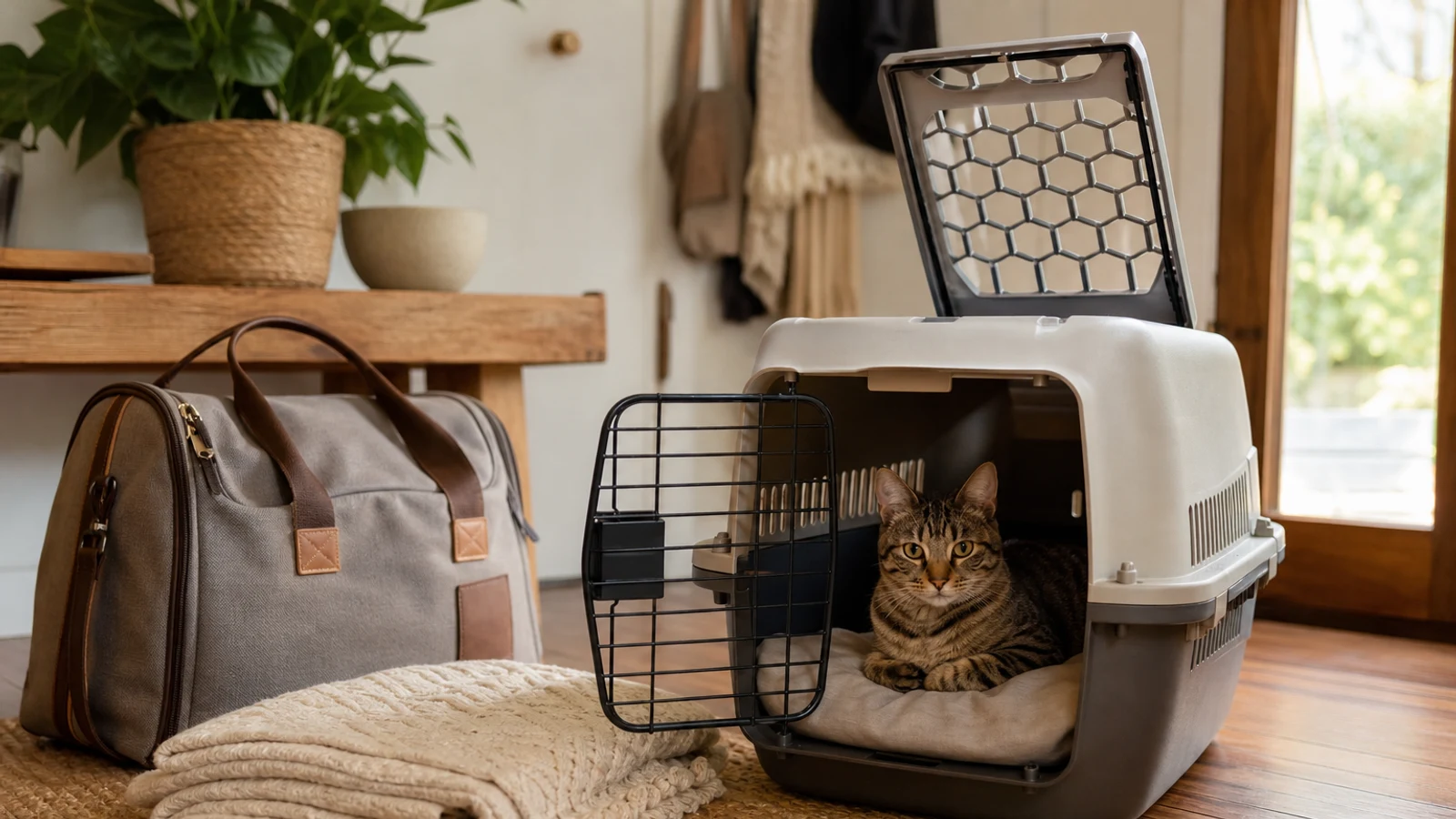
Quick answer
A top-load cat carrier is usually easier for difficult loading, nervous cats, and veterinary visits because you can lower the cat in feet-first and lift them out with less pulling. A front-load carrier is more useful when your cat willingly walks inside, when the carrier is used like a familiar resting space, or when airline and storage dimensions favor a particular shape. If you are buying one carrier for general use, choose a sturdy model with both top and front access, a removable top if possible, adequate ventilation, and secure closures. The opening style matters, but carrier training, fit, stability, and travel rules matter just as much.
Shop this guide
Current Amazon options
Six current listings related to this buying decision. Use the guide to compare fit and trade-offs, then verify the latest seller, price, size, and availability on Amazon.
As an Amazon Associate I earn from qualifying purchases. Product availability, seller, price, and listing details can change.
Key decision checks
The practical difference between top-load and front-load carriers
A top-load carrier opens through a lid on the upper surface. It lets you place a cat down into the carrier rather than pushing the cat headfirst through a doorway. That can be especially helpful when a cat braces against the sides, spreads its legs, hides at the back, or becomes tense when lifted toward a front door.
A front-load carrier opens at one end, usually with a door made from metal or plastic. It works well when a cat enters voluntarily for food, bedding, or treats, and it can be easier to use when the carrier stays on the floor as a familiar resting place. The main drawback is that a frightened cat may resist moving forward into a confined space, making loading more difficult.
- Top access: usually easier for controlled placement and removal.
- Front access: usually better for voluntary entry and everyday use.
- Both openings: provide the widest range of loading and handling options.
- Removable top: can let a veterinarian examine the cat while it remains in the carrier bottom.
Choose top-load access for difficult loading
Top loading is the stronger choice when your immediate problem is getting a reluctant, fearful, stiff, or unfamiliar cat safely into the carrier. You can support the cat’s body and lower it in without forcing the head and shoulders through a narrow front opening. It can also make removal easier because the cat does not have to walk or be pulled forward before leaving.
Top access is not a guarantee of a calm trip. A cat may still struggle if the carrier appears only before unpleasant events, has a slippery floor, is too small, or is lifted and carried roughly. Use a stable carrier with a nonslip bedding layer, keep the opening secure, and practice with the carrier available before the trip.
- Best fit: cats that back away from front doors or resist being pushed forward.
- Useful for: veterinary appointments, urgent transport, and cats with limited mobility.
- Check: the lid should latch securely and leave enough room for safe handling.
- Avoid: lifting a struggling cat by the scruff or forcing limbs through an opening.
Choose front-load access for voluntary entry
Front access makes sense when your cat already enters a carrier willingly or when you want the carrier to function as a familiar den. Place it in a quiet area with the door open, add washable bedding, and reward investigation without immediately closing the door. A front door can also be convenient when the carrier is positioned on the floor or stored in a way that makes opening the lid awkward.
Front-only carriers are less forgiving when a cat refuses to enter. Reaching through the doorway to grab a hiding cat can increase fear and may expose you to scratches or bites. If your cat is difficult to load, a front opening alone is rarely the most flexible design unless the cat has been consistently carrier-trained.
- Best fit: confident cats that walk into the carrier on cue or for treats.
- Useful for: routine car trips, short moves, and leaving the carrier open at home.
- Check: the doorway should be wide enough for your cat and easy to close without pinching.
- Avoid: chasing the cat around the home and turning the carrier into a wrestling space.
For most households, a carrier with both openings is the safer compromise
A carrier with both top and front doors gives you two loading strategies. You can invite a cooperative cat through the front, use the top when the cat resists, and place the carrier on its end only when the design and stability allow it. This flexibility is why veterinary guidance commonly favors carriers with both openings rather than treating top-only or front-only access as a universal winner.
The most useful upgrade is often a carrier whose top half can be removed. During an examination, a cat may remain in the familiar bottom section while the veterinarian uses a towel or other low-stress handling techniques. That design can reduce the need to drag a frightened cat through a door, but the fasteners must be simple for the caregiver and secure during transport.
- Prioritize both openings if the carrier will serve for routine care and emergencies.
- Look for a top that removes completely, not merely a small inspection hatch.
- Test every latch before travel and inspect seams, hinges, and door fasteners periodically.
- Keep one carrier per cat for veterinary visits unless a qualified professional advises otherwise.
Compare options for your pet
Top-Load vs Front-Load Cat Carrier: Which Is Easier for Trips?
Compare current Amazon listings using the fit and safety checks in this guide. Confirm size, specifications, seller and availability before ordering.
See on Amazon →As an Amazon Associate I earn from qualifying purchases. Links open Amazon search results; individual listings have not been independently verified.
Do not let opening style decide the whole purchase
A top-loading door cannot compensate for a carrier that is unstable, poorly ventilated, difficult to clean, or too small. Your cat should have enough room to stand, turn around, sit, and lie in a natural position. The carrier should also provide a solid floor, protect against escape, and be practical to clean after accidents or motion sickness.
For car travel, choose a carrier that can be positioned securely and does not collapse around the cat. Follow the carrier manufacturer’s instructions for restraint and placement rather than improvising with a loose carrier. A towel or blanket can provide traction and familiar scent, but it should not block ventilation or allow the cat to push against an unsecured door.
- Fit: enough room for natural posture without excessive unused space.
- Construction: sturdy, stable, washable, and resistant to escape.
- Ventilation: openings on multiple sides without creating excessive exposure.
- Handling: comfortable grip and a shape you can carry level with two hands if needed.
- Privacy: partial visual shielding may help some cats settle during transport.
Car trips and flights require different priorities
For a veterinary car trip, easy access and low-stress handling usually matter more than whether the carrier looks compact. A hard-sided design with a removable top and both openings is often the most versatile choice. Keep the cat inside the carrier during loading, unloading, and stops; opening the door in an unfamiliar place creates an avoidable escape risk.
For air travel, do not assume that a top-opening carrier is acceptable simply because it is easier at home. Airlines set their own rules, and an in-cabin carrier must fit the airline’s under-seat requirements while allowing the cat to remain inside for the journey. Check the operating airline’s current size, construction, ventilation, reservation, and documentation rules before buying. For international travel, destination and transit requirements may also apply.
- Car: prioritize stability, secure closures, and access for veterinary handling.
- Air: prioritize airline approval and under-seat dimensions over door preference.
- Before booking: confirm the rules with every airline on the itinerary.
- For medical concerns, sedation, or long-distance travel: ask your veterinarian before the trip.
Make either carrier easier with gradual training
Carrier design is only part of the experience. Leave the carrier out in a quiet room with the door open, use familiar bedding, and reward calm investigation. Begin with brief door-closing sessions at home, then progress to short carries and short car rides if your cat remains relaxed. The aim is to make the carrier a predictable object rather than a warning that something unpleasant is about to happen.
If your cat panics, stop and reduce the difficulty instead of repeatedly forcing the issue. A veterinarian can advise on travel preparation when fear is severe, when the cat may injure itself, or when previous trips have involved vomiting, breathing problems, or prolonged distress. Product choice is not a substitute for individualized medical or behavioral guidance.
- Keep the carrier accessible well before a planned trip.
- Reward calm behavior rather than waiting until the cat is already struggling.
- Use familiar bedding, but keep doors and ventilation unobstructed.
- Practice short, uneventful sessions before attempting a long journey.
Common questions
FAQ
Is a top-load cat carrier better for a scared cat?
Often, yes. Top access can make it easier to place a fearful cat inside and remove the cat without pulling it forward through a front door. A removable top is even more useful for veterinary examinations. However, gradual carrier training and calm handling still matter, and severe fear should be discussed with a veterinarian.
Can a cat enter a top-load carrier voluntarily?
Yes. Leave the carrier open in the home, add comfortable bedding, and reward your cat for approaching or resting inside. A top door does not prevent voluntary entry, but a front door may be more convenient if your cat prefers to walk into the carrier.
Is a front-load carrier bad for veterinary visits?
Not necessarily. A front-load carrier can work well when the cat enters willingly and the top can be removed. A front-only carrier is less flexible when the cat resists, because pulling the cat through the doorway may increase fear and make handling harder.
Should I buy a hard or soft carrier for this comparison?
Opening style and construction are separate decisions. A sturdy hard-sided carrier is often easier to clean and may provide better structure for veterinary handling. A soft carrier can be useful for some car or airline situations, but check its stability, ventilation, escape resistance, cleaning needs, and the exact travel rules before choosing it.
Can two cats share one carrier?
Usually, separate carriers are the safer practical choice, even for cats that live together. One cat may become frightened or defensive during travel, and separate carriers make handling and contingency planning easier. Ask your veterinarian or a qualified animal-care professional if your situation is unusual.
What is the best cat carrier for flying?
The best carrier is the one that meets the operating airline’s current requirements, fits under the seat when required, closes securely, and gives your cat adequate ventilation and room for a natural resting position. Door location is secondary to airline approval. Confirm requirements before purchasing because policies and aircraft dimensions can differ.
Sources & further reading
Where the factual guidance comes from
Ready to choose?
Top-Load vs Front-Load Cat Carrier: Which Is Easier for Trips?
Compare current Amazon listings using the fit and safety checks in this guide. Confirm size, specifications, seller and availability before ordering.
See on Amazon →As an Amazon Associate I earn from qualifying purchases. Links open Amazon search results; individual listings have not been independently verified.
Keep researching