Cats · Litter & Cleanup
High-Sided vs Low-Sided Litter Box: Which Fits Your Cat and Home?
High-sided litter boxes contain scatter and urine better, but low-sided boxes are easier for kittens, senior cats, and cats with limited mobility. The best choice depends on entry height, wall height, box size, and your cat’s habits.
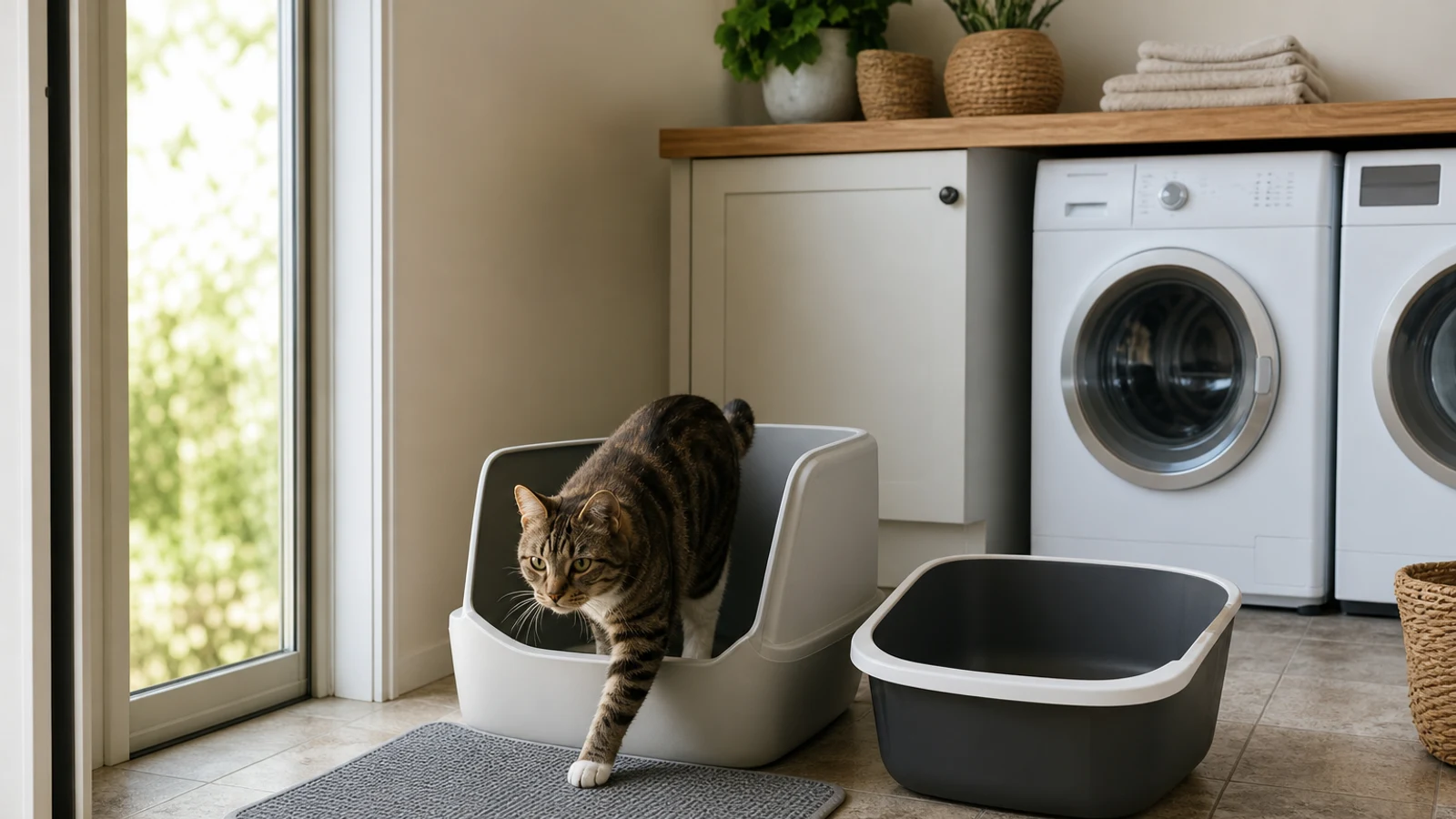
Quick answer
Choose a low-sided litter box when easy entry and exit matter most, especially for kittens, senior cats, or cats with arthritis or other mobility limits. Choose a high-sided box when your cat steps in comfortably but scatters litter or urinates toward the walls. For many homes, the most practical compromise is a large box with a low front entry and higher back and side walls.
Shop this guide
Current Amazon options
Six current listings related to this buying decision. Use the guide to compare fit and trade-offs, then verify the latest seller, price, size, and availability on Amazon.
As an Amazon Associate I earn from qualifying purchases. Product availability, seller, price, and listing details can change.
Key decision checks
The practical difference is entry access versus mess control
A low-sided litter box reduces the step your cat must take to enter and leave. That makes it the safer starting point for young kittens, older cats, cats with joint pain, and cats that hesitate at tall walls. The trade-off is less protection against kicked litter, urine aimed over the rim, and waste landing outside the box.
A high-sided box contains more litter and can protect nearby walls and floors, particularly when a cat digs vigorously or urinates while standing. However, “high-sided” does not automatically mean difficult to use: some designs combine tall walls with a lowered front entrance. Judge the height your cat actually steps over, not only the tallest wall.
- Low-sided: easiest access, but usually more litter scatter and less splash protection.
- High-sided: better containment, but a taller entry can discourage kittens or cats with limited mobility.
- Low-entry/high-wall: often the most balanced option when both access and cleanup matter.
Choose low-sided for kittens, seniors, and mobility limits
Low-sided boxes are usually the better fit when your cat cannot comfortably lift its legs, bend its joints, or balance while stepping over a rim. International Cat Care notes that kittens may initially need a lower-sided tray, while veterinary guidance recommends shallow sides or a low entry for cats with arthritis or other mobility problems. A wide, stable box is preferable to a small tray that is easy to enter but cramped inside.
Do not assume a cat is simply being stubborn if it suddenly avoids a previously familiar box. Pain, urinary disease, constipation, diarrhea, and other medical problems can change litter-box behavior. If accidents, straining, frequent trips, blood, vocalizing, stiffness, or a sudden change in box use appear, contact a veterinarian rather than solving the problem only with a different box.
- Kittens: use a low entry while they are small, then reassess as they grow.
- Senior cats: favor easy access and place a box on each level they use.
- Cats with arthritis or reduced mobility: avoid forcing a high step or jump into the box.
- Cats with sudden accidents: arrange a veterinary evaluation, especially if other symptoms appear.
Choose high-sided when your cat sprays, digs, or scatters litter
High-sided boxes are most useful when your cat can enter comfortably but creates a cleanup problem inside the room. Taller back and side walls help keep litter in the pan when a cat digs, turns, or kicks after using it. They can also reduce urine landing on the wall when a cat backs up or stands while urinating, although no box can compensate for an entry that leaves an exposed gap.
Look for a lowered front rather than a uniformly tall rim. A cat may be able to use a box with high rear and side walls if the front step is short and the interior gives enough room to turn. If urine exits through the low front, repositioning the box or using a washable mat may help, but persistent changes in urination still warrant veterinary attention.
- Prioritize higher back and side walls when litter is thrown backward or sideways.
- Look for a clearly lowered front entry rather than relying on a product’s “high-sided” label.
- Measure the entry height from the floor, including any raised base or feet.
- Leave room around the box so your cat can approach, turn, and exit without feeling trapped.
Size matters more than the label
A box can be low-sided or high-sided and still fail if it is too small. Feline-welfare guidance commonly recommends a box about one and a half times the cat’s body length, allowing the cat to turn, dig, and avoid stepping directly on waste. Measure your cat from the nose to the base of the tail, then compare that length with the usable interior rather than the outside dimensions.
Large or long-bodied cats often need a bigger box even when they do not have mobility problems. A large storage container or mixing tub can sometimes provide more usable space than a small pet-store box, provided it is stable, smooth, easy to clean, and modified only in a way that leaves no sharp edges. A high wall is not helpful if the cat cannot comfortably turn inside it.
- Check usable interior length and width, not only advertised exterior dimensions.
- Make sure the cat can turn around without brushing against every wall.
- Choose a stable base that will not slide when the cat enters or digs.
- For a large cat, prioritize floor space before adding extra wall height.
Compare options for your pet
High-Sided vs Low-Sided Litter Box: Which Fits Your Cat and Home?
Compare current Amazon listings using the fit and safety checks in this guide. Confirm size, specifications, seller and availability before ordering.
See on Amazon →As an Amazon Associate I earn from qualifying purchases. Links open Amazon search results; individual listings have not been independently verified.
Match the box to the room, not just the cat
A low-sided box may be the best choice for the cat but a poor choice for a room with delicate flooring or a cat that scatters litter heavily. Place a washable litter mat outside the entrance, protect the wall behind a high-spraying cat, and leave enough clearance for scooping. These changes can make an accessible box workable without raising the step.
Location affects use as much as box style. Boxes should be quiet, easy to reach, separate from food and water, and not positioned where another pet or household activity can block the entrance. In a multi-level home, a cat with mobility limitations should not have to negotiate stairs to reach its only toilet area.
- Use a litter mat to manage scatter instead of making the entry unnecessarily tall.
- Keep the box away from noisy appliances, busy walkways, and feeding areas.
- Provide easy access on each floor used by a senior or mobility-limited cat.
- Avoid corners or enclosed placements that leave only one difficult escape route.
For multi-cat homes, accessibility and escape routes come first
In a multi-cat household, the box must be easy to enter and leave without another cat controlling the approach. A tall or enclosed design can become especially problematic if a nervous cat feels cornered. Provide one box per cat plus one extra when possible, distribute them across separate locations, and avoid placing every box together in one room.
A high-sided box may still work in a multi-cat home if the entry is easy and the cat has a clear exit. Watch for blocking, guarding, or a cat waiting outside the box. If one cat is older or less mobile, give that cat at least one low-entry option in a quiet location rather than expecting every cat to use the same design.
- Aim for one litter box per cat, plus one extra.
- Distribute boxes across separate areas instead of lining them all up together.
- Make sure cats have more than one practical direction of escape.
- Offer a low-entry box for the cat with the greatest mobility needs.
How to decide between the two
Start with the problem you are trying to solve. If the cat hesitates, struggles, misses the box, or is a kitten or senior, choose access first and begin with a low entry. If the cat uses the box confidently but sends litter or urine over the sides, choose containment first, ideally with high back and side walls plus a lower front.
When the household has conflicting needs, use more than one box style. A low-entry box can serve an older cat, while a high-sided box can reduce mess in another location. Introduce a new design alongside the familiar box rather than removing the accepted option immediately, and keep the litter type and location as consistent as practical during the transition.
- Best for kittens and mobility-limited cats: low-sided or low-entry.
- Best for confident adult cats that scatter litter: high-sided.
- Best for standing urination: high back and side walls with a manageable entry.
- Best for mixed needs: offer different box styles in different locations.
- Best overall buying priority: access, usable size, stability, then mess containment.
Common questions
FAQ
Is a high-sided litter box bad for an older cat?
Not necessarily, but a tall step can be difficult or painful for a senior cat. If the box has a low front entry and the cat moves comfortably, the higher back and side walls may still be useful. Any new difficulty entering, exiting, squatting, or using the box should be discussed with a veterinarian.
Can a low-sided litter box prevent litter from scattering?
It can reduce the effort required to enter, but it usually contains less litter than a high-sided design. A large litter mat, a box with a slightly raised back, and regular removal of tracked litter can help. Do not add a tall barrier if it makes the cat reluctant to use the box.
What height should a low-entry litter box be?
There is no single safe height for every cat. The right entry is one your cat can step over without hesitation, pain, jumping, or loss of balance. Consider the cat’s age, body size, joint mobility, and the height of the litter inside the box. A veterinarian can help assess access when arthritis or pain is suspected.
Should I replace a high-sided box with a low-sided box after accidents?
Not automatically. Accidents may result from box size, litter preference, location, stress, pain, urinary disease, constipation, or other medical issues. If the change is sudden or accompanied by straining, frequent urination, blood, vocalizing, or behavior changes, seek veterinary advice. Otherwise, test a larger low-entry box alongside the current one and observe which option the cat chooses.
Can I use a storage bin as a litter box?
A suitable storage bin can work if it provides enough usable floor space, remains stable, and has a smooth, cleanable surface. Any cut opening must be smooth and free of sharp edges. The entry should be low enough for the cat to use comfortably, and the container should not be so deep or narrow that the cat cannot turn around.
Sources & further reading
Where the factual guidance comes from
Ready to choose?
High-Sided vs Low-Sided Litter Box: Which Fits Your Cat and Home?
Compare current Amazon listings using the fit and safety checks in this guide. Confirm size, specifications, seller and availability before ordering.
See on Amazon →As an Amazon Associate I earn from qualifying purchases. Links open Amazon search results; individual listings have not been independently verified.
Keep researching