Cats · Litter & Cleanup
Stainless Steel vs Plastic Litter Box: Which Is Easier to Live With?
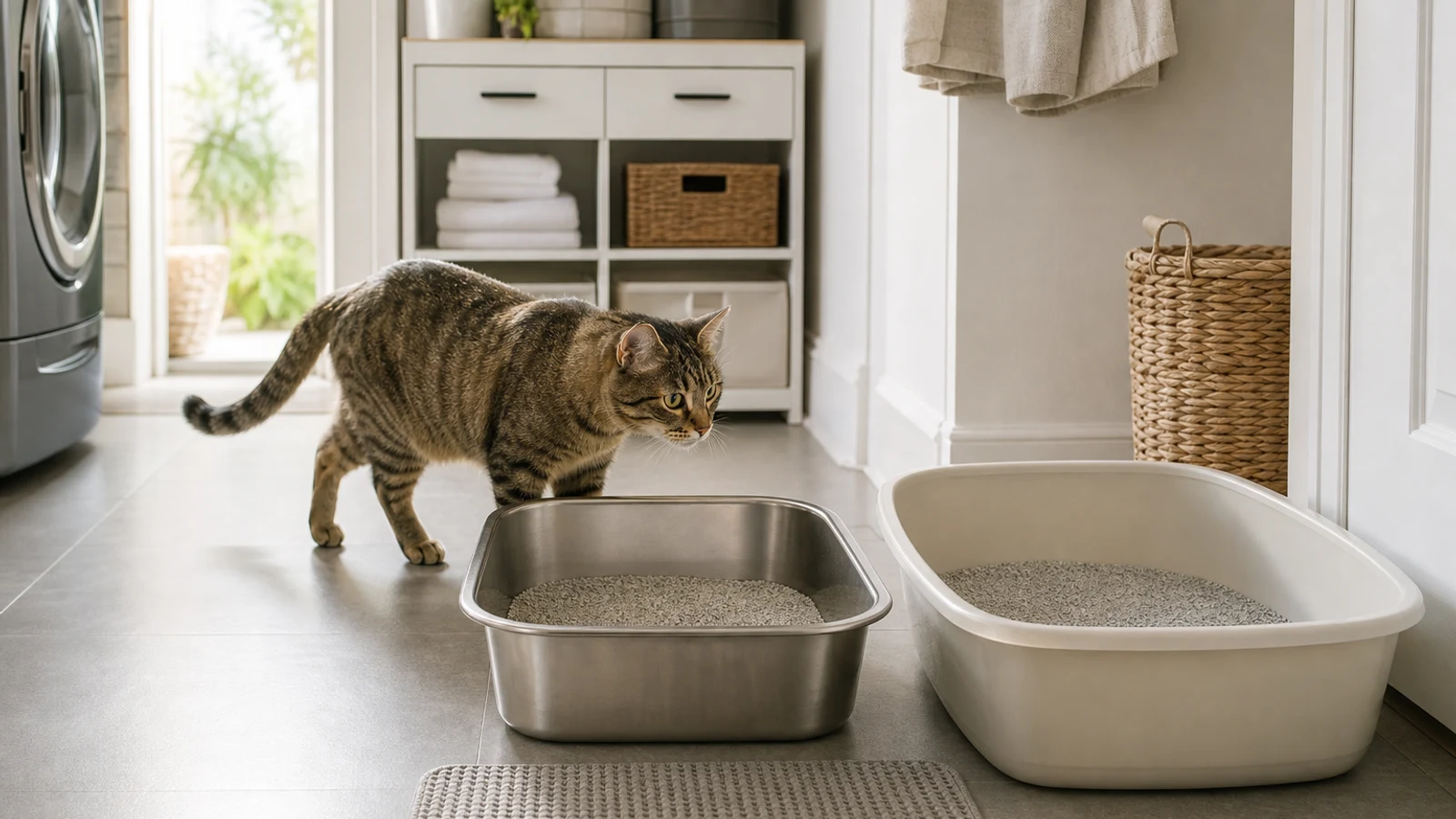
Stainless steel can be easier to reset when an older plastic box holds odor, but plastic remains lighter, cheaper, quieter, and easier to replace. The best choice is the box your cat will use consistently and that you can keep clean.
Quick answer
Choose stainless steel if your current plastic box is scratched, stained, or holding persistent odor and you want a durable, smooth pan that is easier to wash thoroughly. Choose plastic if low weight, lower cost, quieter use, easy replacement, or a lightweight high-sided design matters more. Neither material solves litter-box avoidance by itself: size, location, litter texture, cleanliness, and your cat’s comfort matter more than the pan material.
Shop this guide
Current Amazon options
Six current listings related to this buying decision. Use the guide to compare fit and trade-offs, then verify the latest seller, price, size, and availability on Amazon.
As an Amazon Associate I earn from qualifying purchases. Product availability, seller, price, and listing details can change.
Key decision checks
The practical difference is surface versus convenience
Stainless steel is usually the better reset option for a box that has developed lingering odor or a rough, scratched interior. A smooth steel pan does not absorb smells in the same way porous or heavily worn surfaces can, and it can be scrubbed without worrying that ordinary scooping will quickly score the material. That advantage matters most in busy homes, multi-cat households, or boxes that need frequent deep cleaning.
Plastic is usually easier to live with when handling and replacement are the priorities. It is light enough to move during cleaning, widely available in many shapes and entry heights, and generally less expensive to replace. A good plastic box that is large, stable, and cleaned regularly can work very well; stainless steel is not automatically more acceptable to a cat or better at controlling odor from neglected litter.
- Stainless steel favors long-term surface durability and odor reset.
- Plastic favors low weight, lower upfront cost, shape variety, and easy replacement.
- Both materials still require daily waste removal and routine washing.
Choose based on your cat’s acceptance first
The cat’s willingness to enter, turn around, dig, and leave comfortably should decide between otherwise similar boxes. Welfare guidance commonly recommends a tray around one and a half times the cat’s body length, with lower access for kittens, older cats, or cats with mobility limitations. A material upgrade is a poor trade if it forces a small footprint, steep entry, unstable base, or unwanted enclosure.
Some cats may react to a change in texture, sound, or footing. Metal can make scraping or urine hitting the pan more noticeable, while a thin plastic pan may flex or slide. These are product-design issues rather than automatic material flaws. If your cat is already using a box reliably, change one variable at a time and keep a familiar option available during the transition.
- Measure usable interior space, not only the outside dimensions.
- Check that the entrance is suitable for the cat’s age, size, and mobility.
- Look for a stable base, rounded edges, and no exposed sharp seams.
- Do not trade away a preferred open layout solely to gain odor control.
Stainless steel wins when the old box will not reset
The strongest case for stainless steel is a plastic box that remains smelly after careful washing, has deep scratches, or has become difficult to clean around worn corners. Scratches and damaged surfaces can make residue harder to remove, although regular scooping and appropriate washing remain the main odor-control measures. Stainless steel can be a sensible long-term pan for households willing to pay more upfront and handle a heavier container.
Do not assume every product labeled stainless steel has the same construction. Check the stated steel grade, pan thickness, welds, edge finishing, feet, and whether the included frame or lid is plastic. Stainless steel is corrosion-resistant, not corrosion-proof: abrasive cleaners, chloride-containing products, trapped moisture, poor welds, or low-quality components can lead to staining or corrosion. Follow the maker’s care instructions and avoid steel wool or harsh abrasives.
- Best fit: persistent odor, frequent deep cleaning, or a desire to keep one pan for longer.
- Inspect folded edges and welds where urine or damp litter could collect.
- Confirm that the scoop will not gouge the surface and that the pan dries fully after washing.
- Treat claims about a specific steel grade as product information to verify, not a guarantee of performance.
Plastic wins when lightness and flexibility matter
Plastic remains the practical choice for many homes because it is easy to carry, easy to replace, and available in large, low-entry, high-sided, and open designs. That flexibility is useful when a cat needs a particular shape or when you are testing different box sizes and locations. Plastic also tends to make less sharp scraping noise than thin metal, although construction and litter depth influence sound.
Its main limitation is aging. A plastic box can become scratched, stained, brittle, or odor-retentive over time, especially if it is scooped with a rough tool or left with wet litter against the base. Replacement is part of the ownership plan. If washing no longer restores a clean surface, replacing the pan may be more useful than adding stronger fragrance or deodorizer, which can discourage some cats.
- Best fit: temporary setups, frequent moves, limited lifting strength, or a tight budget.
- Choose thick, rigid plastic with a smooth interior and no difficult-to-clean texture.
- Replace a box when cracks, deep scratches, staining, or persistent odor remain after washing.
- Avoid relying on liners if your cat dislikes the feel, noise, or shifting surface.
Compare options for your pet
Stainless Steel vs Plastic Litter Box: Which Is Easier to Live With?
Compare current Amazon listings using the fit and safety checks in this guide. Confirm size, specifications, seller and availability before ordering.
See on Amazon →As an Amazon Associate I earn from qualifying purchases. Links open Amazon search results; individual listings have not been independently verified.
Cleaning matters more than the material label
Scoop feces and urine clumps at least daily, or more often when the box is heavily used. Thoroughly wash the pan with warm water and a gentle detergent, rinse well, and dry it before adding fresh litter. International Cat Care recommends regular full cleaning and notes that dirty trays can discourage use; veterinary guidance likewise emphasizes keeping litter visibly and olfactorily clean. A stainless pan may make this reset easier, but it does not replace the routine.
Keep the cat away from wet cleaning products, ventilate the area, and never mix chemicals. Avoid strong fragrances, ammonia-like odors, and abrasive methods unless the product maker and a veterinary professional specifically direct otherwise. If a cat begins eliminating outside the box, do not assume the material is the cause: pain, urinary disease, constipation, stress, access problems, litter aversion, or household conflict may all contribute.
- Scoop daily and wash on a schedule appropriate to the number of cats and boxes.
- Use a gentle, well-rinsed cleaning method and let the pan dry completely.
- Keep food and water away from the toilet area.
- Seek veterinary advice promptly for straining, frequent attempts, blood, crying, sudden accidents, or a major change in litter-box behavior.
Compare the ownership trade-offs before buying
The better material depends on which inconvenience you are trying to remove. Stainless steel may reduce the frustration of a pan that never seems fresh, but it can be heavier and may cost more. Plastic may be easier to carry and replace, but it can become a recurring expense if the surface deteriorates quickly. A well-made box in the correct size is more important than choosing a premium material in the wrong shape.
For homes with several cats, consider the total setup rather than one upgraded pan. Cats generally benefit from multiple boxes in separate, accessible locations; Cornell’s guidance summarizes the common rule as one box per cat plus one. If you choose stainless steel for odor control, you do not need to replace every box immediately. Start with the box that is most worn or hardest to clean, then observe use and maintenance demands.
- Prioritize interior size and entry design before color, lid style, or material.
- Compare pan weight with who will lift and wash it.
- Consider whether replacement parts, feet, lids, or liners are available.
- Use the material upgrade where it addresses a real problem instead of replacing functional boxes unnecessarily.
Bottom line: pick stainless steel for reset, plastic for flexibility
Stainless steel is the stronger choice when your main problem is a worn plastic surface, persistent odor, or the desire for a durable pan that can be washed repeatedly. Plastic is the stronger choice when you need a light, affordable, quiet, widely available box or a specific entry and side-height configuration. In both cases, choose an open, adequately sized, stable design unless your cat clearly accepts another arrangement.
A material change should not be used to manage unexplained house-soiling without investigating health and environmental causes. If your cat suddenly stops using the box, strains, urinates frequently, cries, or produces less urine, contact a veterinarian; urinary obstruction can be an emergency, particularly in male cats. For ordinary product selection, let the cat’s body size, mobility, litter preference, and daily cleaning routine determine the final choice.
- Choose stainless steel for a smoother long-term reset and worn-box replacement.
- Choose plastic for lower weight, lower cost, design flexibility, and easier trial-and-error.
- Choose neither until you have confirmed the box is large enough, accessible, stable, and easy to keep clean.
Common questions
FAQ
Does stainless steel stop litter-box odor?
No. It can resist retaining odor better than a scratched or worn plastic pan, but most litter-box smell comes from waste, damp litter, infrequent scooping, poor ventilation, or an undersized setup. Stainless steel helps most when the existing box cannot be cleaned back to a neutral condition.
Can a stainless steel litter box rust?
It can stain or corrode under unfavorable conditions, especially when the steel grade or construction is poor, moisture is trapped, or abrasive or chloride-containing cleaners are used. Check the manufacturer’s care instructions, avoid steel wool, and dry the pan after washing. Do not treat the stainless label as a guarantee against corrosion.
Are plastic litter boxes unsafe for cats?
A clean, intact plastic litter box can be appropriate for household cats. The concern is that heavily scratched, cracked, stained, or odor-retentive plastic may be harder to clean thoroughly and may discourage use. Replace the pan when washing no longer restores a smooth, clean surface.
Will my cat accept a stainless steel litter box?
Many cats can use one, but acceptance depends on size, access, stability, litter type, location, and individual preference. Introduce it gradually, preserve a familiar box during the change, and avoid changing the litter and box design at the same time if your cat is sensitive to transitions.
How often should I replace a plastic litter box?
There is no universal calendar interval. Replace it when it has deep scratches, cracks, persistent odor, staining that does not wash away, or damage that makes scooping and cleaning difficult. A lightly used, well-maintained box may last longer than a heavily used box exposed to frequent scraping.
Is stainless steel better for cats with urinary problems?
A clean, easy-to-wash pan may support good litter-box hygiene, but stainless steel does not diagnose, prevent, or treat urinary disease. Straining, repeated unsuccessful attempts, blood, crying, or little to no urine requires prompt veterinary attention. Ask your veterinarian about any litter, box, hydration, or cleaning changes that are part of the cat’s care plan.
Sources & further reading
Where the factual guidance comes from
Ready to choose?
Stainless Steel vs Plastic Litter Box: Which Is Easier to Live With?
Compare current Amazon listings using the fit and safety checks in this guide. Confirm size, specifications, seller and availability before ordering.
See on Amazon →As an Amazon Associate I earn from qualifying purchases. Links open Amazon search results; individual listings have not been independently verified.
Keep researching