Cats · Grooming
Scissor vs Guillotine Cat Nail Clippers: Which Is Easier to Use?
Scissor and guillotine cat nail clippers can both work well, but the easier choice depends on how clearly you need to see the nail, how steady your cat remains, and whether you are trimming dew claws.
Quick answer
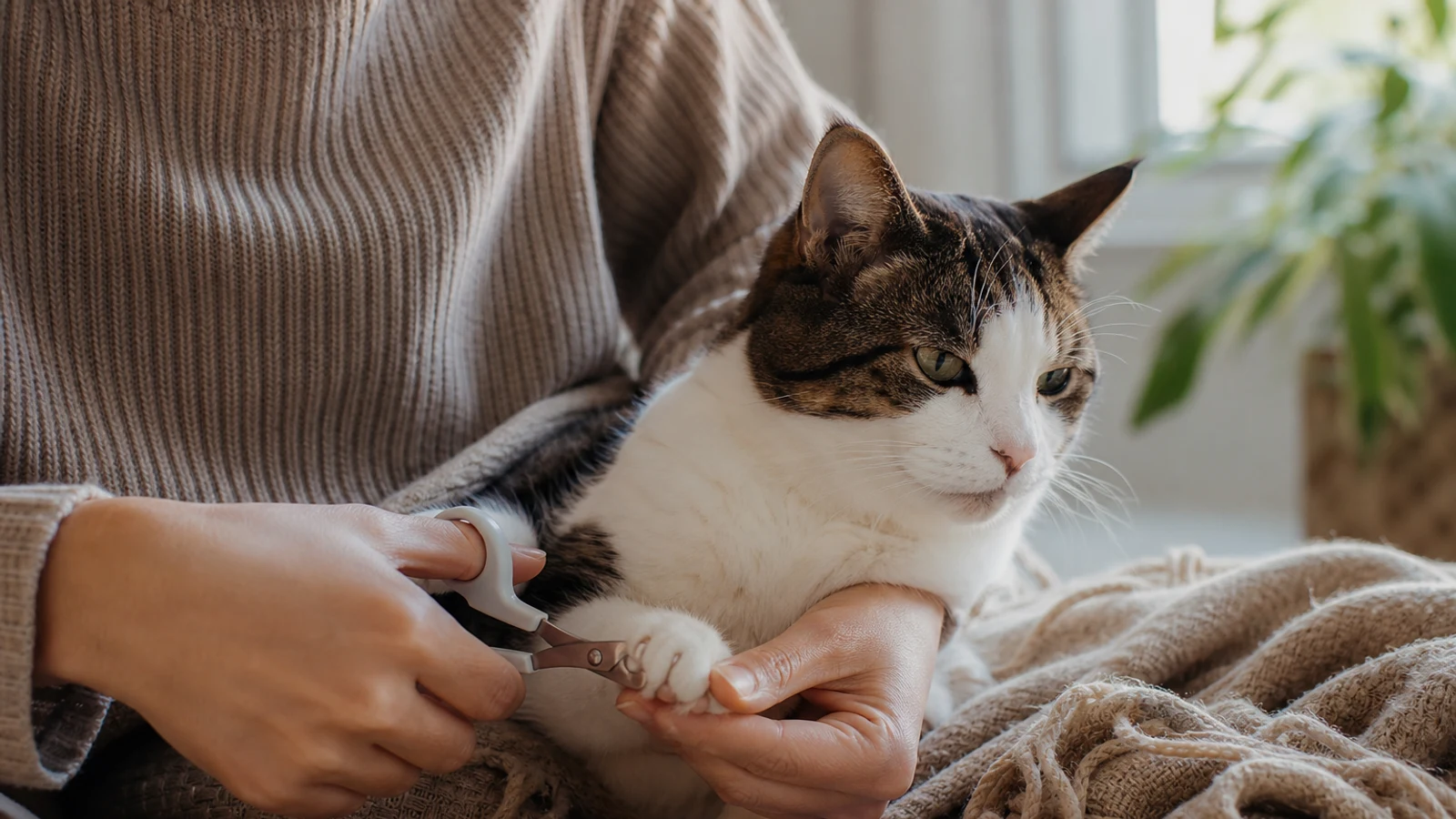
For many first-time owners, scissor-style cat nail clippers are easier because they let you see the entire claw and make small, controlled cuts without threading the nail through a hole. Guillotine clippers can be quick and comfortable in experienced hands, and some veterinary guidance considers them especially easy for ordinary cat claws. Choose scissors when visibility and positioning matter most; choose guillotine clippers when your cat cooperates and you prefer a compact one-blade action. Scissor-style clippers are usually the more versatile option for dew claws and uneven nail angles.
Shop this guide
Current Amazon options
Six current listings related to this buying decision. Use the guide to compare fit and trade-offs, then verify the latest seller, price, size, and availability on Amazon.
As an Amazon Associate I earn from qualifying purchases. Product availability, seller, price, and listing details can change.
Key decision checks
The practical difference between the two styles
Scissor-style clippers resemble small scissors or pliers. Two blades meet around the nail, so you position the cutting edge where you want it and squeeze. Guillotine clippers have a small opening: you place the nail through the hole, then a sliding blade cuts across it. Both designs can be used safely on cats when the tool is sharp, correctly sized, and positioned perpendicular to the nail.
The main decision is not which design is universally safer. It is whether you value an unobstructed view and flexible positioning or a compact, single-motion cut. Veterinary sources differ slightly in emphasis: some describe guillotine clippers as easiest for ordinary cat nails, while others favor scissor-style tools for cats and reserve them particularly for dew claws. That variation is a reason to match the tool to your handling style.
- Scissor style: clearer view, flexible angle, useful for dew claws and individual small cuts.
- Guillotine style: compact action, quick once the nail is positioned, but the opening can make placement harder.
- Either style: requires you to identify the quick and avoid taking too much nail at once.
Choose scissor clippers for visibility and control
Scissor-style clippers are often the better starting point if you are learning to trim nails at home. You can see the nail before closing the blades, move the tool slightly if your cat shifts, and take a tiny amount from the tip. That direct view is useful when nails vary in length or when you are working slowly over several short sessions rather than trying to finish every paw at once.
They are also more flexible around the dew claw, the higher claw on the inside of the front legs. Because a dew claw may sit at a different angle and does not contact the ground, it can be awkward to feed into a guillotine opening. A small scissor-style tool can approach that claw more directly, provided you can hold the paw without forcing the cat into a stressful position.
- Best fit for first-time trimmers who want to see the complete cut area.
- Useful when claws are different sizes, curved, or difficult to line up.
- Usually more versatile for dew claws and occasional single-nail touch-ups.
- Look for a small cat-sized head that does not require excessive hand pressure.
Choose guillotine clippers for a cooperative cat and a quick routine
Guillotine clippers can feel efficient when your cat calmly offers a paw and you already know where to cut. The nail rests in a defined opening, and the blade makes one straightforward motion. Some veterinary teaching guidance identifies this style as easy for cats, especially when the owner has learned the correct placement and keeps the blade oriented properly.
The limitation is the same feature that gives the tool its structure: the nail must enter the opening at the right depth and angle before you squeeze. That can be awkward with a moving cat, a short or sharply curved claw, or a dew claw that does not line up naturally. If you cannot clearly see the nail and the intended cut before closing the tool, the design is not making the job easier for you.
- Best fit for owners who already understand nail anatomy and positioning.
- Can work well for routine trims on a calm cat with easy-to-see claws.
- Less convenient when a cat pulls the paw away or when the nail will not sit squarely in the opening.
- Check the blade condition regularly; a dull blade can make the cut less clean.
How the quick changes the decision
The quick contains blood vessels and nerves inside the nail. With light-colored claws, it often appears as a pink area near the base, leaving a clearer margin at the tip. Dark claws are harder to judge, so the safer approach is to remove only a small amount at a time and inspect the freshly cut surface before deciding whether another tiny cut is appropriate.
Tool style does not eliminate the need to identify the quick. A guillotine opening can give a repeatable position, but it can also encourage a confident single cut that removes too much. Scissor clippers allow gradual trimming, but the operator can still close the blades too far. Whichever style you use, the goal is a short, controlled cut rather than the shortest possible nail.
- Expose the claw by gently pressing the paw pad and toe.
- Keep the blades perpendicular to the nail rather than squeezing from the sides.
- Trim the sharp tip first, especially on dark claws.
- Keep styptic powder or another veterinarian-recommended bleeding aid available in case the quick is nicked.
- Stop if your cat becomes highly distressed, painful, or difficult to handle safely.
Compare options for your pet
Scissor vs Guillotine Cat Nail Clippers: Which Is Easier to Use?
Compare current Amazon listings using the fit and safety checks in this guide. Confirm size, specifications, seller and availability before ordering.
See on Amazon →As an Amazon Associate I earn from qualifying purchases. Links open Amazon search results; individual listings have not been independently verified.
Cat comfort matters more than the clipper label
A technically suitable clipper will not be easier if your cat reacts to its sound, the paw restraint, or repeated attempts to position the nail. Start by touching the paws briefly, showing the tool, and rewarding calm behavior. You may only complete one or two nails at first. Short sessions can build tolerance more effectively than holding the cat down and trying to finish all claws in one attempt.
Use the least restraint that keeps both of you safe. A loose towel wrap, a second calm person, or trimming while the cat is relaxed may help, but forcing a struggling cat increases the chance of a cut or a negative association with grooming. If the tool causes a loud snap or your cat repeatedly panics when the nail is positioned, another clipper style may be worth trying.
- Prioritize a sharp, quiet, cat-sized tool over extra features you will not use.
- Reward calm paw handling, not only completed nail cuts.
- Trim a few nails at a time if that is what your cat accepts.
- Do not punish, chase, or tightly overpower a resisting cat.
A simple buying checklist
The best clipper is the one that lets you see and control the cut while keeping the session brief. Handle shape, grip size, blade alignment, and the tool’s fit in your hand can matter as much as the cutting mechanism. A large dog clipper may feel awkward on small cat claws, while a very tiny tool may be uncomfortable for an adult cat with thicker nails.
Before buying, think about your cat’s actual grooming pattern. A relaxed cat with pale claws may be easy to trim with either style. A cat with dark claws, long dew claws, or a history of pulling away may benefit from the visibility and flexibility of scissors, or from professional help while you learn the technique.
- Can you see the nail and intended cut clearly before closing the tool?
- Does the tool fit your hand without forcing your wrist or fingers into an unstable grip?
- Is the cutting head sized for a cat rather than a larger dog?
- Does the blade close cleanly without crushing, twisting, or requiring excessive force?
- Can you reach the dew claw without bending the paw into an awkward position?
- Is the handle comfortable enough for brief, controlled cuts?
When to use a veterinarian or groomer instead
Home trimming is not the right choice for every cat or every nail problem. Ask a veterinarian or veterinary technician to demonstrate the process if you are unsure where the quick is, especially with dark nails. A professional is also appropriate when your cat cannot be handled safely, the nails are severely overgrown or curling into the paw pad, or a nail is split, bleeding, swollen, or painful.
A sudden refusal to have the paws touched can also deserve attention rather than stronger restraint. Painful joints, skin disease, an injured nail, or other health problems may make grooming uncomfortable. Product choice can improve handling, but it cannot solve an underlying medical issue or replace an individualized plan from a veterinarian.
- Seek help for bleeding that does not stop, a damaged nail, swelling, discharge, or obvious pain.
- Ask for a demonstration if you are inexperienced or nervous about the quick.
- Use a veterinary plan for cats that need medication, sedation, or specialized handling.
- Do not trim through mats, infected tissue, or a nail that appears embedded in the paw.
Common questions
FAQ
Are scissor or guillotine clippers safer for cats?
Neither is automatically safer. The safer choice is the one you can position accurately, see clearly, and close with controlled pressure. Scissor clippers often make gradual cuts easier, while guillotine clippers can be efficient when the nail sits correctly in the opening.
Are guillotine clippers easier for beginners?
They can be, particularly for a calm cat with visible claws and an owner who has learned the correct placement. However, many beginners find scissor-style clippers easier because the entire nail remains visible and does not need to be threaded through a small hole.
Which type is better for a cat’s dew claw?
Scissor-style clippers are generally more flexible for dew claws because you can approach the claw from its natural angle. The dew claw does not wear against the ground and can become overgrown, so inspect it regularly without forcing the paw into an awkward position.
Can I trim only one or two nails at a time?
Yes. Short sessions are often more practical for cats that dislike paw handling. Stop while your cat is still relatively calm, reward cooperation, and continue later rather than turning nail care into a prolonged struggle.
What should I do if I cut the quick?
Remain calm and apply a small amount of styptic powder or another product recommended by your veterinarian to the nail tip. If bleeding continues, the nail is badly damaged, or your cat appears very painful, contact a veterinary professional.
Should I use a nail grinder instead?
A grinder is another option, but its motor noise and vibration bother some cats. It may suit an owner who is comfortable using it gradually, but it is not automatically easier than either clipper style. Introduce the sound and tool separately before bringing it near the paw.
Sources & further reading
Where the factual guidance comes from
Ready to choose?
Scissor vs Guillotine Cat Nail Clippers: Which Is Easier to Use?
Compare current Amazon listings using the fit and safety checks in this guide. Confirm size, specifications, seller and availability before ordering.
See on Amazon →As an Amazon Associate I earn from qualifying purchases. Links open Amazon search results; individual listings have not been independently verified.
Keep researching