Cats · Play & Enrichment
Tall vs Wide Cat Tree: Which Fits Your Cat and Room Better?
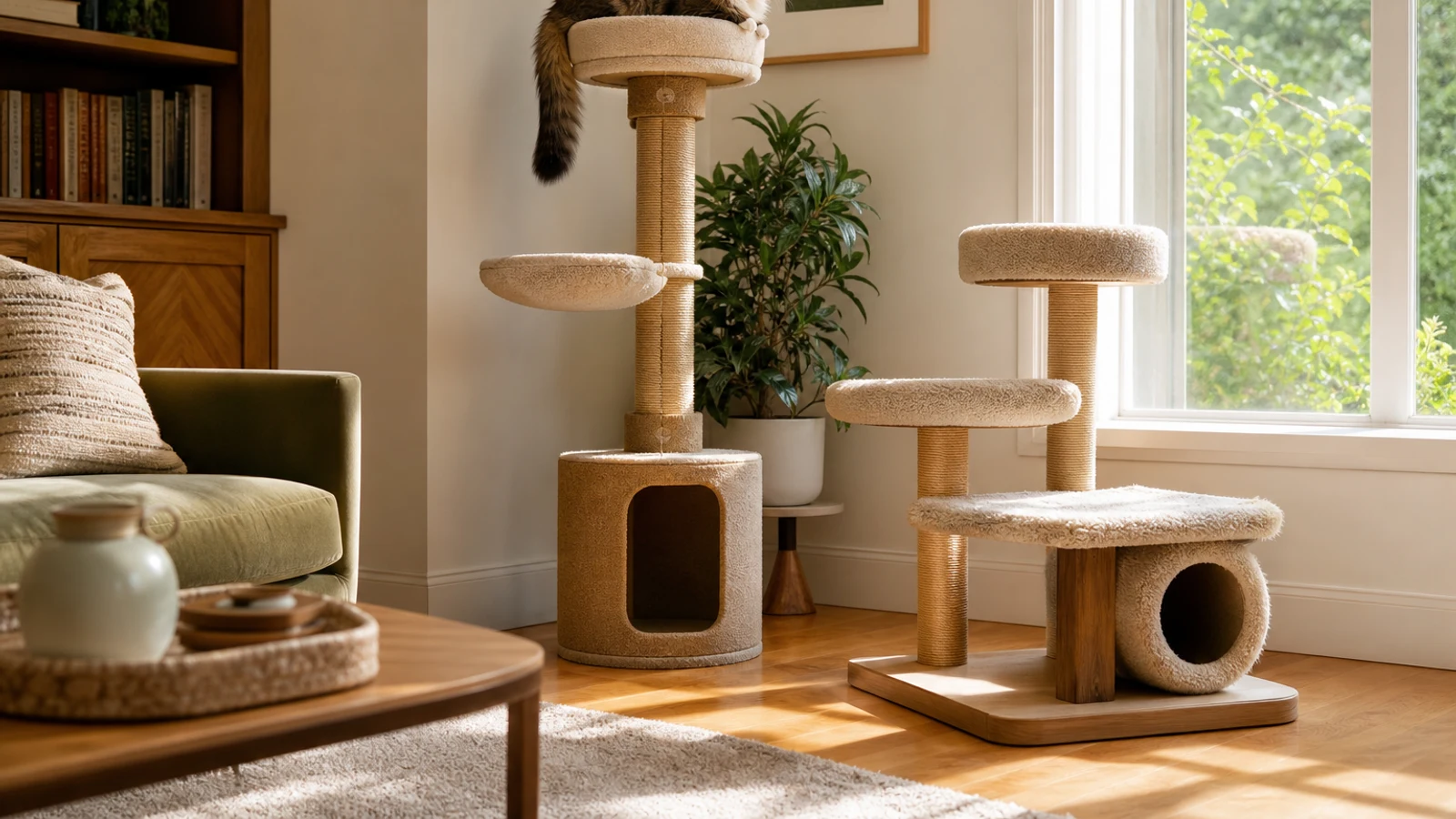
A tall cat tree usually suits homes short on floor space and cats that like to climb or survey the room. A wide cat tree is often easier for large, senior, cautious, or less agile cats because it offers broader platforms and shorter routes. Stability, platform fit, and placement matter more than maximum height alone.
Quick answer
Choose a tall cat tree when your cat actively climbs, your room has limited floor space, and the unit can remain stable or be secured appropriately. Choose a wide cat tree when your cat prefers lounging, needs easier access, has a larger body, or shares the furniture with other cats. If you are unsure, prioritize a stable design with a tall scratching post, one comfortable perch, lower resting space, and more than one route between levels.
Shop this guide
Current Amazon options
Six current listings related to this buying decision. Use the guide to compare fit and trade-offs, then verify the latest seller, price, size, and availability on Amazon.
As an Amazon Associate I earn from qualifying purchases. Product availability, seller, price, and listing details can change.
Key decision checks
Tall and wide cat trees solve different problems
A tall cat tree converts a small floor footprint into elevated territory. It is usually the better fit for an active adult cat that climbs, watches household activity from above, or likes a high sleeping place. It can also work well in an apartment or compact room, provided the base is broad and the structure does not wobble when the cat jumps or scratches.
A wide cat tree spreads platforms, beds, hideaways, and scratching areas across more floor space. It is often more practical for a large-bodied cat, a senior cat, a cautious cat, or a household where the main goal is comfortable lounging rather than maximum elevation. The useful comparison is not height versus width in isolation; it is climbing access versus easy resting space.
- Tall: more elevation with less floor area, but greater demands on stability and ceiling clearance.
- Wide: more room to stretch, turn, rest, and share, but a larger footprint.
- Either style can be a poor choice if the platforms are too small, the route is awkward, or the unit shifts during use.
Choose tall for climbing, lookout points, and small rooms
Tall is the stronger starting point for a cat that already seeks the top of furniture, uses vertical scratching surfaces, or spends time watching windows and household activity. Feline veterinary guidance identifies elevated spaces, perches, and hiding options as important parts of an indoor environment because they give cats more usable territory and control over how they observe their surroundings.
Height is especially valuable when floor space is limited. A narrow-looking tower may occupy less room than a wide lounge-style tree, but it should not be selected by footprint alone. A tall unit with a very small base, flexible posts, or a top perch that sways can become unappealing or unsafe. A corner or wall-adjacent position may improve stability, but follow the product’s anchoring instructions rather than assuming placement alone is enough.
- Best match: agile adult cats, climbers, window watchers, and small rooms.
- Check: total height, ceiling clearance, base dimensions, upper-perch size, and any included anti-tip hardware.
- Avoid: designs that require a large leap to the top or leave the cat with no comfortable lower resting place.
Choose wide for lounging, larger cats, and easier access
Wide is usually the more forgiving choice when your cat values broad resting surfaces or does not confidently climb. It gives the cat room to lie on its side, change position, and settle without balancing on a small top platform. That matters for large cats and for cats whose mobility, strength, or confidence has changed with age.
A wide design can also make better shared furniture in a multi-cat home, but one tree should not be expected to resolve every social conflict. Cats may need separate resting places, hiding options, scratching surfaces, and elevated areas in different parts of the home. If one cat can block the only route or preferred perch, a second resource may be more useful than a larger single structure.
- Best match: large cats, senior cats, less agile cats, and cats that prefer naps over climbing.
- Look for: broad platforms, low entry points, short steps or ramps, sturdy scratching posts, and at least one partially enclosed resting area.
- For multiple cats: consider separate perches or separate trees when cats do not comfortably share space.
Stability matters more than maximum height
The tree must stay planted when a cat launches, lands, stretches, or scratches. The ASPCA and Cornell Feline Health Center both emphasize that scratching structures should be sturdy and should not shift or topple during use. This is a practical safety and acceptance issue: a cat that is startled by movement may stop using an otherwise attractive tree.
Evaluate the whole structure, not only the base. A wide lower footprint helps, but a top-heavy layout, loose hardware, narrow platforms, or a tall post with little support can still create movement. Assemble the tree exactly as directed, recheck fasteners after initial use, and stop using it if posts loosen, coverings expose sharp edges, or the structure becomes unstable. A veterinarian or qualified feline professional is appropriate if a cat has a mobility condition or suddenly avoids jumping.
- Press and gently rock the assembled unit before allowing regular use; visible movement is a reason to reassess.
- Prefer a substantial base, tight connections, and platforms that do not flex noticeably.
- Use the supplied wall-attachment method when recommended, and confirm that the mounting surface and fasteners are suitable for your home.
- Inspect sisal, fabric, carpet, and dangling toys regularly for fraying, loose pieces, or damaged attachments.
Compare options for your pet
Tall vs Wide Cat Tree: Which Fits Your Cat and Room Better?
Compare current Amazon listings using the fit and safety checks in this guide. Confirm size, specifications, seller and availability before ordering.
See on Amazon →As an Amazon Associate I earn from qualifying purchases. Links open Amazon search results; individual listings have not been independently verified.
Match the layout to your cat, not the marketing photo
A useful cat tree offers more than a dramatic top perch. The layout should include a scratchable vertical surface tall enough for a full stretch, a comfortable resting platform, and a route that does not force repeated awkward jumps. Cats differ in scratching direction, preferred textures, confidence, and willingness to use enclosed spaces, so a tree with many features is not automatically a better match.
Placement can determine whether the tree becomes part of your cat’s daily territory. A quiet corner may suit a shy cat, while a social cat may prefer a place near the family’s normal activity. A window can add visual interest, but avoid blocking a needed exit route or placing the tree where children, dogs, or another cat can corner the user. Keep the cat’s other essential resources accessible and separated as appropriate.
- For climbers: staggered levels, usable intermediate platforms, and a secure high perch.
- For loungers: broad beds, stable surfaces, and enough clearance to turn around comfortably.
- For scratchers: a tall vertical post plus another orientation or texture if your cat uses one.
- For cautious cats: a lower perch, hideaway, and more than one way to leave the structure.
Tall vs wide by cat and household situation
There is no universal winner because the same dimensions can suit one cat and frustrate another. A young, athletic cat may use every level of a tall tower, while a senior cat may prefer a low, wide arrangement with steps. A large cat may need a wide platform even if it enjoys height. Observe where your cat already rests, scratches, and jumps before deciding which dimension deserves priority.
For a small room, a stable tall tree or a combination of a modest tree and a window perch may preserve walking space. For a larger room, a wide tree can create a useful resting zone without forcing the cat to climb high. If you rent or cannot anchor furniture, be more conservative about height and choose stability over a taller but narrower design.
- Active adult cat with limited floor space: tall, but only with a stable base and suitable anchoring.
- Large or sprawling cat: wide platforms first; add height if the structure remains easy to navigate.
- Senior or mobility-limited cat: wide, low-access design with ramps or steps; ask your veterinarian about sudden mobility changes.
- Multiple cats: provide distributed vertical and resting resources rather than relying on one crowded tree.
- Renter or temporary setup: favor a stable freestanding design and follow all manufacturer safety instructions.
A practical buying checklist
Measure the intended floor area, the route into the room, and the available ceiling height before shopping. Then compare the product’s usable surfaces rather than counting levels or dangling toys. A smaller tree with a secure base, a correctly sized perch, and a scratch post your cat actually uses can provide more value than a taller model that wobbles or has cramped platforms.
Product choice is separate from medical care. If your cat has arthritis, pain, weakness, balance changes, repeated falls, or a sudden reluctance to jump, do not treat a new cat tree as the solution. Have a veterinarian assess the change and use the advice to select lower, easier-to-access enrichment.
- Measure: floor footprint, ceiling clearance, doorway width, and nearby furniture clearance.
- Confirm: platform dimensions, base construction, post diameter or support design, covering materials, and replacement-part availability if stated by the manufacturer.
- Plan: where the cat can enter, leave, hide, scratch, and rest without being trapped or blocked.
- Maintain: tighten hardware, remove damaged parts, clean washable surfaces as directed, and reassess the setup as your cat ages.
Common questions
FAQ
Is a tall cat tree better for a small apartment?
Often, yes, because it uses vertical space instead of occupying a large area of floor. However, a tall tree should have a stable base and enough clearance around it for safe climbing. A short, wide tree is preferable if the tall model wobbles, cannot be secured appropriately, or has platforms that are too small for your cat.
Do cats prefer tall or wide cat trees?
Individual preference varies. Many cats value elevated perches, while others primarily want a stable place to sleep, scratch, or hide. Watch your cat’s existing behavior: frequent climbing and high perching favor tall; sprawling, cautious movement, or low furniture sleeping favor wide.
How wide should a cat tree be for a large cat?
Choose platforms that allow the cat to turn around, settle fully, and shift position without hanging over the edge. Do not rely only on a manufacturer’s general weight statement; compare the actual platform shape and usable area with your cat’s body size and sleeping posture.
Should a tall cat tree be attached to the wall?
Use wall attachment when the manufacturer recommends it or provides an anti-tip kit, and follow the installation instructions for your wall type. A wide base can improve stability but does not guarantee that a tall structure cannot tip. If you cannot install or verify a secure attachment, choose a more conservative height and a sturdier freestanding design.
Are wide cat trees safer for older cats?
They can be easier to use when they provide low platforms, short transitions, ramps, or steps. Width alone does not make a tree suitable: a senior cat may still struggle with high jumps or slippery coverings. If mobility changes are new, painful, or worsening, consult a veterinarian before changing the environment.
Can one cat tree serve two cats?
Sometimes, especially when the cats are comfortable sharing. In households with tension, one cat may block a route or claim the preferred perch. Provide multiple separated resting, scratching, hiding, and elevated options when cats avoid each other, compete, or need escape routes.
Sources & further reading
Where the factual guidance comes from
Ready to choose?
Tall vs Wide Cat Tree: Which Fits Your Cat and Room Better?
Compare current Amazon listings using the fit and safety checks in this guide. Confirm size, specifications, seller and availability before ordering.
See on Amazon →As an Amazon Associate I earn from qualifying purchases. Links open Amazon search results; individual listings have not been independently verified.
Keep researching