Dogs · Walking & Travel
Dog Car Seat Cover vs Hammock: Which Setup Fits Your Vehicle?
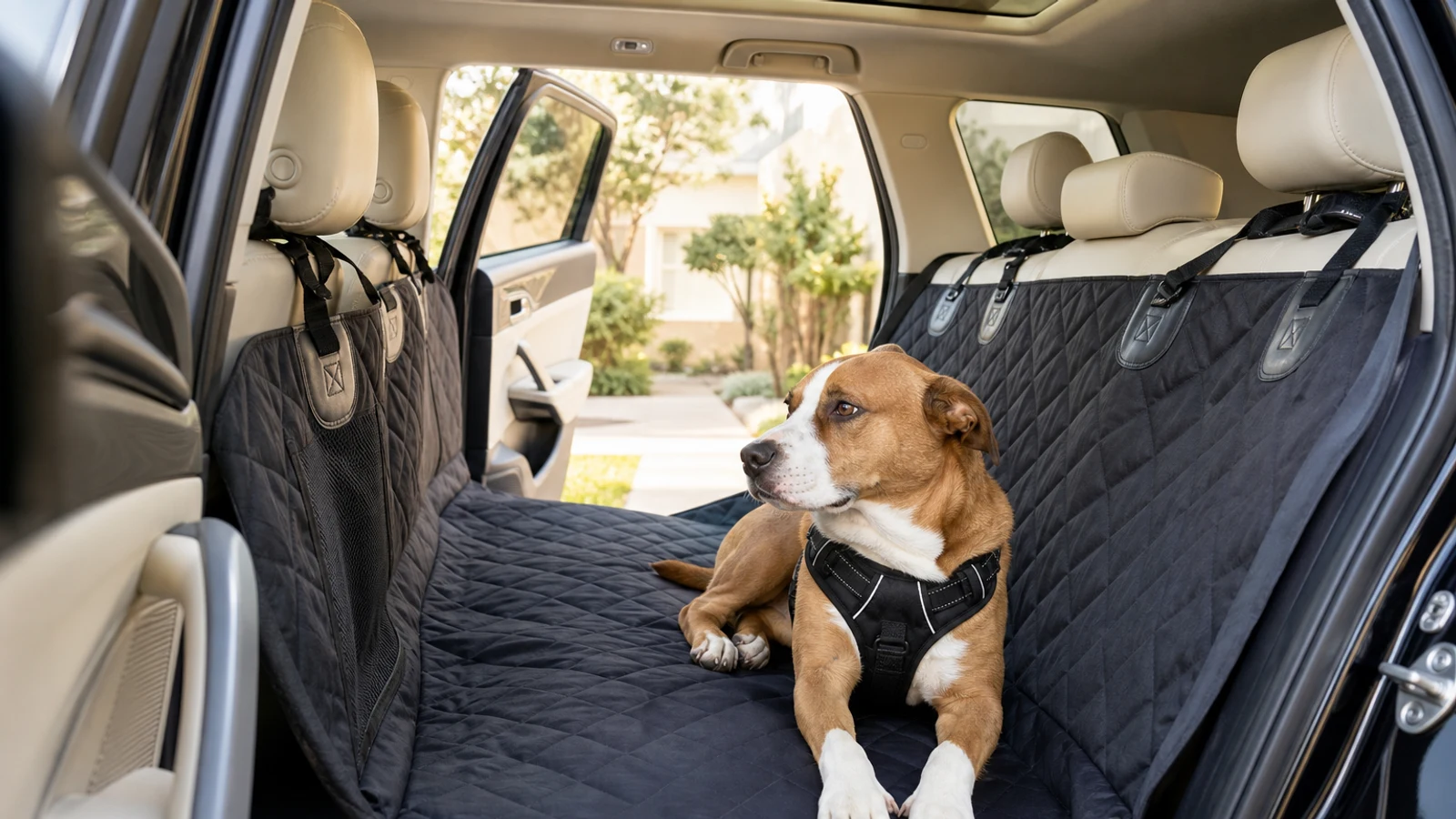
A bench-style seat cover keeps the rear seat usable for people, while a hammock-style cover closes the gap to the front seats and contains more dirt. Neither is a crash restraint, so choose the cover around your vehicle and pair it with an appropriate dog harness or secured crate.
Quick answer
Choose a regular bench-style seat cover if your rear seat must still accommodate passengers, a child seat, or frequent entry and exit. Choose a hammock if your dog normally has the whole rear bench and you want better coverage over the seatbacks, door-side edges, and front-seat backs. A hammock can reduce access to the footwell and help limit sliding, but neither cover should be treated as a crash-tested restraint. For moving-vehicle safety, use the cover with a properly fitted restraint or secured carrier according to the product and vehicle instructions.
Shop this guide
Current Amazon options
Six current listings related to this buying decision. Use the guide to compare fit and trade-offs, then verify the latest seller, price, size, and availability on Amazon.
As an Amazon Associate I earn from qualifying purchases. Product availability, seller, price, and listing details can change.
Key decision checks
Start with the job your vehicle setup must do
A dog car seat cover protects upholstery from hair, mud, moisture, claws, and food. A hammock-style cover adds a second function: fabric panels extend from the rear headrests to the front headrests, closing much of the gap between the rear bench and the front seats. That creates a more enclosed surface for a dog that stands, turns around, or tends to slide toward the footwell.
The practical difference is not that one is automatically safer. It is that a bench cover prioritizes access and flexibility, while a hammock prioritizes coverage and containment of mess. Decide first whether the rear seat is primarily your dog’s space or a shared passenger area; that answer usually narrows the choice quickly.
- Choose a bench cover when people, a child seat, or groceries regularly share the rear seat.
- Choose a hammock when your dog uses most or all of the rear bench and often steps toward the front.
- Treat either product as an interior protector, not as the dog’s primary crash restraint.
Bench-style seat cover: better for shared rear seats
A regular seat cover lies across the rear bench and often includes a backrest panel, seat anchors, and openings for the vehicle’s seat belts. It keeps the seat usable in sections, especially when the cover is split or can be folded behind one passenger. That makes it a practical fit for a sedan, compact crossover, or family vehicle that cannot dedicate the entire rear row to a dog.
The trade-off is less coverage at the front edge of the seat and in the gap above the footwell. A dog that changes position frequently may reach the floor, rub against the front seatbacks, or push the cover out of place. A bench cover also provides less protection from muddy paws on the lower door area unless it includes separate door flaps.
- Best fit: shared rear benches, split-fold seats, child-seat use, and short everyday trips.
- Useful features: seat-belt openings, seat anchors, non-slip backing, waterproof fabric, and a washable surface.
- Watch for: exposed seat edges, loose fabric around buckles, and coverage that interferes with a child restraint.
Hammock-style cover: better for full-bench dog travel
A hammock connects the rear and front headrests, covering the rear seat, seatback, and usually part of the front-seat backs. Side flaps may protect the doors when the dog climbs in, while the suspended center section closes the drop into the footwell. This can be especially useful for a large dog, a wet dog after outdoor activities, or a dog that repeatedly tries to move forward.
The main compromise is reduced passenger access. The front straps and raised side panels may need to be released before someone can sit down, and some designs make it harder to reach seat-belt buckles. The hammock can also create a false impression of security: its fabric may stop a dog from immediately dropping into the footwell, but it is not designed to absorb crash forces or hold the dog in place during a collision.
- Best fit: SUVs, crossovers, wagons, and sedans where the rear bench is mainly the dog’s area.
- Useful features: four-headrest attachment, seat anchors, nonslip underside, zippered door flaps, and a center opening for the restraint.
- Watch for: headrests that do not adjust, wide gaps beside the seat, weak stitching, and straps that the dog can chew.
Do not confuse a cover with a restraint
A cover controls dirt and changes the shape of the seating area; it does not replace a harness, carrier, or crate. The CDC advises keeping a dog in the back seat in a harness attached to the seat buckle, while the American Veterinary Medical Association advises safely restraining dogs and keeping them away from front-seat airbags. These recommendations address travel restraint, not upholstery protection.
Independent testing has also shown that pet travel products can differ substantially in crash performance. The Center for Pet Safety maintains separate categories for certified harnesses, carriers, and crates, and warns against extension tethers and zipline-style products because excessive movement can increase injury risk. If crash protection is your primary concern, evaluate the restraint or carrier separately from the cover and verify that the two products can be used together.
- Select a restraint designed for automotive use; do not attach a tether to a collar.
- Check whether the cover leaves the vehicle seat-belt buckle or approved restraint connection accessible.
- Follow both the vehicle manual and the restraint manufacturer’s instructions.
- Ask a veterinarian about motion sickness, anxiety, or mobility concerns; product selection cannot diagnose or treat those problems.
Compare options for your pet
Dog Car Seat Cover vs Hammock: Which Setup Fits Your Vehicle?
Compare current Amazon listings using the fit and safety checks in this guide. Confirm size, specifications, seller and availability before ordering.
See on Amazon →As an Amazon Associate I earn from qualifying purchases. Links open Amazon search results; individual listings have not been independently verified.
Match the cover to your vehicle layout
Vehicle geometry matters more than the label on the package. Measure the rear bench width, seat depth, backrest height, and distance between usable headrests. Check whether the rear headrests are removable, whether the front headrests provide a stable attachment point, and whether the cover leaves access to the seat belts and child-restraint locations. A hammock that fits one SUV may sag or leave gaps in another vehicle.
Consider how often the rear seats change jobs. A cover that installs quickly and folds behind one passenger may be more useful than a larger hammock that must be removed completely. If your vehicle has a 60/40 split bench, look for a design that can be folded or repositioned without bunching beneath a passenger or blocking the seat-belt buckle.
- For a sedan: prioritize correct headrest spacing, a secure seat anchor, and manageable door-flap length.
- For an SUV or crossover: prioritize full-width coverage, footwell closure, and easy access to the cargo area or rear doors.
- For a vehicle with child seats: confirm that the cover does not sit beneath, cross, or obstruct the child-seat installation path.
- For multiple dogs: check whether the usable surface remains wide enough for each dog to settle without crowding the restraint connections.
Compare cleanup, comfort, and everyday handling
For muddy paws and shedding, the hammock usually covers more of the surfaces that receive contact. Door flaps can protect trim during entry, and a waterproof layer can make wet-dog cleanup easier. A bench cover is often simpler to remove and wash, particularly if it has fewer panels and does not use long front straps. Neither design eliminates the need to clean hair and debris from seams, buckles, and the seat crevice.
For comfort, look for a stable surface rather than excessive padding. A hammock that sags into the footwell can make standing and lying down awkward, while a slick bench cover may let a dog slide during turns. A nonslip backing, seat anchors, and a correctly tensioned installation can help the cover stay flatter. Dogs with joint pain, weakness, or balance problems may need a more individualized travel plan from a veterinarian or qualified canine rehabilitation professional.
- Choose machine-washable or wipe-clean fabric if the dog swims, hikes, or rides after rainy walks.
- Inspect stitching, attachment loops, and zippers regularly, especially with a chewer.
- Remove trapped sand and grit before washing so it does not abrade the vehicle seat or cover.
- Introduce the cover and restraint during short, calm rides before using them on a long trip.
Which setup fits common driving routines?
For short errands with a calm dog and occasional human passengers, a bench cover is usually the less disruptive choice. It protects the main seating surface while preserving access to the other seat positions. For frequent trail trips, beach visits, or long drives with the full rear bench dedicated to one dog, a hammock may justify its larger footprint because it offers broader mess coverage and closes the front-seat gap.
For either option, install the cover before the dog enters, confirm that doors and seat belts operate normally, and secure the dog before driving. A loose dog can distract the driver even when the upholstery is well protected. Never rely on the cover to prevent a dog from reaching the front cabin during sudden braking, and never leave a dog unattended in a parked vehicle.
- Best for shared family use: bench cover plus a compatible restraint.
- Best for maximum upholstery coverage: hammock plus a compatible restraint.
- Best for a dog that needs a contained, structured travel space: consider a properly secured carrier or crate instead of choosing between covers.
- Best for a vehicle with uncertain anchor strength: verify the vehicle manufacturer’s approved connection points before attaching travel equipment.
Bottom line: choose around the rear seat you actually use
A bench-style cover is the flexible choice when the rear seat must continue working for people, child restraints, or changing cargo. A hammock is the coverage-focused choice when your dog occupies the rear row and you want to shield the seatbacks, reduce access to the footwell, and contain wet or dirty paws. Neither is a universal winner because the better design depends on the dog’s movement, the vehicle’s headrests and seat layout, and how often the back seat changes roles.
Build the system in this order: decide where the dog will ride, choose an appropriate restraint or secured carrier, confirm the vehicle connection points, then select the cover that protects the remaining interior without blocking that setup. If your dog has trouble standing, settling, breathing comfortably, or remaining calm during travel, contact your veterinarian before relying on a product change alone.
- Pick a bench cover for passenger access and fast daily use.
- Pick a hammock for full-bench dog travel and broader mess coverage.
- Add a suitable restraint or secured carrier; the cover alone is not crash protection.
- Recheck fit after washing, moving the seats, or changing the dog’s restraint.
Common questions
FAQ
Is a dog car hammock safer than a regular seat cover?
Not as a crash restraint. A hammock can reduce access to the footwell and help keep a dog on the rear seating surface, but it is still primarily an upholstery cover. A properly fitted automotive restraint or secured carrier is the part of the setup that must be evaluated for travel protection.
Can a dog use a hammock with a seat-belt harness?
Often, but only if the hammock has a compatible opening and does not interfere with the harness connection, buckle, or vehicle seat. Follow the instructions for both products, keep the dog in the rear seat, and avoid extension tethers or zipline-style attachments.
Does a hammock work with a child car seat?
Some covers are designed to leave child-restraint areas accessible, while others can interfere with installation or place fabric beneath the seat. Check the child-seat and vehicle instructions first. If the cover blocks the required installation path or contact points, remove it from that seating position.
Should a small dog use a hammock or a regular cover?
Choose based on the vehicle and the dog’s movement, not size alone. A small, calm dog in a shared rear seat may be better served by a bench cover. A small dog that wanders toward the front or slips into the footwell may benefit from a more enclosed setup, but the dog still needs an appropriate restraint or secured carrier.
How do I stop a dog car cover from sliding?
Use the product’s seat anchors, nonslip backing, and headrest straps as directed. Keep the cover correctly tensioned and remove debris from the seat surface. If it still shifts, check whether the design matches the bench width and headrest spacing; a poor fit cannot always be corrected by tightening the straps.
Is a waterproof dog car cover worth it?
It can be useful if your dog rides after swimming, rain, mud, or outdoor activities. Waterproof fabric mainly simplifies cleanup; it does not make the cover a safety restraint. Look for secure attachment points, adequate coverage, and seams that are easy to wipe or wash.
Sources & further reading
Where the factual guidance comes from
Ready to choose?
Dog Car Seat Cover vs Hammock: Which Setup Fits Your Vehicle?
Compare current Amazon listings using the fit and safety checks in this guide. Confirm size, specifications, seller and availability before ordering.
See on Amazon →As an Amazon Associate I earn from qualifying purchases. Links open Amazon search results; individual listings have not been independently verified.
Keep researching