Dogs · Walking & Travel
Step-In vs Overhead Dog Harness: Which Is Easier to Put On?
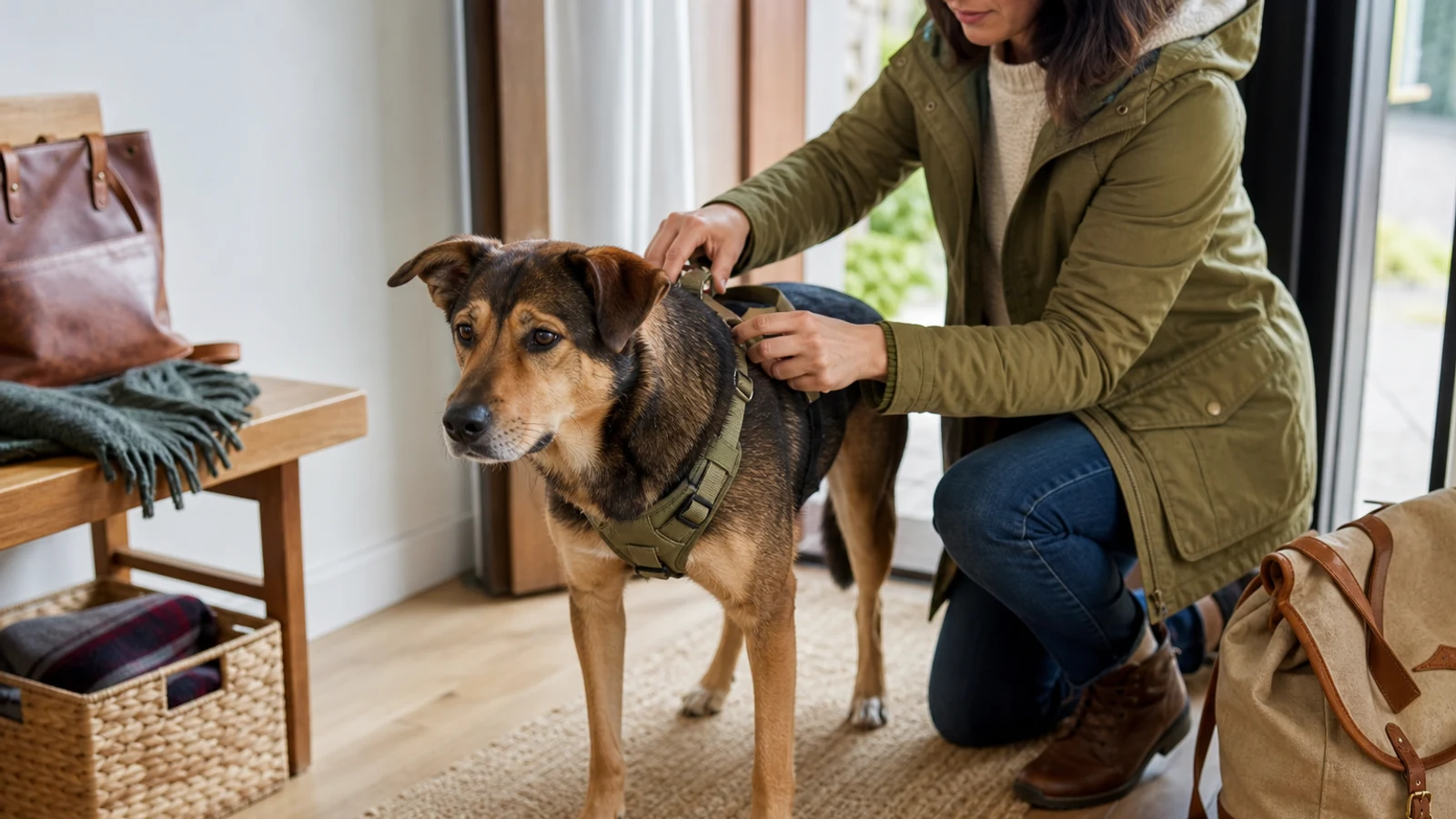
A step-in harness is often easier for head-shy dogs, while an overhead harness can be faster for dogs that dislike paw handling or will not stand still. The better choice depends on your dog’s behavior, body shape, and walking job.
Quick answer
Neither style is universally easier. Choose a step-in harness if your dog dislikes anything passing over the head or has trouble with neck handling. Choose an overhead harness if your dog dislikes having its paws positioned, wriggles while standing, or needs a more adjustable design with a front leash attachment. In either case, fit matters more than the label: the harness should stay secure without rubbing, restricting the front legs, or allowing the dog to back out.
Shop this guide
Current Amazon options
Six current listings related to this buying decision. Use the guide to compare fit and trade-offs, then verify the latest seller, price, size, and availability on Amazon.
As an Amazon Associate I earn from qualifying purchases. Product availability, seller, price, and listing details can change.
Key decision checks
The practical difference is where the struggle happens
A step-in harness lies on the floor or ground. Your dog places its front paws through two openings, you lift the harness up over the chest, and then fasten a buckle across the back. It avoids contact with the head and face, which can make the routine calmer for dogs that duck, retreat, or become tense when gear passes over their ears.
An overhead harness goes over the head first, then fastens around the chest or rib cage. The dog does not need to place its paws into separate openings, but it must accept the neck loop and your hands working around its head and shoulders. Once the dog understands the routine, this can be quicker for a dog that stands poorly or resists having its feet handled.
- Step-in: less head handling, more paw positioning.
- Overhead: more head handling, less need to place individual paws.
- The actual winner depends on what your dog resists, not on the harness name alone.
Choose a step-in harness for a head-shy dog
A step-in harness is usually the more practical starting point when your dog dislikes collars, clothing, or anything moving toward its face. It can also help when you are trying to make harness dressing less confrontational: place the harness down, reward calm positioning, guide one paw at a time, and buckle only after the dog is settled.
The trade-off is that the dog must cooperate with paw placement. A dog that spins, backs away, lifts its feet, or becomes excited at the sight of the leash may make a step-in harness surprisingly awkward. Small dogs can be easy to position when calm, but their leg openings and chest straps still need careful adjustment rather than a quick guess at fit.
- Best fit for: head-shy, face-sensitive, or calm dogs that tolerate paw handling.
- Watch for: a dog stepping out before both openings are correctly positioned.
- Confirm whether the model has only a back leash ring or also offers another attachment point.
Choose an overhead harness for a wriggly or paw-sensitive dog
An overhead harness can be easier when your dog will not stand still long enough for both front feet to enter a step-in design. You can guide the head through the opening, bring the body straps into place, and fasten the buckles without lifting each paw. This may suit dogs that dislike leg handling more than head handling, especially when the harness has clear adjustment points and quick-release buckles.
Overhead does not automatically mean difficult. Many dogs learn to place their own head through the opening when the process is paired with small food rewards and calm repetition. A dog that initially avoids the loop should not be forced through it; build tolerance gradually, and stop if the dog shows fear, pain, or escalating resistance.
- Best fit for: dogs that dislike paw handling or cannot hold a stable stand.
- Useful when: you want more adjustment around the neck, chest, or rib cage.
- Watch for: forcing the head through a loop or choosing an opening that is too tight.
Putting-on speed matters less than the dog’s cooperation
For a calm dog, either design can become a short daily routine. Step-in harnesses are fast when the dog stands over the harness and places both paws cleanly. Overhead harnesses are fast when the dog calmly accepts the neck opening and the buckles are easy to reach. A supposedly quick harness becomes a poor choice if it causes a wrestling match before every walk.
Use the same short sequence each time and reward the behavior you want: approach the harness, stand still, accept one fitting step, and wait for the buckle. If your dog is anxious, practice indoors without attaching a leash. A qualified trainer can help if harness handling consistently triggers fear, defensive behavior, or attempts to bite.
- Measure and adjust the harness before the first walk, not at the doorway.
- Reward stillness in small steps instead of restraining a struggling dog.
- Check the fit again after the dog moves, pulls lightly, sits, and turns.
Compare options for your pet
Step-In vs Overhead Dog Harness: Which Is Easier to Put On?
Compare current Amazon listings using the fit and safety checks in this guide. Confirm size, specifications, seller and availability before ordering.
See on Amazon →As an Amazon Associate I earn from qualifying purchases. Links open Amazon search results; individual listings have not been independently verified.
Fit and escape resistance should decide the final choice
Ease of putting on is only one part of the decision. A harness must remain secure when the dog backs up, turns toward a distraction, or lowers its shoulders. Some dogs can reverse out of a poorly fitted harness, and body shape matters: deep chests, narrow waists, short legs, heavy coats, and broad shoulders can all change how straps sit.
Look for a design that keeps straps clear of the armpits and shoulder joints while leaving the front legs free to move. The harness should be snug without pinching. A common practical check is whether you can slide about two fingers beneath the straps, but manufacturer instructions and your dog’s body shape still matter. Recheck growing puppies, dogs that gain or lose weight, and dogs whose coat changes seasonally.
- Check that the harness does not slide backward over the shoulders.
- Look for rubbing, hair breakage, red skin, or pressure marks after use.
- Test escape resistance in a controlled indoor space before relying on it outdoors.
- Remove the harness when your dog is unsupervised unless the manufacturer and your veterinarian advise otherwise.
Leash attachment changes the job the harness must do
Many step-in harnesses are built primarily for a back leash attachment, although designs vary. A back clip can be suitable for dogs that walk calmly or are being taught loose-leash skills, but it does not by itself stop pulling. Some overhead harnesses include a front chest ring, a back ring, or both, which can give you more options for redirecting a dog that surges forward.
A front attachment is not automatically better for every dog or activity. Certain designs can affect shoulder movement or create pressure in an unsuitable location if they fit poorly. For a strong puller, a dog with unusual anatomy, or a dog with neck, airway, orthopedic, or gait concerns, ask your veterinarian or a qualified reward-based trainer to help select and fit the equipment.
- Calm walker: prioritize comfort, simple dressing, and stable fit.
- Pulling dog: compare the actual leash attachment and training purpose, not just the harness style.
- Hiking or travel: verify that the product is designed for that job rather than assuming a walking harness is suitable for restraint or vehicle use.
A simple decision guide for everyday households
Pick a step-in harness when avoiding overhead handling is the main need and your dog can stand or accept gentle paw placement. Pick an overhead harness when your dog objects to its feet being handled, cannot stay positioned, or benefits from a design with more adjustment and leash-attachment choices. If both routines are stressful, the best next step may be conditioning rather than immediately buying another style.
The product choice does not replace veterinary advice. Dogs with coughing, breathing difficulty, neck pain, tracheal disease, limb problems, skin irritation, or a sudden change in tolerance should be evaluated by a veterinarian. A veterinarian or species-qualified rehabilitation professional can help distinguish an equipment problem from pain or an underlying medical issue.
- Head sensitivity is the strongest reason to start with step-in.
- Paw sensitivity or constant movement can favor overhead.
- Escape risk, rubbing, and restricted movement disqualify either style.
- Choose the harness that your dog accepts calmly and that stays correctly positioned in motion.
Common questions
FAQ
Is a step-in harness safer than an overhead harness?
Not by style alone. Safety depends on the individual design, correct fit, leash attachment, construction, and whether the dog can escape or move comfortably. A well-fitted overhead harness may be safer for one dog, while a well-fitted step-in may be the better practical choice for another.
Are step-in harnesses better for dogs that hate collars?
Often, yes, because many step-in designs avoid placing equipment over the dog’s head and reduce direct neck handling. However, some dogs dislike having their paws lifted or positioned. Introduce the harness gradually and stop if your dog shows pain, fear, or escalating resistance.
Can an overhead harness help a dog that pulls?
Some overhead harnesses include a front chest attachment that can help redirect forward movement when used correctly, but the harness does not replace leash training. Check where the attachment sits and whether it allows comfortable front-leg movement. A trainer or veterinarian can help with a strong or difficult puller.
How do I know if the harness is too tight?
Check for rubbing, pinching, restricted movement, skin redness, hair damage, or marks that remain after removal. You should generally be able to slide about two fingers beneath the straps, but follow the product’s fitting instructions and account for your dog’s coat and body shape.
Sources & further reading
Where the factual guidance comes from
Ready to choose?
Step-In vs Overhead Dog Harness: Which Is Easier to Put On?
Compare current Amazon listings using the fit and safety checks in this guide. Confirm size, specifications, seller and availability before ordering.
See on Amazon →As an Amazon Associate I earn from qualifying purchases. Links open Amazon search results; individual listings have not been independently verified.
Keep researching