Dogs · Walking & Travel
Retractable vs Standard Dog Leash: Which Fits Everyday Walks?
A standard leash is usually the better everyday choice for sidewalks, training, crowded areas, and dogs that pull. A retractable leash can suit a reliably trained dog in a quiet, open space, but it adds handling and entanglement risks.
Quick answer
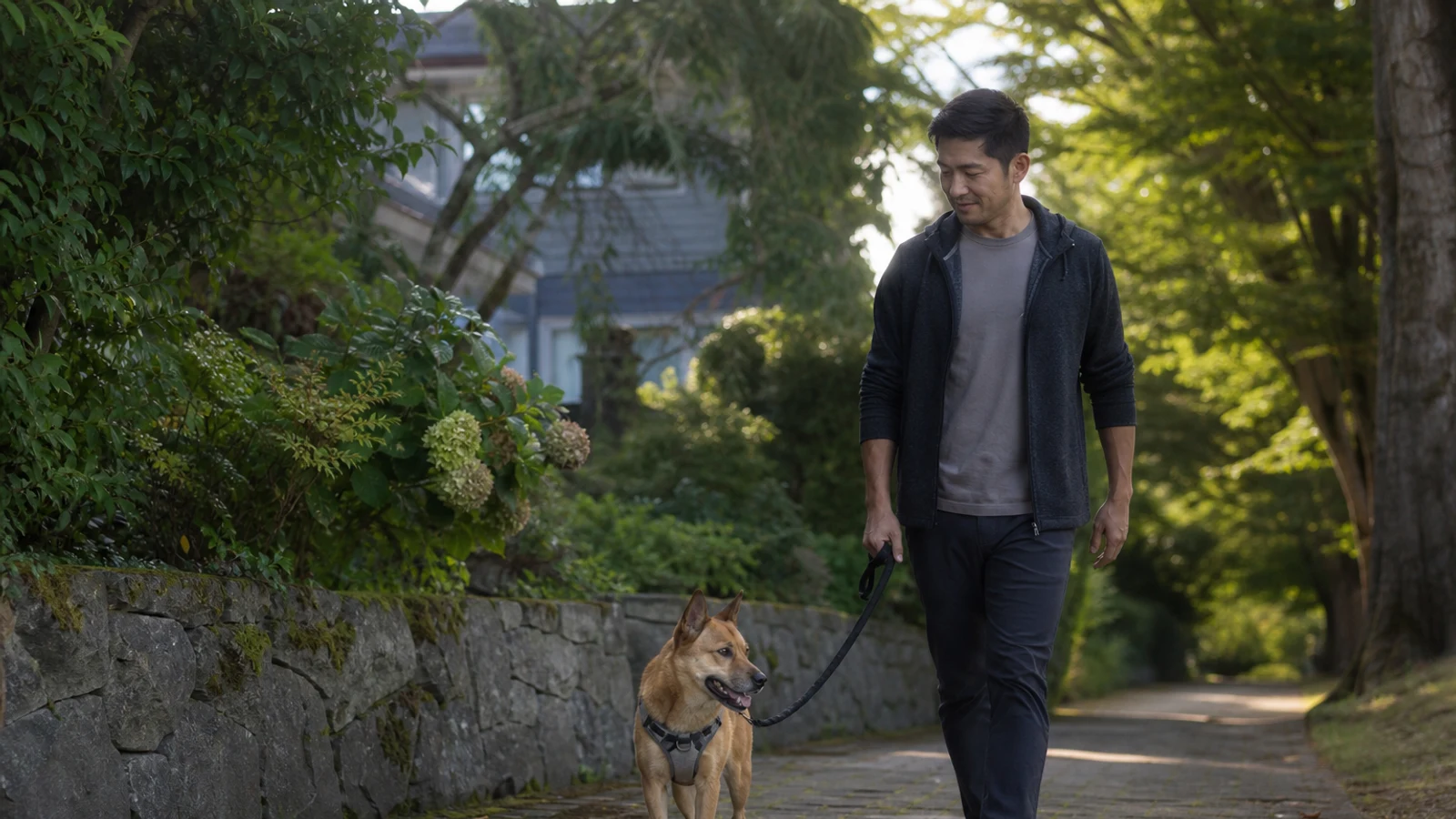
Choose a standard 4- to 6-foot leash for most everyday walks, training, sidewalks, neighborhood routes, veterinary visits, and situations involving other people or dogs. Consider a retractable leash only for a reliably trained dog with a dependable recall in a spacious, low-traffic area where the line will not wrap around people, dogs, bikes, trees, or other obstacles. If your goal is controlled exploration, a fixed long line may offer more predictable handling than a retractable model.
Shop this guide
Current Amazon options
Six current listings related to this buying decision. Use the guide to compare fit and trade-offs, then verify the latest seller, price, size, and availability on Amazon.
As an Amazon Associate I earn from qualifying purchases. Product availability, seller, price, and listing details can change.
Key decision checks
Standard leashes are the practical default for everyday walks
A standard leash has a fixed length, so you decide how much distance exists between your hand and your dog. That makes it the more useful option for sidewalks, neighborhood routes, training sessions, pet-friendly stores, veterinary visits, and any walk where you may need your dog close quickly. A 4- to 6-foot leash is a practical range for many daily situations, although the best length depends on your dog, route, and handling ability.
Fixed length also makes communication more consistent. When the leash stays slack, your dog can learn that walking near you keeps the walk moving; when tension appears, you can pause, change direction, or ask for attention without the leash continually paying out. A standard leash does not teach loose-leash walking by itself, but it gives training clearer feedback than a constantly tensioned retractable line.
- Best fit: daily walks, sidewalks, training classes, crowded routes, and quick control near hazards.
- Useful for dogs still learning leash manners or dogs that lunge, chase, startle, or greet unpredictably.
- Easier to hold with two hands when a dog is strong or you need extra control.
- Usually simpler to inspect, clean, replace, and use with a traffic handle or waist-level attachment when appropriate.
Retractable leashes trade control for roaming freedom
A retractable leash allows the line or tape to extend and retract from a handheld housing. Its main advantage is distance: a dog can sniff and explore farther from the handler while remaining attached. That can be appealing in a quiet, open field or another suitable area, but the extra distance also gives the dog more time and space to approach a hazard before the handler can intervene.
The brake can limit further extension, but it is not the same as instantly pulling a dog back to your side. If the dog is already moving away, the handler may need to shorten the line while moving closer. This makes retractables less forgiving when a cyclist, unfamiliar dog, child, road, wildlife, or other distraction appears suddenly.
- Best fit: a reliably trained adult dog in a spacious, low-traffic area with clear sightlines.
- Requires comfortable use of the brake, awareness of line position, and enough strength to manage the dog.
- Poor fit for narrow sidewalks, crowded parks, dog-dense areas, roadsides, or places with many obstacles.
- A tape-style line is generally easier for others to see than a thin cord, but visibility does not remove entanglement risk.
For training and control, choose the standard leash
If your dog is still learning not to pull, start with a standard leash rather than using a retractable leash as a training shortcut. The steady tension of many retractable designs can allow forward movement when the dog pulls, which may make it harder to teach that slack leash walking is the route to continued movement. Begin with calm, short practice sessions and reward the behavior you want; a qualified force-free trainer can help if pulling or reactivity is difficult to manage.
A standard leash is also the better choice when you need to keep your dog at your side. That includes passing other dogs, entering buildings, crossing streets, navigating elevators, walking near traffic, or responding to a dog that may jump, chase, or react. A harness or collar should be properly fitted, and a dog that coughs, shows neck discomfort, or has a known neck or back condition should be discussed with a veterinarian before changing walking equipment.
- Choose fixed length while teaching loose-leash walking, attention, recall foundations, or calm passing behavior.
- Do not use a retractable leash with a head halter unless the equipment manufacturer and a qualified professional specifically support that setup; veterinary guidance commonly warns against this combination.
- If your dog can overpower you, bolts, or has unpredictable behavior, prioritize a safer control plan with a qualified trainer or behavior professional.
- A leash cannot replace recall training, environmental awareness, or a secure fenced area.
Compare options for your pet
Retractable vs Standard Dog Leash: Which Fits Everyday Walks?
Compare current Amazon listings using the fit and safety checks in this guide. Confirm size, specifications, seller and availability before ordering.
See on Amazon →As an Amazon Associate I earn from qualifying purchases. Links open Amazon search results; individual listings have not been independently verified.
A retractable leash needs the right setting and dog
A retractable leash is most defensible when the dog already walks politely, responds reliably to cues, and can return promptly when called. The setting should be open enough for you to see the entire area, free of nearby traffic, and unlikely to contain passing dogs, children, cyclists, or objects that can catch the line. Even then, keep the extension shorter than the product’s maximum when full distance is unnecessary.
The handler should never rely on the line to stop a running dog at the end of its travel. A dog that accelerates toward a distraction can experience a sudden jolt, while a person may be cut or burned if the cord or tape wraps around a hand, leg, or another animal. Do not grab a moving line directly. If the handle falls, a startled dog may run from the noise of the housing being pulled behind it, so a secure grip matters.
- Use only after reliable loose-leash behavior and recall are established.
- Keep the dog away from roads, cliffs, water hazards, wildlife, crowded trails, and unfamiliar dogs.
- Avoid walking two dogs on separate retractables unless you have exceptional handling skill and a genuinely suitable environment.
- Inspect the housing, brake, line or tape, clip, and connection points before use; replace damaged equipment according to the manufacturer’s instructions.
A fixed long line may be better than a retractable
If you want more freedom for sniffing, recall practice, or decompression walks, compare a standard long line with a retractable leash before buying either. A fixed long line does not continuously reel in and may be easier to see, step over, gather, or handle with gloves. It still creates tangling and snagging hazards, so it belongs in an open, controlled area and should not be dragged through crowded public spaces.
Long lines are not appropriate for every dog or handler. A dog can still build speed and reach the end abruptly, and a long line can wrap around vegetation, people, or other dogs. Use the length that matches the space, keep your attention on the dog, and ask a trainer to demonstrate safe handling if you are practicing recall or working with a dog that chases.
- Choose a long line when you want planned exploration rather than automatic tension and retraction.
- Use a shorter fixed leash when the route includes pedestrians, dogs, vehicles, or narrow paths.
- Never treat a long line or retractable leash as a substitute for a secure fence near traffic or other serious hazards.
- Use a harness recommended for your dog’s build and behavior when a sudden stop could place excess pressure on the neck.
Match the leash to the walk, not to a universal winner
For most households, the best setup is not one leash for every situation. A standard leash should handle routine walks and close-control moments. A separate long line can support carefully managed exploration or recall practice. A retractable leash may be an occasional option for an experienced handler and a suitable dog, but its convenience does not outweigh the need for careful surroundings and reliable behavior.
Before choosing, consider the job the leash must do: keep your dog close, support training, allow controlled sniffing, or provide distance in a safe open area. Also consider your dog’s size and strength, your ability to react quickly, the walking surface, local leash rules, and whether the dog wears a collar, body harness, or head halter. If pain, coughing, neck sensitivity, or a previous injury is involved, ask your veterinarian about equipment and seek species-qualified training help for behavior concerns.
- For everyday neighborhood walks: standard fixed-length leash.
- For busy public areas: standard leash, often with a shorter traffic section if useful.
- For open-space exploration: fixed long line or carefully managed retractable leash, depending on the dog and handler.
- For dogs that pull, lunge, bolt, or are recovering from an injury: get professional guidance before relying on a new leash style.
Common questions
FAQ
Is a retractable leash safe for a puppy?
It is usually not the best starting choice. Puppies need clear, consistent practice with loose-leash walking, attention, and recall, and a fixed leash makes those skills easier to teach. A qualified force-free trainer can help you decide when a puppy is ready for more freedom.
Can a retractable leash stop a dog from pulling?
No. Many retractable leashes maintain tension and give the dog more distance when the dog pulls, which can reinforce forward pulling. Use a fixed leash while teaching loose-leash behavior and ask a trainer for help if pulling is strong or unsafe.
What length standard leash is best for daily walks?
A 4- to 6-foot leash works well for many daily walks because it balances movement with control. A shorter leash may help in crowded areas, while a longer fixed line is better suited to planned exploration in an open, controlled setting.
Is a retractable leash better than a long line?
Neither is universally better. A retractable leash offers automatic retraction but adds a bulky handle, constant tension, and a brake that requires practice. A fixed long line may offer more predictable handling for exploration, but it can still tangle and should be used only in an appropriate open area.
Should I use a retractable leash with a harness?
A harness may reduce direct neck pressure, but it does not remove the handling and entanglement risks of a retractable leash. Choose a properly fitted harness, avoid sudden stops, and ask a veterinarian or qualified trainer about equipment if your dog has pain, coughing, an injury, or difficult behavior.
Sources & further reading
Where the factual guidance comes from
Ready to choose?
Retractable vs Standard Dog Leash: Which Fits Everyday Walks?
Compare current Amazon listings using the fit and safety checks in this guide. Confirm size, specifications, seller and availability before ordering.
See on Amazon →As an Amazon Associate I earn from qualifying purchases. Links open Amazon search results; individual listings have not been independently verified.
Keep researching