Dogs · Grooming
Dog Shampoo Bar vs Liquid Shampoo: Which Is Easier to Use and Store?
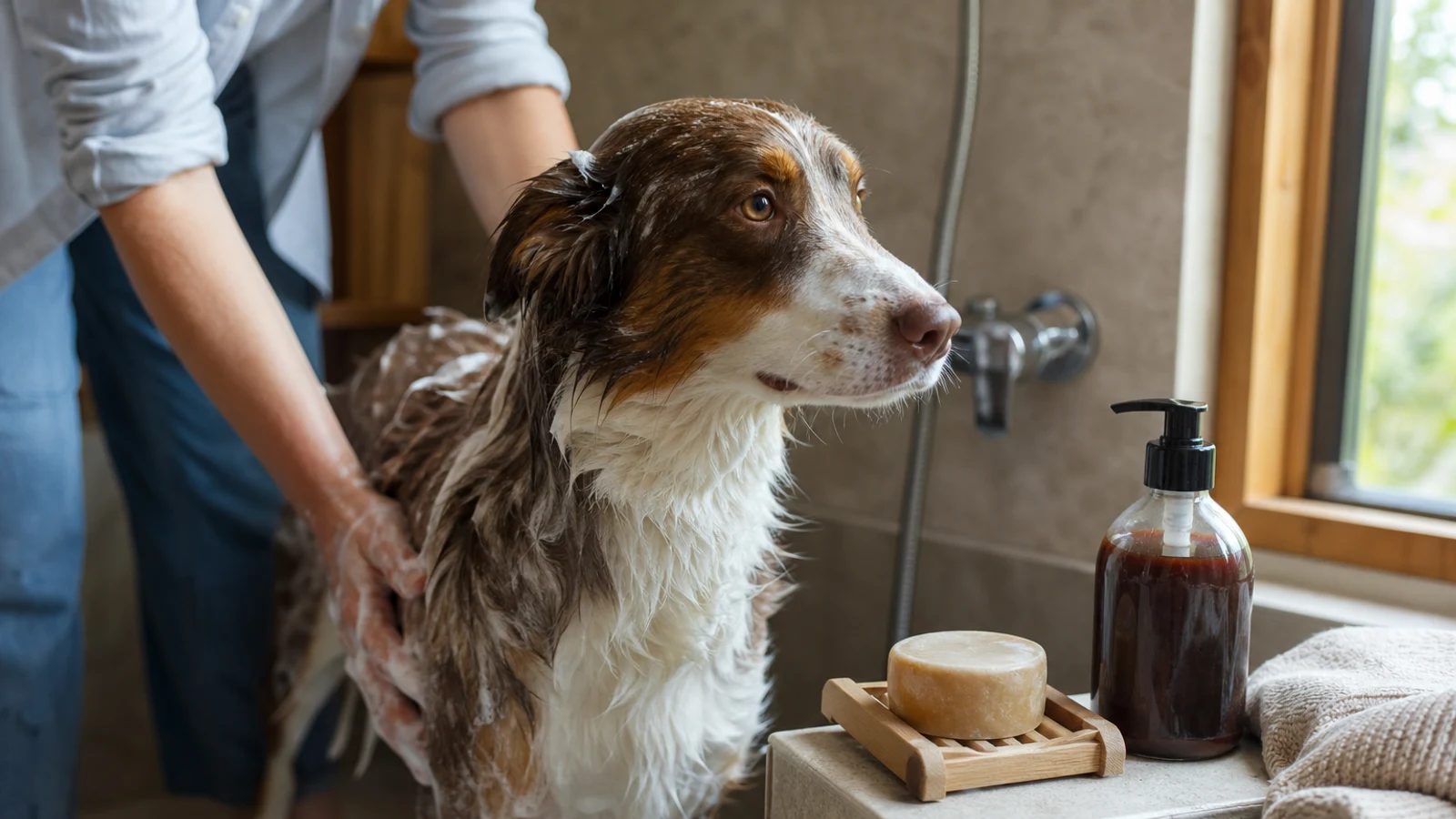
Dog shampoo bars simplify storage and travel, while liquid shampoo usually offers more predictable full-body coverage and a wider choice of routine and veterinary-directed formulas.
Quick answer
Choose a liquid dog shampoo if you want the most straightforward full-body application, easy measuring, or access to specialized formulas. Choose a dog-specific shampoo bar if compact storage, spill-free travel, and reduced bottle clutter matter most—and you can let the bar dry fully between baths. Neither format is automatically gentler: the formula, dog-specific labeling, thorough rinsing, and your dog’s skin needs matter more than whether the shampoo is solid or liquid.
Shop this guide
Current Amazon options
Six current listings related to this buying decision. Use the guide to compare fit and trade-offs, then verify the latest seller, price, size, and availability on Amazon.
As an Amazon Associate I earn from qualifying purchases. Product availability, seller, price, and listing details can change.
Key decision checks
The practical difference: coverage versus storage
Liquid shampoo is usually easier for large dogs, dense coats, and quick full-body coverage. You can dispense a controlled amount into your hand, dilute it when the label allows, or work it into separate areas without repeatedly handling a slippery solid. That makes liquid the more familiar option for households that bathe often or already have a stable bathing routine.
A shampoo bar earns its advantage after the bath rather than during it. It takes little shelf space, cannot spill in a grooming bin or travel bag, and avoids storing a partly used bottle. The trade-off is that the bar must be rinsed, drained, and dried between uses; leaving it in standing water can soften it and shorten its useful life.
- Best for simple full-body coverage: liquid shampoo.
- Best for compact, spill-resistant storage: shampoo bar.
- Best overall format depends on coat density, bathing location, and storage habits—not just ingredient marketing.
When a liquid shampoo is easier to use
Liquid shampoo is generally the easier starting point for first-time home bathing. It is simple to spread over a thoroughly wet coat, easier to portion for a small dog, and less dependent on a separate soap dish or drying rack. A bottle also makes it easier to follow a product label that specifies a measured amount, dilution ratio, repeat wash, or contact time.
Liquid is often the more practical choice for long, curly, or heavily coated dogs because you can place product where the coat is thickest and keep working until the skin is reached. It can still be overused, however. More suds do not necessarily mean a better clean, and residue left behind after bathing can irritate skin, so rinsing deserves at least as much attention as lathering.
- Choose a bottle when your dog has a dense, long, or difficult-to-wet coat.
- Choose liquid when multiple people share the bathing task and consistent dispensing matters.
- Check whether the label permits dilution; do not assume every formula should be diluted.
When a shampoo bar is easier to use
A bar can be convenient for short baths, muddy paws, small living spaces, and travel. It removes the problem of a leaking cap or a bottle taking up most of a grooming kit. Many users also like being able to rub the bar over selected areas instead of pouring shampoo into a hand and trying to keep the bottle dry at the same time.
The format is less convenient if your dog is large, restless, or difficult to handle with one hand. You may need to keep hold of the bar while using the other hand to control the dog, steady the coat, or protect the eyes and ears. A bar can also be awkward when you need precise dosing or an even application over a thick coat.
- A bar fits well in a small bathroom, camper, grooming tote, or travel kit.
- It may be useful for spot cleaning paws or dirty coat sections.
- It is less convenient if handling the dog already requires both hands.
Storage is the bar’s main decision point
A shampoo bar should be treated like a product that needs to dry, not like a bar of soap that can sit in a wet tub. After use, rinse away loose hair and excess lather, then place the bar on a draining dish or raised rack with airflow around it. Do not seal it in a container while damp, leave it in pooled bathwater, or return it immediately to paper packaging.
Liquid shampoo is easier to store immediately after a bath: close the cap, wipe the bottle if needed, and keep it upright according to the manufacturer’s instructions. It takes more shelf space and may leak if the cap fails, but it does not require a drying stage. For households with several dogs, consider whether a shared bar can be kept clean and dry between uses or whether individual products are more practical.
- For bars, prioritize drainage, airflow, and a holder that can be cleaned.
- For bottles, check cap security before packing them for travel.
- Keep either format away from the dog’s eyes, mouth, and accidental licking during storage and use.
Compare options for your pet
Dog Shampoo Bar vs Liquid Shampoo: Which Is Easier to Use and Store?
Compare current Amazon listings using the fit and safety checks in this guide. Confirm size, specifications, seller and availability before ordering.
See on Amazon →As an Amazon Associate I earn from qualifying purchases. Links open Amazon search results; individual listings have not been independently verified.
Do not confuse a dog shampoo bar with ordinary soap
The word “bar” describes the format, not the suitability of the product. Look for a product specifically labeled for dogs, with directions for canine use and ingredients appropriate for a rinse-off grooming product. A household soap bar, human shampoo bar, or handmade product without clear dog-use guidance is not an equivalent substitute.
Dog skin and human skin do not have identical needs, and harsh or poorly matched products may leave a dog dry, itchy, or irritated. The most important checks are species-specific labeling, a clear ingredient list, instructions for use, and the ability to rinse the product thoroughly. “Natural,” “chemical-free,” or “hypoallergenic” wording should not replace reading the actual label.
- Confirm the product is made for dogs, not merely described as gentle or natural.
- Avoid assuming a soap bar has the same cleansing system or skin compatibility as a dog shampoo.
- Stop using a product and contact a veterinarian if bathing is followed by persistent worsening irritation, swelling, or other concerning signs.
Routine grooming is different from medicated bathing
For a healthy dog that needs ordinary dirt and odor removal, either a dog-formulated bar or liquid can be reasonable if it suits the coat and your handling routine. The format alone does not determine whether a product is appropriate for allergies, infection, parasites, severe dandruff, or recurring itch.
Veterinary-directed shampoos are a separate category. A veterinarian may specify an active ingredient, application method, contact time, bathing frequency, or follow-up plan. Do not substitute a cosmetic shampoo bar for a prescribed product, and ask your veterinarian before changing products when your dog has an active skin problem or a history of reactions.
- Routine grooming: compare application, storage, ingredients, and rinsing.
- Possible skin disease: ask a veterinarian rather than selecting by bar-versus-liquid format.
- Follow the label or veterinary instructions for contact time and frequency.
How to choose for your household
Start with the job the shampoo must do. If the priority is the fastest, most predictable whole-body wash, liquid is usually the safer practical choice. If the priority is compact storage, travel convenience, and avoiding spills, a well-labeled dog shampoo bar may be the better fit. For either option, a calm bathing setup and thorough rinse matter more than creating a thick lather.
Before buying, consider how often you bathe, where the product will dry or sit, how much coat you must cover, and whether your dog needs a specialized formula. A bar is not automatically more economical or longer-lasting, and a liquid is not automatically wasteful; product life varies with dog size, coat, bathing frequency, dispensing habits, and storage.
- Choose liquid for dense coats, measured application, and the broadest formula selection.
- Choose a bar for compact storage, travel, and spill resistance.
- Prioritize dog-specific labeling, complete rinsing, and an ingredient list you understand.
- Replace the product or seek professional advice if your dog repeatedly reacts after bathing.
Common questions
FAQ
Are dog shampoo bars better than liquid shampoo for sensitive skin?
Not automatically. Sensitivity depends more on the formula, ingredients, fragrance, correct use, and your dog’s individual response than on whether the product is solid or liquid. For recurring itch, redness, odor, hair loss, or skin lesions, ask a veterinarian before experimenting with grooming products.
Can I use a human shampoo bar on my dog?
It is better to use a product specifically labeled for dogs. Human shampoo bars may use different cleansing agents, fragrances, or pH targets, and a bar that feels mild to a person is not necessarily suitable for canine skin.
How should I store a dog shampoo bar between baths?
Rinse away loose residue, then place the bar on a draining holder in a dry, ventilated area. Let it dry fully before putting it into a travel case or paper package, and do not leave it sitting in water.
Is liquid shampoo easier for a long-haired dog?
Usually, yes. Liquid is often easier to distribute through a long or dense coat and easier to measure or dilute when the label allows. A bar can still work, but it may require more handling and careful rubbing to reach the skin without overworking the coat.
Can a shampoo bar replace medicated dog shampoo?
No. A cosmetic shampoo bar should not replace a veterinary-directed medicated product. If your dog has a diagnosed or suspected skin condition, follow the veterinarian’s product, contact-time, frequency, and rinsing instructions.
Sources & further reading
Where the factual guidance comes from
Ready to choose?
Dog Shampoo Bar vs Liquid Shampoo: Which Is Easier to Use and Store?
Compare current Amazon listings using the fit and safety checks in this guide. Confirm size, specifications, seller and availability before ordering.
See on Amazon →As an Amazon Associate I earn from qualifying purchases. Links open Amazon search results; individual listings have not been independently verified.
Keep researching