Other Pets · Feeding
Hay Rack vs Loose Hay for Guinea Pigs: Which Is Easier to Maintain?
Loose hay is usually the simpler and more natural default for guinea pigs, but a carefully designed open holder can help some households manage soiling and cleanup. The safest choice depends on access, construction, and how closely you monitor the enclosure.
Quick answer
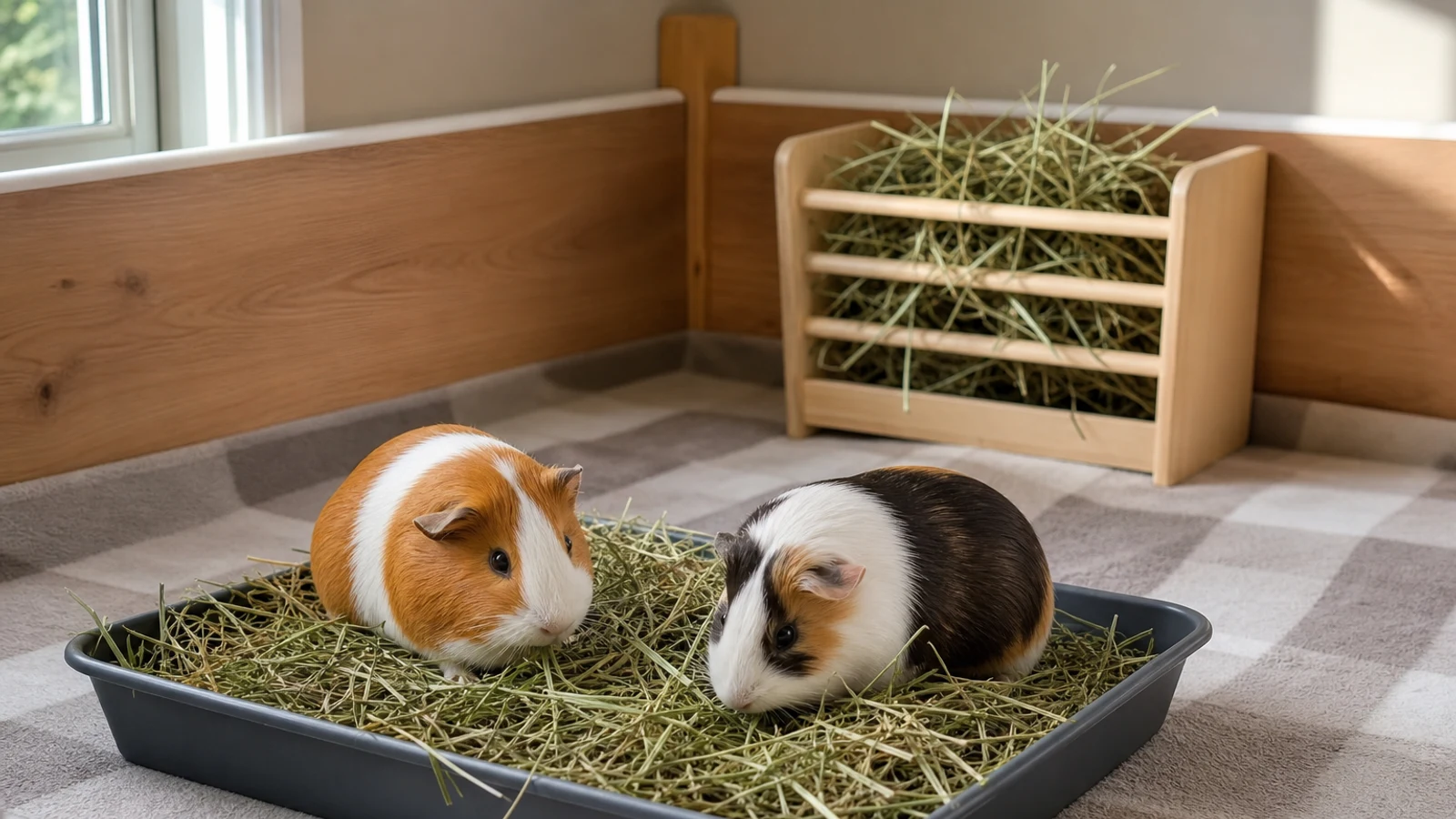
For most guinea pigs, loose grass hay placed on a clean, solid cage surface is the easiest and lowest-risk option to maintain. It supports natural grazing and avoids many trapping hazards associated with narrow wire racks, balls, and enclosed hay bags. A broad, open-topped holder can be useful when loose hay becomes heavily soiled, scattered, or difficult to keep available, but it should never restrict access or replace daily inspection and removal of damp or dirty hay.
Shop this guide
Current Amazon options
Six current listings related to this buying decision. Use the guide to compare fit and trade-offs, then verify the latest seller, price, size, and availability on Amazon.
As an Amazon Associate I earn from qualifying purchases. Product availability, seller, price, and listing details can change.
Key decision checks
The practical difference: access versus containment
Loose hay is the simpler feeding method: place a generous amount at floor level, remove sections that become wet or soiled, and replenish it every day. Guinea pigs can pull, sort, tunnel through, and rest beside the hay. That makes loose hay messy, but it also keeps the food easy to reach and supports natural grazing behavior.
A hay rack tries to contain the pile and keep more of it away from bedding and urine. That may reduce scattered strands and make a feeding area look tidier, but the rack introduces another item to clean and inspect. Its value depends less on the word “rack” than on the opening design, stability, accessibility, and whether the guinea pig can use it without climbing, squeezing, or becoming trapped.
- Loose hay prioritizes unrestricted access, natural foraging, and simple equipment.
- A holder prioritizes separation from bedding and may reduce some cleanup, but it adds safety and maintenance checks.
- Neither option should allow the hay supply to run out; grass hay should remain available at all times.
Why loose hay is usually the safer default
Veterinary care guidance consistently treats high-quality grass hay as a staple that should be available continuously. Offering it at floor level makes access straightforward for young, elderly, overweight, injured, or less agile guinea pigs. It also avoids forcing a guinea pig to reach through narrow gaps or lift its head into a suspended feeder.
Welfare organizations commonly favor loose hay because guinea pigs are grazing animals and can use hay as part of their normal foraging and resting behavior. This does not mean every holder is automatically unsafe, but it does mean convenience should not come before unrestricted access. If a guinea pig ignores a rack, struggles to reach the hay, or spends less time eating, return to a generous loose pile and discuss appetite changes with a veterinarian.
- Use a solid-bottom enclosure or feeding surface rather than a wire floor.
- Keep hay dry, fresh-smelling, and free from obvious mold, dampness, or contamination.
- Remove soiled hay promptly instead of expecting a holder to keep dirty hay safe.
- Watch actual eating behavior; a tidy enclosure is not a success if hay intake falls.
When a hay holder can make maintenance easier
A broad, open holder may help households whose guinea pigs immediately urinate on a floor pile, drag hay into a water dish, or scatter it across a large enclosure. Keeping part of the supply slightly above the bedding can preserve cleaner hay for longer and make spot-cleaning more predictable. It can also create a defined feeding zone, which some owners find easier to check during daily care.
The useful middle ground is often not a small wire rack but a low, stable, open container or tray that allows the guinea pig to reach hay from the side and top. The container should be easy to remove, wash, dry, and replace. It should not have a narrow neck, hinged lid, spring-loaded ball, sharp edge, unstable hook, or opening large enough for a head to become wedged.
- Prefer wide access over a narrow grid or slot.
- Avoid hay balls and enclosed bags that can allow the head or body to become stuck.
- Secure the holder so it cannot tip, swing, collapse, or create a climb-and-fall route.
- Provide enough hay at floor level if the holder is difficult to use or temporarily unavailable.
Safety checks matter more than the label
Product descriptions often use “hay rack,” “hay feeder,” or “hay bag” interchangeably, but those labels do not establish safety. Inspect the actual product from the guinea pig’s perspective. Can the animal reach every part of the hay without pushing its head through a gap? Could a foot, jaw, or shoulder catch? Is there a wire end, rough weld, detachable piece, or chewable coating? Would the feeder remain safe if it were knocked sideways?
Check the setup again after your guinea pig uses it. An accessory that appears secure when empty may bend, loosen, or become blocked after hay is pulled out. Multiple guinea pigs may also compete at one opening. If one animal guards the feeder, another may go without enough hay, so separate feeding areas or a larger open supply may be necessary.
- Inspect for head, neck, leg, and foot entrapment points.
- Check that the lowest accessible hay is easy to reach without standing upright or stretching.
- Remove any accessory that causes repeated climbing, tipping, chewing, or conflict.
- Reassess after cage rearrangements, illness, aging, or a new guinea pig joins the group.
Compare options for your pet
Hay Rack vs Loose Hay for Guinea Pigs: Which Is Easier to Maintain?
Compare current Amazon listings using the fit and safety checks in this guide. Confirm size, specifications, seller and availability before ordering.
See on Amazon →As an Amazon Associate I earn from qualifying purchases. Links open Amazon search results; individual listings have not been independently verified.
Which option is easier to keep clean?
Loose hay is usually faster to refill but can increase visible waste. Guinea pigs may select preferred strands, sit in the pile, and mix hay with urine, feces, or bedding. That means maintenance is less about saving every strand and more about removing contaminated material before it becomes damp, dusty, or unpleasant. A washable tray beneath the hay can make this routine easier without restricting access.
A holder can reduce the amount of hay spread across the enclosure, but it does not eliminate waste. Hay pulled through an opening may still fall onto the floor, and the feeder itself can collect dust, chewed fragments, droppings, or moisture. A holder is only easier to maintain if its shape lets you empty it completely, clean all surfaces, and see whether the remaining hay is fresh.
- For loose hay, use a designated washable feeding area and remove wet sections daily.
- For holders, empty crumbs and debris rather than topping up indefinitely.
- Wash and dry reusable trays or feeders according to their material and the manufacturer’s instructions.
- Discard hay that smells musty or shows moisture or visible mold; do not mix it into fresh hay.
A practical setup for most households
Start with loose grass hay at floor level in a clean, dry area. Offer more than a single small portion so your guinea pig can graze throughout the day and night. A low washable tray, paper-lined zone, or easily replaced section of bedding can contain some of the mess while preserving unrestricted access. Refresh the supply at least daily and more often when it becomes wet or heavily contaminated.
If loose hay is consistently wasted or spoiled, test a wide, open holder as an addition rather than an exclusive source. Keep a floor-level reserve available while you observe whether each guinea pig can eat comfortably. During the first several days, check the feeder several times, confirm that hay is being eaten, and remove it immediately if it creates a trapping or access problem.
- Choose a grass hay appropriate for your guinea pig’s life stage and veterinary guidance.
- Store unused hay in a cool, dry, dark, ventilated place rather than a sealed damp container.
- Keep hay separate from the water bottle or bowl to reduce wetting.
- For bonded groups, provide enough access points to prevent one guinea pig from controlling the supply.
When to ask a veterinarian or qualified professional
This comparison addresses equipment and enclosure maintenance, not diagnosis or treatment. A guinea pig that suddenly eats less hay, produces fewer droppings, drools, loses weight, appears painful while chewing, or becomes unusually quiet needs prompt veterinary advice, because dental and digestive problems can worsen quickly. Do not assume a new rack or a messy feeding area is the cause.
Ask an exotic-animal veterinarian or species-qualified welfare professional for help if your guinea pig cannot reach the hay comfortably, has mobility limitations, is recovering from illness, or has a persistent change in appetite. They can help adapt the feeding arrangement while checking for an underlying health problem.
- Seek prompt veterinary guidance for reduced appetite or reduced fecal output.
- Do not force a guinea pig to use a feeder it avoids or cannot reach.
- Treat product guidance as a supplement to, not a replacement for, individualized veterinary care.
Common questions
FAQ
Can guinea pigs eat hay directly from the floor?
Yes. Loose hay at floor level is a common and practical way to provide constant access. Use a clean, dry, solid-bottom area and remove portions that become wet or heavily soiled. A tray or designated feeding zone can make floor-level hay easier to manage.
Do hay racks reduce hay waste?
They may reduce some scattering, but they do not prevent selective eating, dropped strands, or contamination. A rack can also create additional cleaning and safety issues. Choose one only if your guinea pig can reach the hay freely and the design has no trapping points.
Are wire hay racks safe for guinea pigs?
Some wire designs may be hazardous if gaps can trap a head, neck, foot, or leg. Avoid narrow openings, hay balls, sharp edges, unstable attachments, and any design that requires climbing or reaching awkwardly. Inspect the specific product rather than relying on its label.
Should I use a hay bag instead of a rack?
A hay bag is not automatically safer. Enclosed fabric openings can create entrapment risks, and fabric may absorb moisture or become chewed. If you use any bag or holder, it should be open, stable, easy to inspect, and supplemental to a freely accessible hay supply.
How often should guinea pig hay be replaced?
Provide fresh hay continuously and remove wet, soiled, dusty, or musty material as needed. Many households refresh the main supply daily, with additional spot removal throughout the day. The exact routine depends on enclosure size, bedding, number of guinea pigs, and how quickly the hay becomes contaminated.
What is the best choice for an older or less mobile guinea pig?
Loose hay placed at floor level is usually the easiest starting point because it does not require climbing, stretching, or pushing through an opening. If appetite or mobility has changed, consult an exotic-animal veterinarian rather than treating the feeder as the only issue.
Sources & further reading
Where the factual guidance comes from
Ready to choose?
Hay Rack vs Loose Hay for Guinea Pigs: Which Is Easier to Maintain?
Compare current Amazon listings using the fit and safety checks in this guide. Confirm size, specifications, seller and availability before ordering.
See on Amazon →As an Amazon Associate I earn from qualifying purchases. Links open Amazon search results; individual listings have not been independently verified.
Keep researching