Other Pets · Play & Enrichment
Chew Toys vs Foraging Toys for Rabbits: Which Job Does Each One Do?
Rabbit chew toys redirect a natural need to gnaw, while foraging toys make rabbits search, manipulate, or work for food. Learn when each type is useful, what materials to look for, and why neither replaces hay or veterinary dental care.
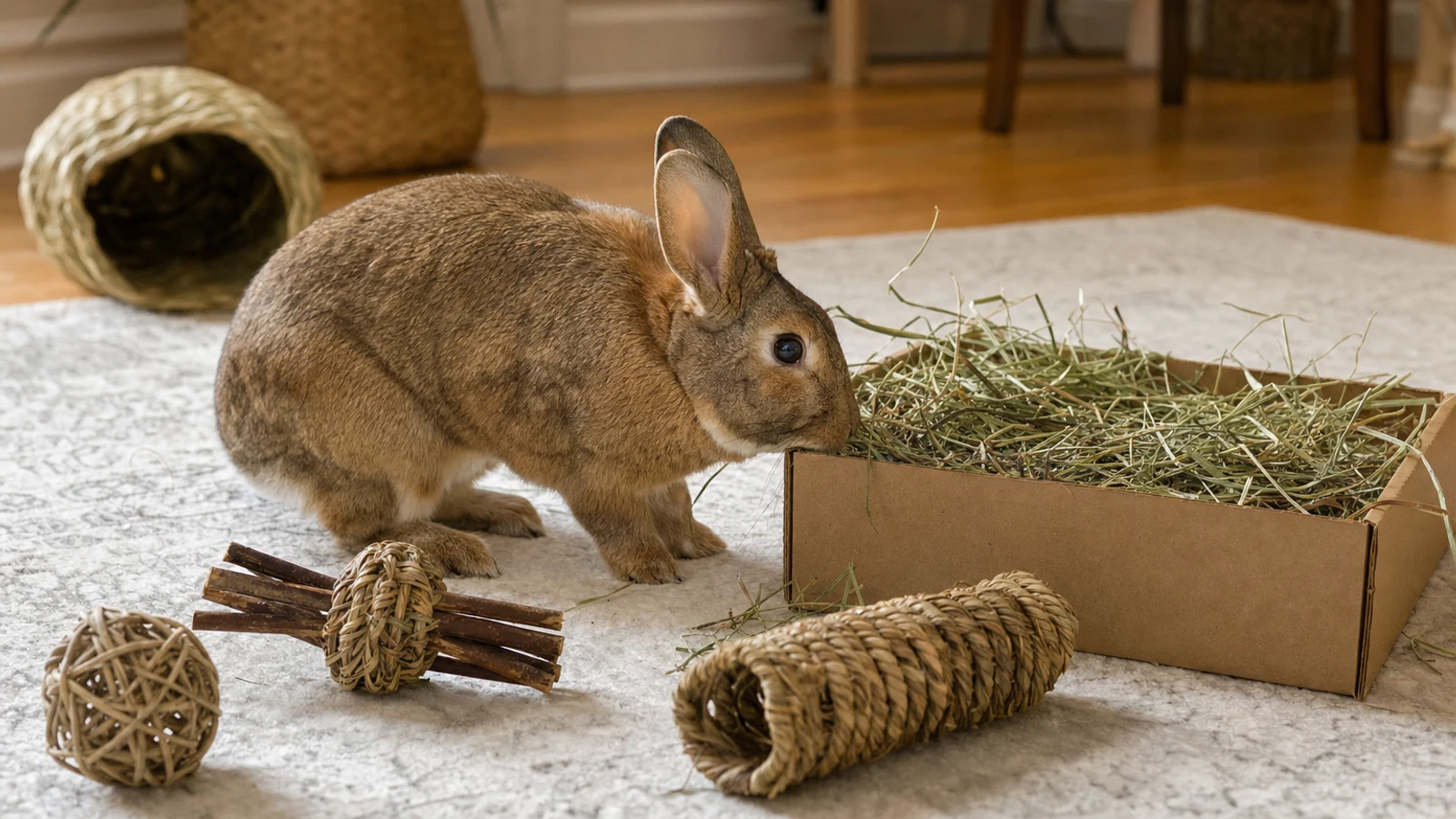
Quick answer
Choose a chew toy when your rabbit needs a safe outlet for gnawing, tossing, or manipulating objects. Choose a foraging toy when you want to add searching, movement, and problem-solving to meals. Many rabbits benefit from both: safe chew materials available regularly, plus easy-to-moderate foraging activities using part of the rabbit’s normal hay, greens, or pellet ration. Neither toy replaces unlimited appropriate hay, a suitable diet, exercise, or an examination by a rabbit-savvy veterinarian when eating or dental behavior changes.
Shop this guide
Current Amazon options
Six current listings related to this buying decision. Use the guide to compare fit and trade-offs, then verify the latest seller, price, size, and availability on Amazon.
As an Amazon Associate I earn from qualifying purchases. Product availability, seller, price, and listing details can change.
Key decision checks
The practical difference: chewing versus searching
Chew toys are designed mainly for the physical act of gnawing, shredding, or manipulating a material. They can give a rabbit an acceptable alternative to baseboards, furniture, wires, or other household hazards and may suit rabbits that naturally investigate objects with their teeth. Common formats include untreated wood, willow, hay, grass, cardboard, paper, and some natural-fiber items.
Foraging toys make food take longer to find or obtain. A rabbit may scatter-feed, pull hay from a tube, push a feeder, search a dig box, or uncover a small portion of its normal food. The main job is not simply chewing the toy; it is encouraging exploration, movement, and problem-solving around feeding.
- Best first choice for a persistent gnawer: a safe, readily available chew item plus rabbit-proofing around unsafe targets.
- Best first choice for a bored or inactive mealtime: a simple foraging setup that is easy to understand and does not delay necessary food.
- Best overall enrichment plan for many rabbits: offer both categories, then rotate formats according to the rabbit’s preferences.
What chew toys can—and cannot—do
A chew toy can satisfy a normal behavior and help redirect destructive chewing, but it should not be marketed as a stand-alone dental treatment. Rabbit teeth grow continuously, and the side-to-side chewing associated with abundant hay is central to normal tooth wear. A wooden block or willow toy may be worthwhile enrichment, but it does not replace the rabbit’s hay-based diet or professional dental care.
Chew toys are particularly useful when the rabbit needs something to shred, carry, toss, or gnaw between meals. Some rabbits prefer soft hay toys or cardboard, while others choose willow, untreated apple branches, or other appropriate natural materials. Individual preference matters, so a variety of safe textures is usually more useful than buying several copies of one expensive design.
- Look for materials identified as untreated, unpainted, and free from varnish, preservatives, toxic glue, staples, plastic film, or sharp hardware.
- Remove a toy when it develops splinters, sharp edges, loose strings, broken pieces, or a size that could become a choking hazard.
- Treat chewing changes as a health signal: drooling, difficulty eating, dropping food, facial swelling, or reduced appetite warrants prompt veterinary advice rather than a new toy.
What foraging toys add to a rabbit’s day
Foraging toys turn part of feeding into an activity. They can be as simple as scattering a rabbit’s daily pellets in a safe area, hiding hay in a cardboard tube, or placing greens among hay in a shallow box. More structured options include treat balls, puzzle feeders, forage bowls, hay mats, and dig boxes. The right level is one the rabbit can learn without becoming frustrated or leaving essential food uneaten.
Foraging is most useful when it increases natural searching and movement without adding excessive calorie-dense treats. Use part of the rabbit’s normal daily ration rather than automatically feeding extra food through the toy. Hay-based activities are often a practical fit because hay supports the rabbit’s fiber needs while also encouraging chewing and investigation.
- Start easy: leave a tube open, use visible hay, or scatter food across a small area before introducing closed compartments or multiple steps.
- Use the rabbit’s normal food where possible, including hay and an appropriate portion of its daily pellets or leafy greens.
- Watch whether the rabbit can access the food, whether another rabbit monopolizes the item, and whether the activity creates rushing or competition.
Which type fits your household need?
Choose chew toys first if your main problem is chewing on furniture, wires, enclosure parts, or other unsafe objects. The product must be available at the time and place the rabbit tends to chew, while the surrounding area still needs rabbit-proofing. A chew toy is also a sensible low-complexity option for a rabbit that ignores puzzles but enjoys shredding or tossing.
Choose foraging toys first if meals are delivered quickly and predictably, or if the rabbit shows interest in searching, pushing, digging, or exploring. Foraging can add activity without requiring a large collection of toys, but it needs regular setup and cleaning. A cardboard box with hay may provide more useful engagement than a complicated feeder the rabbit cannot operate.
- For a young or highly destructive rabbit: prioritize safe chew outlets, environmental protection, and close supervision of new materials.
- For a food-motivated rabbit: prioritize adjustable, easy-to-clean foraging options and use measured portions of normal food.
- For a cautious rabbit: begin with open, familiar materials and allow the rabbit to retreat; remove items that cause fear or stress.
- For bonded rabbits: provide enough access points or duplicate resources to reduce competition and prevent one rabbit from controlling the activity.
Compare options for your pet
Chew Toys vs Foraging Toys for Rabbits: Which Job Does Each One Do?
Compare current Amazon listings using the fit and safety checks in this guide. Confirm size, specifications, seller and availability before ordering.
See on Amazon →As an Amazon Associate I earn from qualifying purchases. Links open Amazon search results; individual listings have not been independently verified.
Materials and safety checks matter more than marketing
Rabbit enrichment items should have smooth, safe surfaces and no small parts that can be swallowed. For paper and cardboard, remove plastic windows, tape, staples, heavy dyes, and questionable coatings. For wood and branches, use products specifically identified as untreated and appropriate for rabbits; do not assume that any branch, craft wood, or garden cutting is safe.
Fabric snuffle mats, fleece, rugs, and woven items require special caution because some rabbits chew and swallow fibers. Supervise initial use and discontinue the item if the rabbit ingests material rather than merely pushing through it. Any new toy should be introduced when you can observe the rabbit, particularly if it contains food or has openings that could block or trap a head or foot.
- Inspect before every use for loose threads, splinters, sharp edges, damaged plastic, detached parts, and blocked food openings.
- Provide enough space for the rabbit to move away, turn around, stand upright, and reach a hiding place.
- Clean food-bearing items regularly and discard damp, moldy, heavily soiled, or difficult-to-clean materials.
- Rotate safe items to maintain interest, but do not remove all familiar objects at once if the rabbit is wary of change.
A simple way to combine both types
A balanced setup does not need to be elaborate. Keep one or two safe chew materials in the rabbit’s normal area, then create a short foraging activity using a portion of the day’s food. For example, place hay in a cardboard tube, scatter a measured pellet portion through clean hay, or put leafy greens in several easy-to-reach locations. Change only one variable at a time so you can tell what the rabbit understands and enjoys.
Observe the result rather than assuming a product is successful because it looks advanced. Useful signs include voluntary exploration, normal eating, chewing appropriate materials, movement, and relaxed behavior. If the rabbit stops eating, produces fewer droppings, becomes unusually quiet, or shows pain, remove the enrichment item and contact a veterinarian; enrichment should never delay evaluation of a possible illness.
- Daily baseline: unlimited appropriate hay, fresh water, suitable housing, exercise, hiding space, and companionship or carefully managed social needs.
- Add chew enrichment for an acceptable gnawing outlet.
- Add foraging enrichment around normal meals, beginning with easy access.
- Review and replace items as they wear, become contaminated, or stop matching the rabbit’s behavior.
When a toy question is really a health question
A rabbit that suddenly chews unsuitable objects, refuses a favorite toy, eats more slowly, drools, loses weight, produces fewer droppings, or changes posture may have pain or another medical problem. Dental disease can involve the cheek teeth and may not be identified by looking only at the front incisors. A toy cannot correct malocclusion, mouth injury, gastrointestinal illness, or reduced appetite.
Contact a veterinarian experienced with rabbits when eating, drinking, droppings, energy, or chewing behavior changes. Ask about diet, dental examination, safe enrichment, and any material the rabbit may have swallowed. Product guidance can help you select an activity, but it cannot diagnose the cause of a behavior change.
Common questions
FAQ
Can a foraging toy also be a chew toy?
Yes. Hay tunnels, cardboard tubes, willow baskets, and hay mats can encourage both searching and chewing. Judge the item by its primary use in your rabbit’s routine: if food is hidden inside, it is functioning as foraging enrichment as well as a chewable object.
Do rabbit chew toys keep teeth healthy?
They may support normal chewing behavior, but they do not replace hay or veterinary dental care. Hay is the more important dietary source of chewing for normal tooth wear. A rabbit with dental signs needs assessment by a veterinarian experienced with rabbits.
Should I put treats in a foraging toy?
You can use a small portion of the rabbit’s normal pellets or suitable greens, but do not assume every activity needs extra treats. Keep the total diet appropriate, start with easy access, and make sure the rabbit still eats enough hay and can reach the food without competition.
What if my rabbit eats the cardboard or fabric?
Remove the item if the rabbit is ingesting substantial amounts, shredding creates sharp pieces, or fibers are being swallowed. Try a hay-based or simpler option and supervise new materials. If appetite, droppings, or behavior changes after possible ingestion, contact a veterinarian promptly.
How often should rabbit toys be replaced?
Replace them whenever they become sharp, splintered, moldy, heavily soiled, structurally damaged, or small enough to swallow. Chew items may wear out quickly, while washable or durable foraging equipment may last longer if it remains safe and easy to clean.
Sources & further reading
Where the factual guidance comes from
Ready to choose?
Chew Toys vs Foraging Toys for Rabbits: Which Job Does Each One Do?
Compare current Amazon listings using the fit and safety checks in this guide. Confirm size, specifications, seller and availability before ordering.
See on Amazon →As an Amazon Associate I earn from qualifying purchases. Links open Amazon search results; individual listings have not been independently verified.
Keep researching